Building Blocks
This section contains fundamental products for the synthesis of organic and biological compounds. Building blocks are the essential starting materials used to construct complex molecules through various chemical reactions. They play a critical role in drug discovery, material science, and chemical research. At CymitQuimica, we offer a diverse range of high-quality building blocks to support your innovative research and industrial projects, ensuring you have the essential components for successful synthesis.
Subcategories of "Building Blocks"
- Boronic Acids & Boronic Acid Derivatives(5,805 products)
- Chiral Building Blocks(1,248 products)
- Hydrocarbon Building Blocks(6,118 products)
- Organic Building Blocks(61,447 products)
Found 208423 products of "Building Blocks"
Sort by
Purity (%)
0
100
|
0
|
50
|
90
|
95
|
100
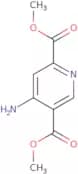
2,5-Dimethyl 4-aminopyridine-2,5-dicarboxylate
CAS:Versatile small molecule scaffold
Formula:C9H10N2O4Purity:Min. 95%Molecular weight:210.19 g/mol4-Chloropyridine-2,5-dicarboxylic acid
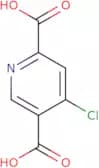
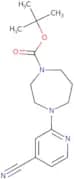
CAS:Versatile small molecule scaffoldFormula:C7H4ClNO4Purity:Min. 95%Molecular weight:201.56 g/moltert-Butyl 4-(4-cyanopyridin-2-yl)-1,4-diazepane-1-carboxylate
CAS:Versatile small molecule scaffold
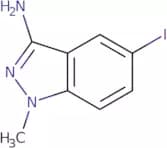
Formula:C16H22N4O2Purity:Min. 95%Molecular weight:302.37 g/mol5-Iodo-1-methyl-1H-indazol-3-amine
CAS:Versatile small molecule scaffold
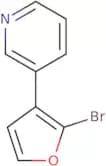
Formula:C8H8IN3Purity:Min. 95%Molecular weight:273.07 g/mol3-(2-Bromofuran-3-yl)pyridine
CAS:Versatile small molecule scaffoldFormula:C9H6BrNOPurity:Min. 95%Molecular weight:224.05 g/molPiperacetazine
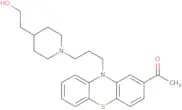
CAS:Controlled ProductPiperacetazine is a drug used to treat symptoms of depression and anxiety among the elderly. It has also been studied as a treatment for psychiatric patients who have not responded to other treatments. Piperacetazine belongs to the class of drugs known as CNS depressants, and is often prescribed by doctors in conjunction with other medications. Piperacetazine also has anti-inflammatory properties and can be used in the treatment of inflammatory diseases such as rheumatoid arthritis. The drug is not effective against viral infections, but it may be useful in treating some bacterial infections because it inhibits the growth of bacteria by binding to DNA-dependent RNA polymerase, thereby preventing transcription and replication. Piperacetazine is usually administered orally at doses between 10 mg and 50 mg per day, depending on the severity of symptoms.Formula:C24H30N2O2SPurity:Min. 95%Molecular weight:410.57 g/mol3-Chloropropane-1-sulfonyl fluoride
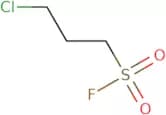
CAS:Versatile small molecule scaffoldFormula:C3H6ClFO2SPurity:Min. 95%Molecular weight:160.6 g/mol3,3,3-Trifluoro-2-hydroxy-2-(hydroxymethyl)propanoic acid
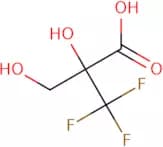
CAS:Versatile small molecule scaffoldFormula:C4H5F3O4Purity:Min. 95%Molecular weight:174.08 g/mol2,4-dichloro-6-fluoroaniline
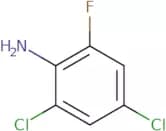
CAS:Versatile small molecule scaffold
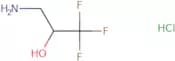
Formula:C6H4Cl2FNPurity:Min. 95%Molecular weight:180 g/mol3-Amino-1,1,1-trifluoropropan-2-ol hydrochloride
CAS:Versatile small molecule scaffold
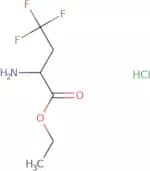
Formula:C3H7ClF3NOPurity:Min. 95%Molecular weight:165.54 g/molEthyl 2-amino-4,4,4-trifluorobutanoate hydrochloride
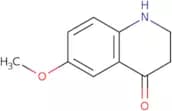
CAS:Versatile small molecule scaffoldFormula:C6H11ClF3NO2Purity:Min. 95%Molecular weight:221.6 g/mol6-Methoxy-2,3-dihydroquinolin-4(1H)-one
CAS:6-Methoxy-2,3-dihydroquinolin-4(1H)-one is a target compound that can be synthesized in an intramolecular condensation process. In this reaction, two molecules of acetone react with each other to form a cyclic six-membered ring. The hydrolysis of the ester bond then releases the desired product. This process is catalyzed by glutathione reductase and requires NADPH as a cofactor.
Formula:C10H11NO2Purity:Min. 95%Molecular weight:177.2 g/mol6-Methylimidazo[2,1-b][1,3]thiazole
CAS:Versatile small molecule scaffold
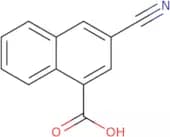
Formula:C6H6N2SPurity:Min. 95%Molecular weight:138.19 g/mol3-Cyanonaphthalene-1-carboxylic acid
CAS:3-Cyanonaphthalene-1-carboxylic acid is a benzyl compound that can be synthesized by the reaction of benzyne with piperazine. It has been shown to have a low yield in research and complicates the operational skeleton. 3-Cyanonaphthalene-1-carboxylic acid is also a subgroup of compounds called tachykinins, which are peptides that activate tachykinin receptors. This chemical is not currently used for commercial purposes, but it may be useful as a starting material for large-scale production of other compounds.Formula:C12H7NO2Purity:Min. 95%Molecular weight:197.19 g/mol2-Amino-2'-methyldiphenyl Ether
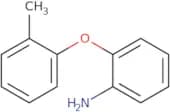
CAS:2-Amino-2'-methyldiphenyl Ether (2-AME) is a hydrosulfide. It is a colorless to pale yellow, oily liquid with an unpleasant odor and low toxicity. 2-AME is soluble in water and polar organic solvents. 2-AME can be used to generate hydrosulfides, such as sodium sulfide, nitro compounds, sulfides, and ethers. These compounds are used in the production of dyes for wool, leather tanning, perfumes and flavors.Formula:C13H13NOPurity:Min. 95%Molecular weight:199.25 g/mol2,4-Dimethyl-1-(prop-2-en-1-yl)benzene
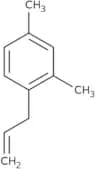
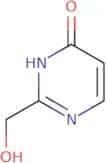
CAS:Versatile small molecule scaffoldFormula:C11H14Purity:Min. 95%Molecular weight:146.23 g/mol2-(Hydroxymethyl)-3,4-dihydropyrimidin-4-one
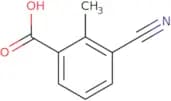
CAS:Versatile small molecule scaffoldFormula:C5H6N2O2Purity:Min. 95%Molecular weight:126.11 g/mol3-Cyano-2-methylbenzoic acid
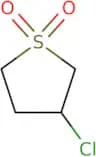
CAS:Versatile small molecule scaffoldFormula:C9H7NO2Purity:Min. 95%Molecular weight:161.16 g/mol3-Chloro-tetrahydro-thiophene 1,1-dioxide
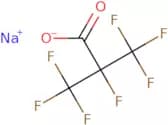
CAS:3-Chloro-tetrahydro-thiophene 1,1-dioxide is a reaction product of aluminum with benzene in the presence of aluminum chloride. This compound is used as an intermediate for the production of sulfonates and homologs. 3-Chloro-tetrahydro-thiophene 1,1-dioxide is also used to produce phenol by reacting with sulfuric acid and chloroform.Formula:C4H7ClO2SPurity:Min. 95%Molecular weight:154.62 g/molSodium 2,3,3,3-tetrafluoro-2-(trifluoromethyl)propanoate
CAS:Versatile small molecule scaffold
Formula:C4F7NaO2Purity:Min. 95%Molecular weight:236.02 g/mol

![6-Methylimidazo[2,1-b][1,3]thiazole](/_next/image/?url=https%3A%2Fstatic.cymitquimica.com%2Fproducts%2F3D%2Fthumb-webp%2FDAA83541.webp&w=3840&q=75)