Building Blocks
This section contains fundamental products for the synthesis of organic and biological compounds. Building blocks are the essential starting materials used to construct complex molecules through various chemical reactions. They play a critical role in drug discovery, material science, and chemical research. At CymitQuimica, we offer a diverse range of high-quality building blocks to support your innovative research and industrial projects, ensuring you have the essential components for successful synthesis.
Subcategories of "Building Blocks"
- Boronic Acids & Boronic Acid Derivatives(5,756 products)
- Chiral Building Blocks(1,242 products)
- Hydrocarbon Building Blocks(6,095 products)
- Organic Building Blocks(61,051 products)
Found 199813 products of "Building Blocks"
Sort by
Purity (%)
0
100
|
0
|
50
|
90
|
95
|
100
2,3,5-Trichloro-6-hydrazinylpyridine
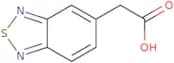
CAS:<p>Versatile small molecule scaffold</p>Formula:C5H4Cl3N3Purity:Min. 95%Molecular weight:212.46 g/mol2-(2,1,3-Benzothiadiazol-5-yl)acetic acid
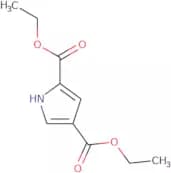
CAS:<p>Versatile small molecule scaffold</p>Formula:C8H6N2O2SPurity:Min. 95%Molecular weight:194.21 g/moldiethyl 1h-pyrrole-2,4-dicarboxylate
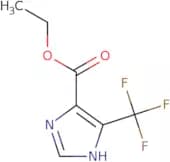
CAS:Diethyl 1H-pyrrole-2,4-dicarboxylate is a reactive and nucleophilic substituent that is used in organic synthesis. It has been shown to undergo substitution reactions with various functional groups, such as alcohols and amines. This compound can also be conjugated with other molecules, such as amino acids. Diethyl 1H-pyrrole-2,4-dicarboxylate is synthesized from pyrrole and diethyl malonate. It has been shown to have optimal activity against caco-2 cells when substituted for the 2,4-dimethoxybenzaldehyde component of the substrate.Formula:C10H13NO4Purity:Min. 95%Molecular weight:211.22 g/molEthyl 4-(trifluoromethyl)-1H-imidazole-5-carboxylate
CAS:<p>Versatile small molecule scaffold</p>Formula:C7H7F3N2O2Purity:Min. 95%Molecular weight:208.14 g/mol1-(2-Bromoethyl)pyrrolidine-2,5-dione
CAS:<p>Versatile small molecule scaffold</p>Formula:C6H8BrNO2Purity:Min. 95%Molecular weight:206.04 g/mol(2S)-2-(Naphthalene-2-sulfonamido)-3-phenylpropanoic acid
CAS:<p>Versatile small molecule scaffold</p>Formula:C19H17NO4SPurity:Min. 95%Molecular weight:355.4 g/mol3-(1,3-Thiazol-2-ylamino)propanoic acid
CAS:<p>Versatile small molecule scaffold</p>Formula:C6H8N2O2SPurity:Min. 95%Molecular weight:172.21 g/molMethyl 3,5-dichlorobenzeneacetate
CAS:<p>Methyl 3,5-dichlorobenzeneacetate is a chemical compound that is used as a reagent for organic synthesis. It is also known as 1,3-dichloro-5-methylbenzeneacetic acid methyl ester and has the chemical formula CHClO. Methyl 3,5-dichlorobenzeneacetate can be prepared by reacting copper with nitrobenzene in the presence of an esterifying agent such as pyridine or acetic anhydride. This chemical has been shown to be useful as a catalyst for biomolecular reactions involving nitrogen sources. Methyl 3,5-dichlorobenzeneacetate can also be used as a nitrogen source in imidazolinones.</p>Formula:C9H8Cl2O2Purity:Min. 95%Molecular weight:219.06 g/mol(1-Chloro-3-methoxypropyl)benzene
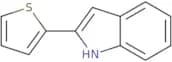
CAS:<p>Versatile small molecule scaffold</p>Formula:C10H13ClOPurity:Min. 95%Molecular weight:184.66 g/mol2-(Thiophen-2-yl)-1H-indole
CAS:<p>2-(Thiophen-2-yl)-1H-indole is a reagent that can be used in the screening of potential anticancer drugs. The compound has been shown to inhibit the growth of cultured human cancer cells by inhibiting the synthesis of DNA. This inhibition is due to its ability to interact with hydrogen bonds and hydrophobic interactions, which are key players in biological activity. 2-(Thiophen-2-yl)-1H-indole is potent against tumor cells and has been shown to have antiangiogenic effects on endothelial cells. This compound also inhibits transcription, leading to an increased number of transcripts.</p>Formula:C12H9NSPurity:Min. 95%Molecular weight:199.27 g/molMethyl 3h-benzo[e]indole-2-carboxylate
CAS:<p>Versatile small molecule scaffold</p>Formula:C14H11NO2Purity:Min. 95%Molecular weight:225.25 g/mol3-Bromooxan-2-one
CAS:<p>Versatile small molecule scaffold</p>Formula:C5H7BrO2Purity:Min. 95%Molecular weight:179.01 g/moltert-Butyl[(4-methylphenyl)methyl]amine
CAS:<p>Versatile small molecule scaffold</p>Formula:C12H19NPurity:Min. 95%Molecular weight:177.29 g/moldibromo-1,3,4-thiadiazole
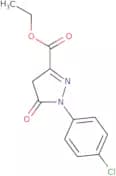
CAS:<p>Dibromo-1,3,4-thiadiazole is a heterocyclic compound. It has been shown that dibromo-1,3,4-thiadiazole can be synthesized by cross-coupling reactions of 2,5-dibromothiophene with pyridine-3-carboxylic acid and 1,2,4-triazole. The crystal x-ray diffraction data for this compound shows that it is a square planar molecule with a potential for a cyclic transition. The molecular formula for dibromo-1,3,4-thiadiazole is C8H6Br2N2S. Dibromo-1,3,4-thiadiazole has been used as a substrate in voltammetry experiments to study the rate of electron transfer between an electrode and the molecule. This process can be followed by observing the change</p>Formula:C2Br2N2SPurity:Min. 95%Molecular weight:243.9 g/molEthyl 1-(4-chlorophenyl)-5-oxo-4,5-dihydro-1H-pyrazole-3-carboxylate
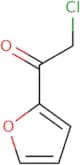
CAS:<p>Versatile small molecule scaffold</p>Formula:C12H11ClN2O3Purity:Min. 95%Molecular weight:266.68 g/mol2-Chloro-1-(furan-2-yl)ethan-1-one
CAS:<p>2-Chloro-1-(furan-2-yl)ethan-1-one is a selenium compound that has been shown to have anti-inflammatory properties. This drug binds to the reactive oxygen species produced by the inflammation and prevents them from damaging cells. 2-Chloro-1-(furan-2-yl)ethan-1-one also has an effect on metabolic disorders, such as diabetes mellitus, where it inhibits the synthesis of amines that can lead to ketosis. It is also used to treat hepatitis, which may be due to its ability to inhibit the growth of bacteria. This drug has been shown to have antimicrobial activity against Mycobacterium avium and other infectious diseases.</p>Formula:C6H5ClO2Purity:Min. 95%Molecular weight:144.55 g/mol2-Iodo-1-(1H-pyrrol-2-yl)ethan-1-one
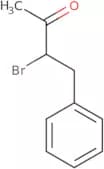
CAS:<p>Versatile small molecule scaffold</p>Formula:C6H6INOPurity:Min. 95%Molecular weight:235.02 g/mol3-Bromo-4-phenylbutan-2-one
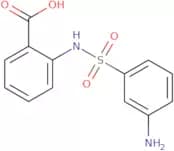
CAS:<p>3-Bromo-4-phenylbutan-2-one is an efficient method for the synthesis of secretory phospholipase A2 (sPLA2) inhibitors. This compound has been shown to inhibit a number of sPLA2 enzymes in vitro and in vivo, including those from human neutrophils, rat peritoneal macrophages, and rat pancreatic acinar cells. 3-Bromo-4-phenylbutan-2-one is hydrolyzed by a number of reagents, including acids and bases. It can also be used as a starting material for the synthesis of potent sPLA2 inhibitors with nonpancreatic activity.</p>Formula:C10H11BrOPurity:Min. 95%Molecular weight:227.1 g/mol2-(3-Amino-benzenesulfonylamino)-benzoic acid
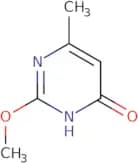
CAS:<p>Versatile small molecule scaffold</p>Formula:C13H12N2O4SPurity:Min. 95%Molecular weight:292.31 g/mol2-Methoxy-6-methyl-4(1H)-pyrimidinone
CAS:<p>Versatile small molecule scaffold</p>Formula:C6H8N2O2Purity:Min. 95%Molecular weight:140.14 g/mol




![Methyl 3h-benzo[e]indole-2-carboxylate](/_next/image/?url=https%3A%2Fstatic.cymitquimica.com%2Fproducts%2F3D%2Fthumb-webp%2FFCA97006.webp&w=3840&q=75)

![tert-Butyl[(4-methylphenyl)methyl]amine](/_next/image/?url=https%3A%2Fstatic.cymitquimica.com%2Fproducts%2F3D%2Fthumb-webp%2FFCA98045.webp&w=3840&q=75)