Building Blocks
This section contains fundamental products for the synthesis of organic and biological compounds. Building blocks are the essential starting materials used to construct complex molecules through various chemical reactions. They play a critical role in drug discovery, material science, and chemical research. At CymitQuimica, we offer a diverse range of high-quality building blocks to support your innovative research and industrial projects, ensuring you have the essential components for successful synthesis.
Subcategories of "Building Blocks"
- Boronic Acids & Boronic Acid Derivatives(5,783 products)
- Chiral Building Blocks(1,242 products)
- Hydrocarbon Building Blocks(6,105 products)
- Organic Building Blocks(61,055 products)
Found 205383 products of "Building Blocks"
Sort by
Purity (%)
0
100
|
0
|
50
|
90
|
95
|
100
5-methyl-2H-benzo[d][1,3]oxazine-2,4(1H)-dione
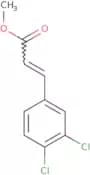
CAS:5-Methyl-2H-benzo[d][1,3]oxazine-2,4(1H)-dione is a synthetic chemical compound that consists of an acid derivative. It is a multistep synthesis involving a reaction between 2-aminoethanol and benzoic acid. The product is isolated as a white solid. It has not been shown to have any biological activity.Formula:C9H7NO3Purity:Min. 95%Molecular weight:177.16 g/molMethyl 3-(3,4-dichlorophenyl)acrylate
CAS:Versatile small molecule scaffoldFormula:C10H8Cl2O2Purity:Min. 95%Molecular weight:231.07 g/mol3-(Propane-2-sulfonyl)benzoic acid
CAS:Versatile small molecule scaffoldFormula:C10H12O4SPurity:Min. 95%Molecular weight:228.27 g/mol2-Methylsulfanyl-5-nitro-pyridine
CAS:Versatile small molecule scaffold
Formula:C6H6N2O2SPurity:Min. 95%Molecular weight:170.19 g/mol2-[(Phenylamino)methyl]aniline
CAS:Versatile small molecule scaffoldFormula:C13H14N2Purity:Min. 95%Molecular weight:198.26 g/mol1-(Furan-2-yl)-2-hydroxypropan-1-one
CAS:Versatile small molecule scaffold
Formula:C7H8O3Purity:Min. 95%Molecular weight:140.14 g/mol6-Methyl-2,3-dihydro-1-benzofuran-3-one
CAS:6-Methyl-2,3-dihydro-1-benzofuran-3-one is a heterocyclic compound that is oxidized to the corresponding carboxylic acid by treatment with sodium hypochlorite in the presence of hydrochloric acid. This reaction is an example of cyclocondensation. The initial product is an anhydride, which reacts with one molecule of the other reactant to form a condensation product.Formula:C9H8O2Purity:Min. 95%Molecular weight:148.16 g/mol1-(2-Chloro-6-nitrophenyl)ethan-1-one
CAS:Versatile small molecule scaffoldFormula:C8H6ClNO3Purity:Min. 95%Molecular weight:199.59 g/mol1-(2-Amino-6-chlorophenyl)ethan-1-one
CAS:Versatile small molecule scaffold
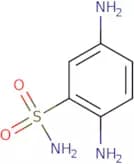
Formula:C8H8ClNOPurity:Min. 95%Molecular weight:169.61 g/mol2,5-Diaminobenzenesulfonamide
CAS:Versatile small molecule scaffold
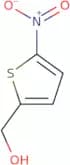
Formula:C6H9N3O2SPurity:Min. 95%Molecular weight:187.22 g/mol(5-Nitrothiophen-2-yl)methanol
CAS:5-Nitrothiophen-2-yl)methanol is a synthetic compound that is used in the synthesis of prednisolone. It has been shown to be bioreductive, meaning that it can be reduced by cytochrome P450 enzymes and other reductases. 5-Nitrothiophen-2-yl)methanol reduces nitro groups on a variety of substrates, including steroids, which are conjugated with glutathione or glucuronic acid. This product also has been shown to reduce chloride ions inside cells and vessels, leading to vasoconstriction. The microenvironment around the tumor may lead to cancer development.Formula:C5H5NO3SPurity:Min. 95%Molecular weight:159.17 g/mol1-Butoxynaphthalene
CAS:Versatile small molecule scaffold
Formula:C14H16OPurity:Min. 95%Molecular weight:200.28 g/mol3-Bromo-4-(methylsulfanyl)aniline
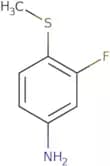
CAS:Versatile small molecule scaffoldFormula:C7H8BrNSPurity:Min. 95%Molecular weight:218.12 g/mol3-Fluoro-4-(methylsulfanyl)aniline
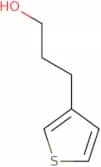
CAS:Versatile small molecule scaffoldFormula:C7H8FNSPurity:Min. 95%Molecular weight:157.21 g/mol3-(3-Thienyl)-1-propanol
CAS:3-(3-Thienyl)-1-propanol is a pinacol derivative that has been synthesized with a boronic acid. 3-(3-Thienyl)-1-propanol is also a functional monomer that can be used in polymerization reactions. This compound has been shown to react with diarylated compounds and undergo coupling reactions with boronic acid, which can lead to the formation of diarylated boronic esters. 3-(3-Thienyl)-1-propanol is also known for its ability to form pinacol esters through the use of miyaura coupling reactions. Due to its electron donating properties, this compound may be useful for spectroscopies such as Fourier transform infrared spectroscopy and nuclear magnetic resonance spectroscopy.Formula:C7H10OSPurity:Min. 95%Molecular weight:142.22 g/mol5-(3-Thienyl)pentanoic acid
CAS:Versatile small molecule scaffold
Formula:C9H12O2SPurity:Min. 95%Molecular weight:184.26 g/molRef: 3D-VAA90604
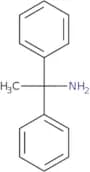
1gTo inquire5gTo inquire10gTo inquire5mg200.00€50mg715.00€250mgTo inquire500mgTo inquire1,1-Diphenylethan-1-amine
CAS:Versatile small molecule scaffold
Formula:C14H15NPurity:Min. 95%Molecular weight:197.27 g/molethyl 2-methylcyclopropane-1-carboxylate
CAS:Ethyl 2-methylcyclopropane-1-carboxylate is a carboxylic acid with a cyclobutane ring. It is used in the synthesis of various chemical compounds, including ester, acid, and ester derivatives. This compound can be found as an extract from seeds. GC/MS analysis of this compound has been shown to produce peaks at retention times of 10.7 minutes for the methyl ester and 11.8 minutes for the butyl ester, respectively. The chemical formula of ethyl 2-methylcyclopropane-1-carboxylate is C12H22O3.Formula:C7H12O2Purity:Min. 95%Molecular weight:128.16 g/molN-Nitrosoheptamethyleneimine
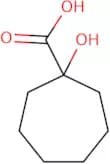
CAS:N-Nitrosoheptamethyleneimine is a nitrosamine that has been shown to be a potent inhibitor of HIV infection. This compound binds to the hydroxyl group on the skin cells and interacts with a redox cycle, which is an electron transfer process in which electrons are transferred between chemical species. The oxidation catalyst reacts with the compound and converts it into nitrous acid, which can then react with other compounds such as formaldehyde to produce carcinogenic nitrosamines. N-Nitrosoheptamethyleneimine has also been shown to cause cancer by reacting with amides, which can lead to DNA mutation and cell proliferation. It has been shown that this compound may have beneficial effects for congestive heart failure patients when combined with hydrochloric acid.Formula:C7H14N2OPurity:Min. 95%Molecular weight:142.2 g/mol1-Hydroxycycloheptanecarboxylic acid
CAS:1-Hydroxycycloheptanecarboxylic acid is a carboxylic acid that has been synthesized through the reaction of 1,1,1,3,3-pentafluoro-2-(trifluoromethyl)propane with cyclohexanone. The molecule has a carbocation at the beta position and an alcohol group at the alpha position. The compound was synthesized in order to maximize the absorbance of this molecule in the UV region. The spectra show maxima at 232 nm and 228 nm, which correspond to the C=O stretch and the C-F stretch respectively. This compound is thermodynamically stable and can be used as a superacidic solvent for many organic compounds.Formula:C8H14O3Purity:Min. 95%Molecular weight:158.19 g/mol
![5-methyl-2H-benzo[d][1,3]oxazine-2,4(1H)-dione](/_next/image/?url=https%3A%2Fstatic.cymitquimica.com%2Fproducts%2F3D%2Fthumb-webp%2FVAA87781.webp&w=3840&q=75)



![2-[(Phenylamino)methyl]aniline](/_next/image/?url=https%3A%2Fstatic.cymitquimica.com%2Fproducts%2F3D%2Fthumb-webp%2FVAA88706.webp&w=3840&q=75)