Building Blocks
This section contains fundamental products for the synthesis of organic and biological compounds. Building blocks are the essential starting materials used to construct complex molecules through various chemical reactions. They play a critical role in drug discovery, material science, and chemical research. At CymitQuimica, we offer a diverse range of high-quality building blocks to support your innovative research and industrial projects, ensuring you have the essential components for successful synthesis.
Subcategories of "Building Blocks"
- Boronic Acids & Boronic Acid Derivatives(5,784 products)
- Chiral Building Blocks(1,243 products)
- Hydrocarbon Building Blocks(6,105 products)
- Organic Building Blocks(61,066 products)
Found 205426 products of "Building Blocks"
Sort by
Purity (%)
0
100
|
0
|
50
|
90
|
95
|
100
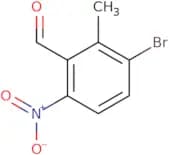
3-bromo-2-methyl-6-nitrobenzaldehyde
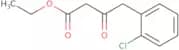
CAS:Versatile small molecule scaffoldFormula:C8H6BrNO3Purity:Min. 95%Molecular weight:244 g/mol4-(2-Chloro-phenyl)-3-oxo-butyric acid ethyl ester
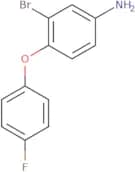
CAS:Versatile small molecule scaffoldFormula:C12H13ClO3Purity:Min. 95%Molecular weight:240.68 g/mol3-Bromo-4-(4-fluorophenoxy)aniline
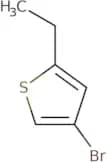
CAS:Versatile small molecule scaffoldFormula:C12H9BrFNOPurity:Min. 95%Molecular weight:282.11 g/mol4-Bromo-2-ethylthiophene
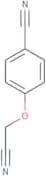
CAS:Versatile small molecule scaffoldFormula:C6H7BrSPurity:Min. 95%Molecular weight:191.09 g/mol4-(Cyanomethoxy)benzonitrile
CAS:Versatile small molecule scaffold
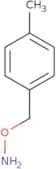
Formula:C9H6N2OPurity:Min. 95%Molecular weight:158.16 g/molO-(4-Methyl-benzyl)-hydroxylamine
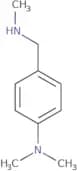
CAS:Versatile small molecule scaffoldFormula:C8H11NOPurity:Min. 95%Molecular weight:137.18 g/molN,N-Dimethyl-4-((methylamino)methyl)aniline
CAS:Versatile small molecule scaffold
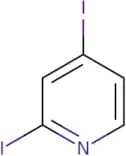
Formula:C10H16N2Purity:Min. 95%Molecular weight:164.25 g/mol2,4-Diiodopyridine
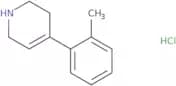
CAS:Versatile small molecule scaffoldFormula:C5H3I2NPurity:Min. 95%Molecular weight:330.89 g/mol4-(2-Methylphenyl)-1,2,3,6-tetrahydropyridine hydrochloride
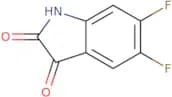
CAS:Versatile small molecule scaffoldFormula:C12H16ClNPurity:Min. 95%Molecular weight:209.71 g/mol5,6-difluoroisoindoline-1,3-dione
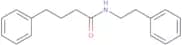
CAS:Versatile small molecule scaffoldFormula:C8H3F2NO2Purity:Min. 95%Molecular weight:183.11 g/mol4-Phenyl-N-(2-phenylethyl)butanamide
CAS:Versatile small molecule scaffoldFormula:C18H21NOPurity:Min. 95%Molecular weight:267.4 g/mol1-Bromo-3-(ethylsulfanyl)propane
CAS:Versatile small molecule scaffold
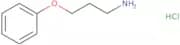
Formula:C5H11BrSPurity:Min. 95%Molecular weight:183.11 g/mol(3-Aminopropoxy)benzene hydrochloride
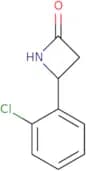
CAS:Versatile small molecule scaffoldFormula:C9H14ClNOPurity:Min. 95%Molecular weight:187.67 g/mol4-(2-Chlorophenyl)azetidin-2-one
CAS:Versatile small molecule scaffold
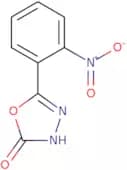
Formula:C9H8ClNOPurity:Min. 95%Molecular weight:181.62 g/mol5-(2-Nitrophenyl)-3H-1,3,4-oxadiazol-2-one
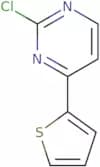
CAS:Versatile small molecule scaffoldFormula:C8H5N3O4Purity:Min. 95%Molecular weight:207.14 g/mol2-chloro-4-(thiophen-2-yl)pyrimidine
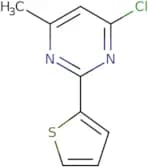
CAS:Versatile small molecule scaffoldFormula:C8H5ClN2SPurity:Min. 95%Molecular weight:196.65 g/mol4-Chloro-6-methyl-2-(thiophen-2-yl)pyrimidine
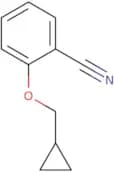
CAS:Versatile small molecule scaffoldFormula:C9H7ClN2SPurity:Min. 95%Molecular weight:210.68 g/mol2-(Cyclopropylmethoxy)benzonitrile
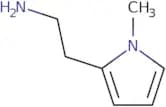
CAS:Versatile small molecule scaffoldFormula:C11H11NOPurity:Min. 95%Molecular weight:173.21 g/mol2-(1-Methyl-1H-pyrrol-2-yl)ethanamine
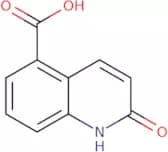
CAS:2-(1-Methyl-1H-pyrrol-2-yl)ethanamine (MPEA) is a tetracoordinated cationic aminopyridine with a dimeric structure. It reacts with x-rays, showing an X-ray diffraction pattern. The crystallographic data for MPEA can be found in the PDB database under accession code 3AB6. MPEA is also synthesized from 1,4-dimethylpyrrole and ethylamine in a two step procedure with high yields. The reactivity of MPEA has been studied by reacting it with aminopyridines or amino groups and observing the products formed as well as the equilibrium conditions.Formula:C7H12N2Purity:Min. 95%Molecular weight:124.19 g/mol2-Hydroxyquinoline-5-carboxylic acid
CAS:Quinoline-5-carboxylic acid is a compound that has been studied for its use as an ionic liquid. It can be used in experiments to study the selectivity of 2-hydroxyquinoline-5-carboxylic acid in terms of density, thermally, and isotherms. The uptake and binding sites of 2-hydroxyquinoline-5-carboxylic acid are also being researched. This compound is stable and has a high selectivity for nitrogen adsorption.Formula:C10H7NO3Purity:Min. 95%Molecular weight:189.17 g/mol