Building Blocks
This section contains fundamental products for the synthesis of organic and biological compounds. Building blocks are the essential starting materials used to construct complex molecules through various chemical reactions. They play a critical role in drug discovery, material science, and chemical research. At CymitQuimica, we offer a diverse range of high-quality building blocks to support your innovative research and industrial projects, ensuring you have the essential components for successful synthesis.
Subcategories of "Building Blocks"
- Boronic Acids & Boronic Acid Derivatives(5,778 products)
- Chiral Building Blocks(1,242 products)
- Hydrocarbon Building Blocks(6,098 products)
- Organic Building Blocks(61,059 products)
Found 199580 products of "Building Blocks"
Sort by
Purity (%)
0
100
|
0
|
50
|
90
|
95
|
100
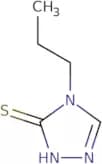
4-Propyl-4H-1,2,4-triazole-3-thiol
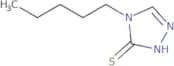
CAS:Versatile small molecule scaffoldFormula:C5H9N3SPurity:Min. 95%Molecular weight:143.21 g/mol4-Pentyl-4H-1,2,4-triazole-3-thiol
CAS:<p>Versatile small molecule scaffold</p>Formula:C7H13N3SPurity:Min. 95%Molecular weight:171.27 g/mol4-Butyl-5-mercapto-4H-1,2,4-triazol-3-ol
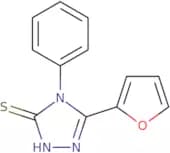
CAS:<p>Versatile small molecule scaffold</p>Formula:C6H11N3OSPurity:Min. 95%Molecular weight:173.24 g/mol5-(Furan-2-yl)-4-phenyl-4H-1,2,4-triazole-3-thiol
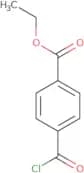
CAS:Versatile small molecule scaffoldFormula:C12H9N3OSPurity:Min. 95%Molecular weight:243.29 g/molEthyl 4-(carbonochloridoyl)benzoate
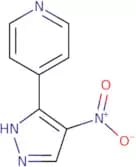
CAS:<p>Versatile small molecule scaffold</p>Formula:C10H9ClO3Purity:Min. 95%Molecular weight:212.63 g/mol4-(4-Nitro-1H-pyrazol-3-yl)pyridine
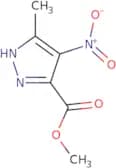
CAS:Versatile small molecule scaffoldFormula:C8H6N4O2Purity:Min. 95%Molecular weight:190.16 g/molMethyl 5-methyl-4-nitro-1H-pyrazole-3-carboxylate
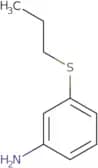
CAS:Versatile small molecule scaffoldFormula:C6H7N3O4Purity:Min. 95%Molecular weight:185.14 g/mol3-(Propylsulfanyl)aniline
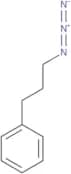
CAS:Versatile small molecule scaffoldFormula:C9H13NSPurity:Min. 95%Molecular weight:167.27 g/mol(3-Azidopropyl)benzene
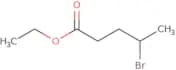
CAS:<p>Versatile small molecule scaffold</p>Formula:C9H11N3Purity:Min. 95%Molecular weight:161.2 g/molEthyl 4-bromopentanoate
CAS:<p>Ethyl 4-bromopentanoate is an organic compound that belongs to the class of compounds called ketones. It is a colorless liquid with a fruity odor. The compound is used in the synthesis of polycyclic aromatic hydrocarbons, such as tetrahydrocarbazoles and adducts with dienophiles. This active form can be synthesized by Wittig reaction using dimethyl acetylenedicarboxylate and an annulated alkyl halide as the starting materials.</p>Formula:C7H13BrO2Purity:Min. 95%Molecular weight:209.08 g/mol4-Phenylimidazolidin-2-one
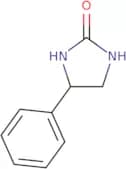
CAS:<p>4-Phenylimidazolidin-2-one is a prodrug that is converted to an active form by hydrolysis. This compound has antiviral potency and a detection time of 1 to 4 hours. 4-Phenylimidazolidin-2-one is used as an antiviral agent for the treatment of influenza A and B. It also has anticancer activity, which may be due to its ability to inhibit allosteric binding sites on proteins such as human epidermal growth factor receptor 2 (HER2) and vascular endothelial growth factor receptor 2 (VEGFR2). It has been shown to be effective against cancer cells in vitro and in vivo, including the highly aggressive tumor cell line sw620. The mechanism of action for the anticancer activity of 4-phenylimidazolidin-2-one may be through the inhibition of protein kinase C (PKC) and phospholipase C (PLC), which are</p>Formula:C9H10N2OPurity:Min. 95%Molecular weight:162.19 g/mol(z)-Ethyl 2-chloro-2-(2-(4-chlorophenyl)hydrazono)acetate
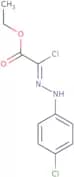
CAS:(Z)-Ethyl 2-chloro-2-(2-(4-chlorophenyl)hydrazono)acetate is a cyclic molecule with a planar geometry. The molecule has a hydrogen bond between the carboxyl and amino groups, which provides stability. It also has an aromatic ring, which is planar and coplanar in shape. The monoclinic structure of the molecule results in torsion angles that are dihedral. This chemical compound is a polymer with substituents on each carbon atom.Formula:C10H10Cl2N2O2Purity:Min. 95%Molecular weight:261.1 g/mol5-Methyl-N-(propan-2-yl)-1,2-oxazole-3-carboxamide
CAS:<p>Versatile small molecule scaffold</p>Formula:C8H12N2O2Purity:Min. 95%Molecular weight:168.19 g/molBenzo[d]isothiazole-3(2H)-thione 1,1-dioxide
CAS:Benzo[d]isothiazole-3(2H)-thione 1,1-dioxide is a molecule that crystallizes as the sodium salt. The crystal structure was determined by x-ray diffraction and found to be orthorhombic with space group Pna2 1 . The molecular geometry was studied using experimental studies and calculated from the diffraction data. It has been shown that benzo[d]isothiazole-3(2H)-thione 1,1-doxide can form hydrogen bonds with water molecules in the crystal lattice. There are two possible geometries for this molecule: one where the hydrogen atom is above the plane of the thione ring, and one where it is below.Formula:C7H5NO2S2Purity:Min. 95%Molecular weight:199.24 g/mol5-Methoxy-3,3-dimethyl-5-oxopentanoic acid
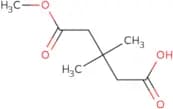
CAS:<p>Versatile small molecule scaffold</p>Formula:C8H14O4Purity:Min. 95%Molecular weight:174.19 g/mol2-Oxo-1H,2H,5H,7H,8H-pyrano[4,3-b]pyridine-3-carbonitrile
CAS:Versatile small molecule scaffoldFormula:C9H8N2O2Purity:Min. 95%Molecular weight:176.17 g/mol1,10-Diazatricyclo[6.4.1.0,4,13]trideca-2,4,6,8(13)-tetraene
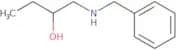
CAS:<p>Versatile small molecule scaffold</p>Formula:C11H12N2Purity:Min. 95%Molecular weight:172.23 g/mol1-(Benzylamino)butan-2-ol
CAS:<p>Versatile small molecule scaffold</p>Formula:C11H17NOPurity:Min. 95%Molecular weight:179.26 g/mol4-(2-Chloroethyl)-1,2-dimethoxybenzene
CAS:<p>4-(2-Chloroethyl)-1,2-dimethoxybenzene is a cyanoalkyl, carboxyalkyl, and signifies. It is a residue that has high yield in the synthesis of hypotensive drugs. It is also a 6-membered cycloalkenyl with aromatic properties. The hydrogenation reaction with pectoris provides 4-(2-chloroethyl)-1,2-dimethoxybenzene with its desired structure. IVAbradine is one such drug synthesized from this chemical compound.</p>Formula:C10H13ClO2Purity:Min. 95%Molecular weight:200.66 g/mol3,6-Dichloro-2-hydroxybenzaldehyde
CAS:<p>Versatile small molecule scaffold</p>Formula:C7H4Cl2O2Purity:Min. 95%Molecular weight:191.01 g/mol


![Benzo[d]isothiazole-3(2H)-thione 1,1-dioxide](/_next/image/?url=https%3A%2Fstatic.cymitquimica.com%2Fproducts%2F3D%2Fthumb-webp%2FCBA14803.webp&w=3840&q=75)
![2-Oxo-1H,2H,5H,7H,8H-pyrano[4,3-b]pyridine-3-carbonitrile](/_next/image/?url=https%3A%2Fstatic.cymitquimica.com%2Fproducts%2F3D%2Fthumb-webp%2FCBA15209.webp&w=3840&q=75)
![1,10-Diazatricyclo[6.4.1.0,4,13]trideca-2,4,6,8(13)-tetraene](/_next/image/?url=https%3A%2Fstatic.cymitquimica.com%2Fproducts%2F3D%2Fthumb-webp%2FCBA15893.webp&w=3840&q=75)