Building Blocks
This section contains fundamental products for the synthesis of organic and biological compounds. Building blocks are the essential starting materials used to construct complex molecules through various chemical reactions. They play a critical role in drug discovery, material science, and chemical research. At CymitQuimica, we offer a diverse range of high-quality building blocks to support your innovative research and industrial projects, ensuring you have the essential components for successful synthesis.
Subcategories of "Building Blocks"
- Boronic Acids & Boronic Acid Derivatives(5,778 products)
- Chiral Building Blocks(1,242 products)
- Hydrocarbon Building Blocks(6,098 products)
- Organic Building Blocks(61,059 products)
Found 199580 products of "Building Blocks"
Sort by
Purity (%)
0
100
|
0
|
50
|
90
|
95
|
100
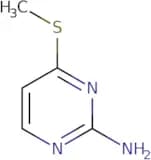
4-(Methylsulfanyl)pyrimidin-2-amine
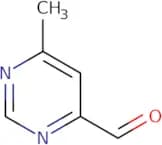
CAS:<p>4-(Methylsulfanyl)pyrimidin-2-amine is a benzoyl derivative of pyrimidin-2-amine. It is a heterocyclic compound that can be synthesized from the reaction of cyanamide and benzoyl chloride. 4-(Methylsulfanyl)pyrimidin-2-amine is used as an intermediate in organic synthesis to produce other compounds.</p>Formula:C5H7N3SPurity:Min. 95%Molecular weight:141.2 g/mol6-Methylpyrimidine-4-carbaldehyde
CAS:<p>Versatile small molecule scaffold</p>Formula:C6H6N2OPurity:Min. 95%Molecular weight:122.12 g/mol(1-Bromoethyl)cyclohexane
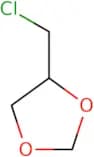
CAS:<p>Versatile small molecule scaffold</p>Formula:C8H15BrPurity:Min. 95%Molecular weight:191.11 g/mol4-(Chloromethyl)-1,3-dioxolane
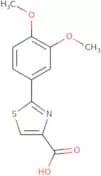
CAS:<p>4-(Chloromethyl)-1,3-dioxolane is an active compound that belongs to the group of alkylation agents. It reacts with amines to form a new carbon-carbon bond between the amine nitrogen and the carbonyl oxygen. This reaction is called alkylation. The polyvinylchloride (PVC) model system was used to show the functional groups of this compound. The chlorine atom in 4-(chloromethyl)-1,3-dioxolane reacts with acid moieties in PVC to form chloroform and hydrogen chloride gas. The carboxylic acid moieties react with alkanolamide, which is a base, to form esterified products.</p>Formula:C4H7ClO2Purity:Min. 95%Molecular weight:122.55 g/mol2-(3,4-Dimethoxyphenyl)-1,3-thiazole-4-carboxylicacid
CAS:<p>Versatile small molecule scaffold</p>Formula:C12H11NO4SPurity:Min. 95%Molecular weight:265.29 g/mol6-(Dimethylamino)hexanoic acid
CAS:<p>Versatile small molecule scaffold</p>Formula:C8H17NO2Purity:Min. 95%Molecular weight:159.23 g/molCyclophosphamide Related Compound C
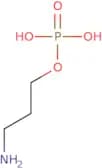
CAS:<p>Cyclophosphamide Related Compound C is a potent retinoic acid agonist. It is a white to yellowish crystalline compound, soluble in ether, acetone and chloroform. Cyclophosphamide Related Compound C has been shown to have skin care effects by reducing the production of sebum and regulating the production of melanin. It also has an anti-inflammatory effect on the skin by inhibiting prostaglandin synthesis. Cyclophosphamide Related Compound C also regulates the activity of retinoic acid receptors, which may be useful for treatment of acne or psoriasis.</p>Formula:C3H10NO4PPurity:Min. 95%Molecular weight:155.09 g/mol1,1,1,3-Tetrachloropropane
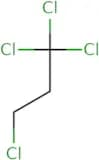
CAS:<p>1,1,1,3-Tetrachloropropane is a chlorinated hydrocarbon that has been shown to be toxic to animals. It causes liver lesions in rats and has been shown to cause cardiac arrhythmias in dogs. 1,1,1,3-Tetrachloropropane is not an ozone depleter. 1,1,1,3-Tetrachloropropane has a low viscosity and high solubility in water. The compound can exist as three isomers: the cis form (CClCHCl), the trans form (CClCHBr) and the mixed form (CCLCHCl). The mixed form of 1,1,1,3-tetrachloropropane is more active than either of the other two forms and is more readily absorbed from the gastrointestinal tract into the blood stream. It also breaks down more slowly than either of its two isomers.</p>Formula:C3H4Cl4Purity:Min. 95%Molecular weight:181.87 g/molMonoethyl Glutarate
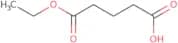
CAS:<p>Monoethyl glutarate is a chemical compound that is used as an antimicrobial agent. It is soluble in water and has shown to have a broad spectrum of activity against bacteria, fungi, and algae. Monoethyl glutarate is also used as a pharmaceutical preparation in dry weight preparations and ionotropic gelation. The mechanism of action of this compound is not fully understood, but it has been shown to bind with naphthalene with the formation of a bicyclic heterocycle. This binding leads to the inhibition of enzymes such as fatty acid synthase, which are involved in the production of prostaglandins. Monoethyl glutarate may also act by forming an unsaturated alkyl group or by blocking the synthesis of fatty acids or phospholipids on the cell membrane surface.</p>Formula:C7H12O4Purity:Min. 95%Molecular weight:160.17 g/mol2-(Diethylamino)ethyl Bromide Hydrobromide
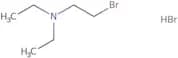
CAS:Bromodiethylamine is a bromination product that is used in the synthesis of 2-(diethylamino)ethyl bromide hydrobromide. This compound is used in clinical diagnostics to detect the presence of tuberculosis by reacting with primary amino groups and ethyl bromoacetate functional groups. Bromodiethylamine also reacts with hydroxyl groups, reactive alkynyl groups, and conjugates to form ion-exchange resins for immobilized use.Formula:C6H14BrN·HBrPurity:Min. 95%Molecular weight:261 g/molIsobutyl 2-cyanoacrylate
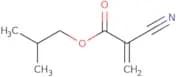
CAS:<p>Isobutyl 2-cyanoacrylate is a monomer that has been used in the clinical setting for the repair of tissue defects. It is an alkyl ester of acrylic acid, which reacts with water to form an acrylate polymer. Isobutyl 2-cyanoacrylate can also be used as a tissue growth factor because it stimulates the growth and proliferation of cells. Isobutyl 2-cyanoacrylate has antimicrobial activity against Gram-positive bacteria and fungi. It has also shown anti-inflammatory properties and may be useful for embolization or angiography procedures.</p>Formula:C8H11NO2Purity:Min. 95%Color and Shape:Clear LiquidMolecular weight:153.18 g/molDiethyl (prop-1-yn-1-yl)phosphonate
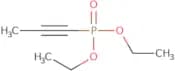
CAS:<p>Diethyl (prop-1-yn-1-yl)phosphonate is an organic compound that belongs to the class of propargylic compounds. It is a colorless liquid with a boiling point of 56°C. Diethyl (prop-1-yn-1-yl)phosphonate can be used as a reagent for hydrozirconation and as an adduct in organic chemistry. This compound can be hydrolyzed to form diethyl phosphite, which has been shown to react with alcohols, amines, and thiols.</p>Formula:C7H13O3PPurity:Min. 95%Molecular weight:176.15 g/molDiethyl Allylphosphonate
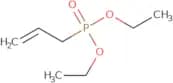
CAS:<p>Diethyl allylphosphonate is a cross-linking agent that has been shown to inhibit HIV infection. It is a macrocyclic inhibitor that binds to the active site of the protease enzyme, preventing it from cleaving the viral polyprotein into its constituent proteins. The chemical stability of diethyl allylphosphonate and its biological properties make it an efficient method for inhibiting HIV.</p>Formula:C7H15O3PPurity:Min. 95%Molecular weight:178.17 g/molTetrahydropyran-4-ylmethyl methanesulfonate
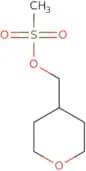
CAS:<p>Versatile small molecule scaffold</p>Formula:C7H14O4SPurity:Min. 95%Molecular weight:194.25 g/molMordant Blue 13
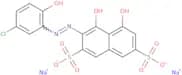
CAS:<p>Mordant Blue 13 is a mordant dye that is used in the textile industry for the dying of wool. It has been shown to have physiological activities such as adhesion prevention and anti-viral properties. Mordant Blue 13 is also used as a diagnostic agent to detect damaged tissue and measure the degree of damage. Langmuir adsorption isotherms have shown that Mordant Blue 13 has an affinity for virus particles, which can be used to control viral infections. Metallochromic dyes are blue or violet dyes that change color depending on pH, which can be used to measure enzymatic reactions. Mordant Blue 13 also has optical properties such as colorants and fluorescence emission.</p>Formula:C16H9ClN2O9S2·2NaPurity:Min. 95%Molecular weight:518.82 g/mol3-(4-Ethoxyphenyl)-2-thioxo-2,3-dihydroquinazolin-4(1H)-one
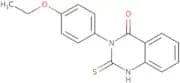
CAS:<p>Versatile small molecule scaffold</p>Formula:C16H14N2O2SPurity:Min. 95%Molecular weight:298.36 g/mol3-(4-methoxyphenyl)-2-thioxo-1,3-dihydroquinazolin-4-one
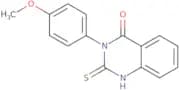
CAS:Versatile small molecule scaffoldFormula:C15H12N2O2SPurity:Min. 95%Molecular weight:284.3 g/molMethyl 2-amino-2-(thiophen-2-yl)acetate hydrochloride
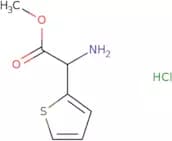
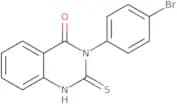
CAS:<p>Versatile small molecule scaffold</p>Formula:C7H10ClNO2SPurity:Min. 95%Molecular weight:207.68 g/mol3-(4-Bromophenyl)-2-thioxo-2,3-dihydroquinazolin-4(1H)-one
CAS:<p>3-(4-Bromophenyl)-2-thioxo-2,3-dihydroquinazolin-4(1H)-one is a compound with disorder. It crystallizes in the monoclinic space group P21/c and has a pairwise stabilized crystal structure. 3-(4-Bromophenyl)-2-thioxo-2,3-dihydroquinazolin-4(1H)-one is stable as dimers and amides, which are linked by hydrogen bonds. The amide bond distance is 1.47 Å. The dihedral angle between substituents is 99° and it has an HOMO energy level of -5.94 eV, making it a hole acceptor. 3-(4-Bromophenyl)-2-thioxo-2,3-dihydroquinazolin-4(1H)-one has the following crystal structures:</p>Formula:C14H9BrN2OSPurity:Min. 95%Molecular weight:333.2 g/molethyl 1-benzyl-4-oxo-pyrrolidine-3-carboxylate
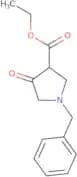
CAS:<p>Versatile small molecule scaffold</p>Formula:C14H17NO3Purity:Min. 95%Molecular weight:247.29 g/mol