Building Blocks
This section contains fundamental products for the synthesis of organic and biological compounds. Building blocks are the essential starting materials used to construct complex molecules through various chemical reactions. They play a critical role in drug discovery, material science, and chemical research. At CymitQuimica, we offer a diverse range of high-quality building blocks to support your innovative research and industrial projects, ensuring you have the essential components for successful synthesis.
Subcategories of "Building Blocks"
- Boronic Acids & Boronic Acid Derivatives(5,778 products)
- Chiral Building Blocks(1,243 products)
- Hydrocarbon Building Blocks(6,097 products)
- Organic Building Blocks(61,048 products)
Found 203115 products of "Building Blocks"
Sort by
Purity (%)
0
100
|
0
|
50
|
90
|
95
|
100
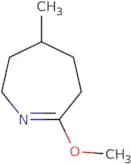
7-Methoxy-4-methyl-3,4,5,6-tetrahydro-2H-azepine
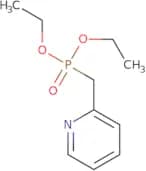
CAS:Versatile small molecule scaffoldFormula:C8H15NOPurity:Min. 95%Molecular weight:141.21 g/molDiethyl (pyridin-2-ylmethyl)phosphonate
CAS:Diethyl (pyridin-2-ylmethyl)phosphonate is a ligand that forms hydrogen bonds with water molecules. This compound is a mononuclear, diamagnetic, and non-planar molecule with two chloride atoms and one nitrogen atom coordinated to the phosphorus. Diethyl (pyridin-2-ylmethyl)phosphonate has been shown to chelate metal ions in coordination complexes and can be used as an organic ligand in crystal x-ray diffraction studies of organic compounds.Formula:C10H16NO3PPurity:Min. 95%Molecular weight:229.21 g/molDiethyl (2-hydroxyethyl)phosphonate
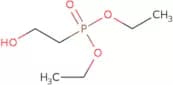
CAS:<p>Diethyl (2-hydroxyethyl)phosphonate is an intramolecular nucleophilic compound that contains a diethylamino group. Diethyl (2-hydroxyethyl)phosphonate is soluble in water and insoluble in organic solvents, with a ph range of 2 to 11. Diethyl (2-hydroxyethyl)phosphonate is used as a catalyst for organic reactions, such as the hydrolysis of esters. It also catalyzes the reaction between dialkylamines and amino compounds to form amides. This compound has been shown to be a good model for the synthesis of amino groups.</p>Formula:C6H15O4PPurity:Min. 95%Molecular weight:182.15 g/mol4-(Trifluoromethyl)-2-pyrrolidinone
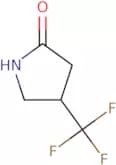
CAS:Versatile small molecule scaffoldFormula:C5H6F3NOPurity:Min. 95%Molecular weight:153.1 g/moltert-Butyl N-[(1S,3R)-3-(hydroxymethyl)cyclopentyl]carbamate
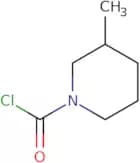
CAS:Versatile small molecule scaffoldFormula:C11H21NO3Purity:Min. 95%Molecular weight:215.29 g/mol3-Methylpiperidine-1-carbonyl chloride
CAS:Versatile small molecule scaffoldFormula:C7H12ClNOPurity:Min. 95%Molecular weight:161.63 g/molN-[3,3-Dimethyl-1-(1H-pyrazol-1-yl)butan-2-ylidene]hydroxylamine
CAS:Versatile small molecule scaffoldFormula:C9H15N3OPurity:Min. 95%Molecular weight:181.23 g/mol3-Methyl-1-(1H-pyrazol-1-yl)butan-2-one
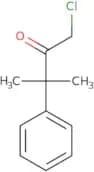
CAS:Versatile small molecule scaffoldFormula:C8H12N2OPurity:Min. 95%Molecular weight:152.19 g/mol1-Chloro-3-methyl-3-phenylbutan-2-one
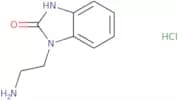
CAS:Versatile small molecule scaffoldFormula:C11H13ClOPurity:Min. 95%Molecular weight:196.67 g/mol1-(2-Aminoethyl)-2,3-dihydro-1H-1,3-benzodiazol-2-one hydrochloride
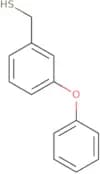
CAS:<p>Versatile small molecule scaffold</p>Formula:C9H12ClN3OPurity:Min. 95%Molecular weight:213.67 g/mol(3-Phenoxyphenyl)methanethiol
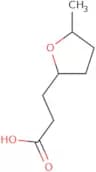
CAS:<p>Versatile small molecule scaffold</p>Formula:C13H12OSPurity:Min. 95%Molecular weight:216.3 g/mol3-(5-Methyloxolan-2-yl)propanoic acid
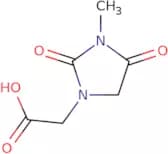
CAS:<p>Versatile small molecule scaffold</p>Formula:C8H14O3Purity:Min. 95%Molecular weight:158.19 g/mol2-(3-Methyl-2,4-dioxoimidazolidin-1-yl)acetic acid
CAS:Versatile small molecule scaffoldFormula:C6H8N2O4Purity:Min. 95%Molecular weight:172.14 g/molEthyl imidazo[1,2-a]pyrimidine-3-carboxylate
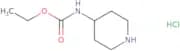
CAS:Versatile small molecule scaffoldFormula:C9H9N3O2Purity:Min. 95%Molecular weight:191.19 g/molEthyl piperidin-4-ylcarbamate hydrochloride
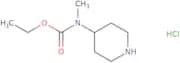
CAS:Versatile small molecule scaffoldFormula:C8H17ClN2O2Purity:Min. 95%Molecular weight:208.68 g/molEthyl N-methyl-N-(piperidin-4-yl)carbamate hydrochloride
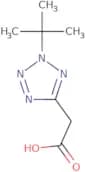
CAS:<p>Versatile small molecule scaffold</p>Formula:C9H19ClN2O2Purity:Min. 95%Molecular weight:222.71 g/mol2-(2-tert-Butyl-2H-1,2,3,4-tetrazol-5-yl)acetic acid
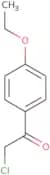
CAS:Versatile small molecule scaffoldFormula:C7H12N4O2Purity:Min. 95%Molecular weight:184.2 g/mol2-Chloro-1-(4-ethoxyphenyl)ethan-1-one
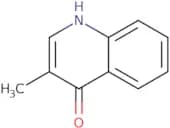
CAS:<p>2-Chloro-1-(4-ethoxyphenyl)ethan-1-one is a hydrocarbon radical that is used as a vitamin and in the synthesis of other molecules. This molecule has a covalent bond between the two chlorine atoms and one carbon atom. The hydrocarbon radical is also present in many hydrocarbons.</p>Formula:C10H11ClO2Purity:Min. 95%Molecular weight:198.64 g/mol3-methylquinolin-4-ol
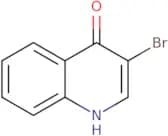
CAS:Versatile small molecule scaffoldFormula:C10H9NOPurity:Min. 95%Molecular weight:159.19 g/mol3-Bromoquinolin-4-ol
CAS:<p>3-Bromoquinolin-4-ol is a pyrrole derivative with a hydroxy group on the 4 position. It is an intermediate in the synthesis of 3-bromo-5-hydroxypyridine, which can be used as a reagent for aminations, oxindole syntheses, and piperidide formation. The presence of substituents on the 2 position of the quinoline ring determines whether it is an isomeric or nonisomeric compound. Substituents on the 2 position also determine if it is a nucleus or not. Finally, a substitution at the 4 position determines whether it is 2-amino-4-hydroxypyridine or pyrrole derivatives.</p>Formula:C9H6BrNOPurity:Min. 95%Molecular weight:224.05 g/mol

![tert-Butyl N-[(1S,3R)-3-(hydroxymethyl)cyclopentyl]carbamate](/_next/image/?url=https%3A%2Fstatic.cymitquimica.com%2Fproducts%2F3D%2Fthumb-webp%2FPBB34172.webp&w=3840&q=75)
![N-[3,3-Dimethyl-1-(1H-pyrazol-1-yl)butan-2-ylidene]hydroxylamine](/_next/image/?url=https%3A%2Fstatic.cymitquimica.com%2Fproducts%2F3D%2Fthumb-webp%2FPCA92157.webp&w=3840&q=75)
![Ethyl imidazo[1,2-a]pyrimidine-3-carboxylate](/_next/image/?url=https%3A%2Fstatic.cymitquimica.com%2Fproducts%2F3D%2Fthumb-webp%2FPCA95107.webp&w=3840&q=75)