Building Blocks
Subcategories of "Building Blocks"
- Boronic Acids & Boronic Acid Derivatives(5,783 products)
- Chiral Building Blocks(1,242 products)
- Hydrocarbon Building Blocks(6,105 products)
- Organic Building Blocks(61,055 products)
Found 205383 products of "Building Blocks"
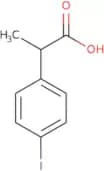
2-(4-Iodophenyl)propanoic acid
CAS:Versatile small molecule scaffoldFormula:C9H9IO2Purity:Min. 95%Molecular weight:276.07 g/mol4-Chloro-2-methyl-5-nitroaniline
CAS:4-Chloro-2-methyl-5-nitroaniline is an organic compound with the chemical formula C6H4ClNO2. It is a nitro derivative of aniline. 4-Chloro-2-methyl-5-nitroaniline is a white solid that is soluble in water, alcohols, and ethers. It has a melting point around 206 °C and decomposes at temperatures over 350 °C. This compound can be obtained by reacting hydroxylamine with nitrous acid and chlorinating 2,5-dimethylaniline. The sequence of reactions can be summarized as follows: hydroxy group to nitro group, nitro group to methyl group, methyl group to acetyl or acetylamino, acetyl or acetylamino to acetylation or methylation, transformation from hydroxyl group to amino group and esterification from acid hydrazide to acid group.
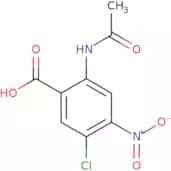
Formula:C7H7ClN2O2Purity:Min. 95%Molecular weight:186.59 g/mol5-Chloro-2-acetamido-4-nitrobenzoic acid
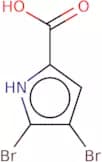
CAS:Amiloride is a medication that belongs to the group of potassium-sparing diuretics. It works by blocking sodium channels in the kidney, which reduces the amount of sodium and water that is reabsorbed into the body. Amiloride has been shown to be effective in human patients. This drug inhibits uptake of pyrazine, which is an active compound in amiloride. Amiloride also inhibits rinm5f, a channel found on renal tubular cells, with inhibitory potency as high as benzene ring. Amiloride has many inhibitors including exchangers such as Na/K-ATPase and Na/H exchanger and other benzene ring compounds such as amiloride itself and ethacrynic acid. The synthesis of amiloride was first reported in 1971 and it can be synthesized by two pathways: from benzene or from ethyl acetate.Formula:C9H7ClN2O5Purity:Min. 95%Molecular weight:258.61 g/mol4,5-Dibromo-1H-pyrrole-2-carboxylic acid
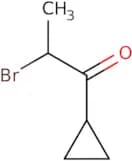
CAS:4,5-Dibromo-1H-pyrrole-2-carboxylic acid is a fatty acid derivative that inhibits the growth of bacteria by interfering with fatty acid synthesis. It was found to be active against Borrelia burgdorferi and Galleria mellonella and has been shown to be cytotoxic in vitro. 4,5-Dibromo-1H-pyrrole-2-carboxylic acid has also been shown to stimulate antibody production in mice and to have anticancer activity. 4,5-Dibromo-1H-pyrrole-2-carboxylic acid may be used therapeutically as an antiinfective agent for treating infectious diseases such as tuberculosis or cancer tissues.Formula:C5H3Br2NO2Purity:Min. 95%Molecular weight:268.89 g/mol2-Bromo-1-cyclopropylpropan-1-one
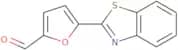
CAS:Versatile small molecule scaffoldFormula:C6H9BrOPurity:Min. 95%Molecular weight:177.04 g/mol5-(1,3-Benzothiazol-2-yl)-2-furaldehyde
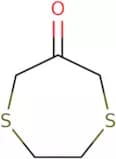
CAS:5-(1,3-Benzothiazol-2-yl)-2-furaldehyde is a benzothiazole that has been shown to be an effective lead compound for anticancer drug development. It has been shown to inhibit the growth of breast cancer cells in vitro and in vivo. 5-(1,3-Benzothiazol-2-yl)-2-furaldehyde's antitumor activity may be due to its ability to induce apoptosis by disrupting the cell cycle and inhibiting DNA synthesis. 5-(1,3-Benzothiazol-2-yl)-2-furaldehyde also binds to DNA and inhibits the function of both bacterial DNA gyrase and topoisomerase IV. It also possesses antiinflammatory properties which are due to its ability to inhibit prostaglandin synthesis.Formula:C12H7NO2SPurity:Min. 95%Molecular weight:229.25 g/mol1,4-Dithiepan-6-one
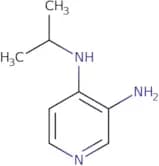
CAS:Versatile small molecule scaffoldFormula:C5H8OS2Purity:Min. 95%Molecular weight:148.3 g/mol4-N-(Propan-2-yl)pyridine-3,4-diamine
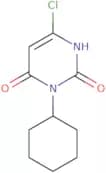
CAS:Versatile small molecule scaffoldFormula:C8H13N3Purity:Min. 95%Molecular weight:151.21 g/mol6-Chloro-3-cyclohexyl-1,2,3,4-tetrahydropyrimidine-2,4-dione
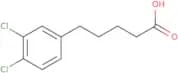
CAS:Versatile small molecule scaffoldFormula:C10H13ClN2O2Purity:Min. 95%Molecular weight:228.67 g/mol5-(3,4-Dichlorophenyl)pentanoic acid
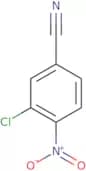
CAS:Versatile small molecule scaffoldFormula:C11H12Cl2O2Purity:Min. 95%Molecular weight:247.11 g/mol3-Chloro-4-nitrobenzonitrile
CAS:3-Chloro-4-nitrobenzonitrile is a heterocyclic compound that inhibits the activity of transferase enzymes. The molecular structure of 3-Chloro-4-nitrobenzonitrile is similar to that of myriocin, which is a natural product from the fungus Myriococcum erythraeum. 3-Chloro-4-nitrobenzonitrile has been shown to be an inhibitor of the enzyme phosphatidylcholine: phosphatidylethanolamine N-methyltransferase (PCMT) in rat liver microsomes. It also has been shown to inhibit the activities of other transferases including phospholipase A2, phospholipase C, and serine/threonine protein kinases.
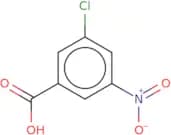
Formula:C7H3ClN2O2Purity:Min. 95%Molecular weight:182.56 g/mol3-Chloro-5-nitrobenzoic acid
CAS:3-Chloro-5-nitrobenzoic acid is a potent antiparasitic drug that has been shown to be effective against filarial worms. It is metabolised in the liver to its active form, which inhibits the parasite's ability to produce ATP. 3-Chloro-5-nitrobenzoic acid has been found to be toxic at high doses and can also cause allergic reactions. This drug has been studied as a potential treatment for brugia, due to its structural similarities with benzamides and amides. The structures of analogues of 3-chloro-5-nitrobenzoic acid have been studied and they have shown promising results in gerbils infected with acanthocheilonema.
Formula:C7H4ClNO4Purity:Min. 95%Molecular weight:201.56 g/mol4-Oxo-4H-Pyrido[1,2-A]Pyrimidine-3-Carboxylic Acid
CAS:4-Oxo-4H-pyrido[1,2-A]pyrimidine-3-carboxylic acid is a compound that has an analogy with the structure of pyridoxine. The structure of this molecule includes an alkoxycarbonyl group, a cycloalkyl group, and a phenyl group. This compound can be used as a medicine for gastroprotective purposes, and it also has anti-inflammatory properties. It is believed that 4-Oxo-4H-pyrido[1,2-A]pyrimidine-3-carboxylic acid can be used as a medicament to treat gastric ulcers.Formula:C9H6N2O3Purity:Min. 95%Molecular weight:190.16 g/mol8-Methyl-4-Oxo-4H-Pyrido[1,2-A]Pyrimidine-3-Carboxylic Acid
CAS:Versatile small molecule scaffold
Formula:C10H8N2O3Purity:Min. 95%Molecular weight:204.18 g/mol6,7,8,9-Tetrahydro-5H-benzo[7]annulen-6-one
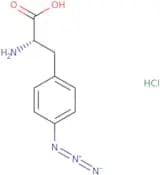
CAS:6,7,8,9-Tetrahydro-5H-benzo[7]annulen-6-one is an underserved drug candidate for tuberculosis. 6,7,8,9-Tetrahydro-5H-benzo[7]annulen-6-one has been shown to be a potent inhibitor of bacterial lactamase enzymes that are involved in the resistance of bacteria to many antibiotics. 6,7,8,9-Tetrahydro-5H-benzo[7]annulen-6-one is also able to bind to the electron withdrawing group on the lactam ring and stabilize the molecule. This binding prevents conformational changes in the lactamase enzyme and inhibits its activity. 6,7,8,9 tetrahydro 5H benzo[7]annulen 6 one has been shown to have potential use in treating tuberculosis due to its activity against drug resistant bacteriaFormula:C11H12OPurity:Min. 95%Molecular weight:160.21 g/mol4-Azido-L-phenylalanine Hydrochloride
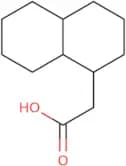
CAS:Versatile small molecule scaffoldFormula:C9H11ClN4O2Purity:Min. 95%Molecular weight:242.66 g/mol2-(Decahydronaphthalen-1-yl)acetic acid
CAS:Versatile small molecule scaffoldFormula:C12H20O2Purity:Min. 95%Molecular weight:196.29 g/mol2-Thioxo-2,3-dihydropyrazolo[1,5-a][1,3,5]triazin-4(1H)-one
CAS:Versatile small molecule scaffoldFormula:C5H4N4OSPurity:Min. 95%Molecular weight:168.18 g/mol2-(Chloromethyl)-1-ethoxy-4-nitrobenzene
CAS:Versatile small molecule scaffold
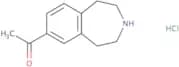
Formula:C9H10ClNO3Purity:Min. 95%Molecular weight:215.63 g/mol1-(2,3,4,5-Tetrahydro-1H-3-benzazepin-7-yl)ethan-1-one hydrochloride
CAS:Versatile small molecule scaffoldFormula:C12H16ClNOPurity:Min. 95%Molecular weight:225.71 g/mol


![4-Oxo-4H-Pyrido[1,2-A]Pyrimidine-3-Carboxylic Acid](/_next/image/?url=https%3A%2Fstatic.cymitquimica.com%2Fproducts%2F3D%2Fthumb-webp%2FJBA66258.webp&w=3840&q=75)
![8-Methyl-4-Oxo-4H-Pyrido[1,2-A]Pyrimidine-3-Carboxylic Acid](/_next/image/?url=https%3A%2Fstatic.cymitquimica.com%2Fproducts%2F3D%2Fthumb-webp%2FJBA66259.webp&w=3840&q=75)
![6,7,8,9-Tetrahydro-5H-benzo[7]annulen-6-one](/_next/image/?url=https%3A%2Fstatic.cymitquimica.com%2Fproducts%2F3D%2Fthumb-webp%2FJBA66315.webp&w=3840&q=75)
![2-Thioxo-2,3-dihydropyrazolo[1,5-a][1,3,5]triazin-4(1H)-one](/_next/image/?url=https%3A%2Fstatic.cymitquimica.com%2Fproducts%2F3D%2Fthumb-webp%2FJBA68299.webp&w=3840&q=75)