Building Blocks
This section contains fundamental products for the synthesis of organic and biological compounds. Building blocks are the essential starting materials used to construct complex molecules through various chemical reactions. They play a critical role in drug discovery, material science, and chemical research. At CymitQuimica, we offer a diverse range of high-quality building blocks to support your innovative research and industrial projects, ensuring you have the essential components for successful synthesis.
Subcategories of "Building Blocks"
- Boronic Acids & Boronic Acid Derivatives(5,778 products)
- Chiral Building Blocks(1,242 products)
- Hydrocarbon Building Blocks(6,098 products)
- Organic Building Blocks(61,084 products)
Found 198714 products of "Building Blocks"
Sort by
Purity (%)
0
100
|
0
|
50
|
90
|
95
|
100
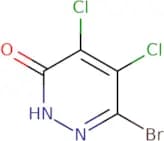
6-bromo-4,5-dichloro-2,3-dihydropyridazin-3-one
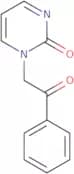
CAS:<p>Versatile small molecule scaffold</p>Formula:C4HBrCl2N2OPurity:Min. 95%Molecular weight:243.9 g/mol1-(2-Oxo-2-phenylethyl)-1,2-dihydropyrimidin-2-one
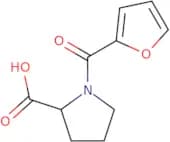
CAS:<p>Versatile small molecule scaffold</p>Formula:C12H10N2O2Purity:Min. 95%Molecular weight:214.22 g/mol1-(Furan-2-carbonyl)pyrrolidine-2-carboxylic acid
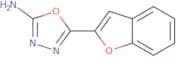
CAS:<p>1-(Furan-2-carbonyl)pyrrolidine-2-carboxylic acid is a peptidomimetic that inhibits the enzyme tyrosinase, which is involved in the synthesis of melanin. This drug has been shown to inhibit the growth of L1210 cells and to be cytotoxic against mouse melanoma cells. 1-(Furan-2-carbonyl)pyrrolidine-2-carboxylic acid binds to the active site of tyrosinase by mimicking its natural substrate, L-DOPA (dopamine). The drug also inhibits certain types of collagen and has allosteric binding properties.</p>Formula:C10H11NO4Purity:Min. 95%Molecular weight:209.2 g/mol5-(1-Benzofuran-2-yl)-1,3,4-oxadiazol-2-amine
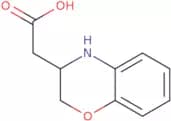
CAS:<p>Versatile small molecule scaffold</p>Formula:C10H7N3O2Purity:Min. 95%Molecular weight:201.18 g/mol2-(3,4-Dihydro-2H-1,4-benzoxazin-3-yl)acetic acid
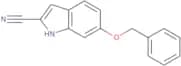
CAS:<p>Versatile small molecule scaffold</p>Formula:C10H11NO3Purity:Min. 95%Molecular weight:193.2 g/mol6-(Phenylmethoxy)-1H-indole-2-carbonitrile
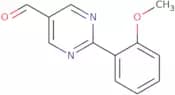
CAS:<p>Versatile small molecule scaffold</p>Formula:C16H12N2OPurity:Min. 95%Molecular weight:248.28 g/mol2-(2-Methoxyphenyl)pyrimidine-5-carbaldehyde
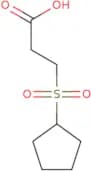
CAS:<p>Versatile small molecule scaffold</p>Formula:C12H10N2O2Purity:Min. 95%Molecular weight:214.22 g/mol3-(Cyclopentanesulfonyl)propanoic acid
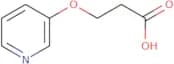
CAS:<p>Versatile small molecule scaffold</p>Formula:C8H14O4SPurity:Min. 95%Molecular weight:206.26 g/mol3-(Pyridin-3-yloxy)propanoic acid
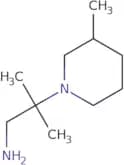
CAS:<p>Versatile small molecule scaffold</p>Formula:C8H9NO3Purity:Min. 95%Molecular weight:167.16 g/mol2-Methyl-2-(3-methylpiperidin-1-yl)propan-1-amine
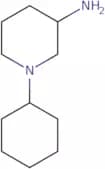
CAS:<p>Versatile small molecule scaffold</p>Formula:C10H22N2Purity:Min. 95%Molecular weight:170.3 g/mol1-Cyclohexylpiperidin-3-amine
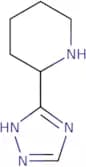
CAS:<p>Versatile small molecule scaffold</p>Formula:C11H22N2Purity:Min. 95%Molecular weight:182.31 g/mol2-(1H-1,2,4-Triazol-3-yl)piperidine
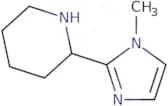
CAS:<p>Versatile small molecule scaffold</p>Formula:C7H12N4Purity:Min. 95%Molecular weight:152.2 g/mol2-(1-Methyl-1H-imidazol-2-yl)piperidine
CAS:<p>Versatile small molecule scaffold</p>Formula:C9H15N3Purity:Min. 95%Molecular weight:165.24 g/mol2-Methyl-2,9-diazaspiro[5.5]undecane
CAS:<p>Versatile small molecule scaffold</p>Formula:C10H20N2Purity:Min. 95%Molecular weight:168.28 g/molMethyl[(5-methyl-1,3,4-thiadiazol-2-yl)methyl]amine
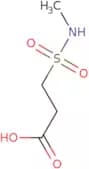
CAS:Versatile small molecule scaffoldFormula:C5H9N3SPurity:Min. 95%Molecular weight:143.21 g/mol3-(Methylsulfamoyl)propanoic acid
CAS:Versatile small molecule scaffoldFormula:C4H9NO4SPurity:Min. 95%Molecular weight:167.19 g/mol5,7-Dimethylpyrazolo[1,5-a]pyrimidine-6-carboxylic acid
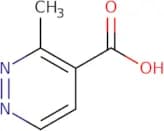
CAS:Versatile small molecule scaffoldFormula:C9H9N3O2Purity:Min. 95%Molecular weight:191.19 g/mol3-methylpyridazine-4-carboxylic acid
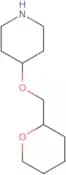
CAS:<p>3-methylpyridazine-4-carboxylic acid is a phosphonate that is used as an alkylating agent. It reacts with the methyl group of a compound to form an alkylated product. This reaction is used in organic synthesis for the preparation of 1,3-dicarbonyl compounds and dibromides. 3-Methylpyridazine-4-carboxylic acid also participates in the aromatization of alcohols, where it forms a ketone from an alcohol by adding a methyl group to the oxygen atom. 3-Methylpyridazine-4-carboxylic acid selectively reacts with ethanol, chloroform, hydrazine, and dioxane.</p>Formula:C6H6N2O2Purity:Min. 95%Molecular weight:138.12 g/mol4-(Oxan-2-ylmethoxy)piperidine
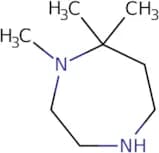
CAS:<p>Versatile small molecule scaffold</p>Formula:C11H21NO2Purity:Min. 95%Molecular weight:199.29 g/mol1,7,7-Trimethyl-1,4-diazepane
CAS:<p>Versatile small molecule scaffold</p>Formula:C8H18N2Purity:Min. 95%Molecular weight:142.24 g/mol

![2-Methyl-2,9-diazaspiro[5.5]undecane](/_next/image/?url=https%3A%2Fstatic.cymitquimica.com%2Fproducts%2F3D%2Fthumb-webp%2FIMB71400.webp&w=3840&q=75)
![Methyl[(5-methyl-1,3,4-thiadiazol-2-yl)methyl]amine](/_next/image/?url=https%3A%2Fstatic.cymitquimica.com%2Fproducts%2F3D%2Fthumb-webp%2FIMB71410.webp&w=3840&q=75)
![5,7-Dimethylpyrazolo[1,5-a]pyrimidine-6-carboxylic acid](/_next/image/?url=https%3A%2Fstatic.cymitquimica.com%2Fproducts%2F3D%2Fthumb-webp%2FIMB71504.webp&w=3840&q=75)