Building Blocks
This section contains fundamental products for the synthesis of organic and biological compounds. Building blocks are the essential starting materials used to construct complex molecules through various chemical reactions. They play a critical role in drug discovery, material science, and chemical research. At CymitQuimica, we offer a diverse range of high-quality building blocks to support your innovative research and industrial projects, ensuring you have the essential components for successful synthesis.
Subcategories of "Building Blocks"
- Boronic Acids & Boronic Acid Derivatives(5,756 products)
- Chiral Building Blocks(1,242 products)
- Hydrocarbon Building Blocks(6,095 products)
- Organic Building Blocks(61,055 products)
Found 199650 products of "Building Blocks"
Sort by
Purity (%)
0
100
|
0
|
50
|
90
|
95
|
100
3-[(2-Bromophenyl)carbamoyl]prop-2-enoic acid
CAS:<p>Versatile small molecule scaffold</p>Formula:C10H8BrNO3Purity:Min. 95%Molecular weight:270.08 g/mol3-Amino-2-(3,4-dimethoxyphenyl)propan-1-ol hydrochloride
CAS:<p>Versatile small molecule scaffold</p>Formula:C11H18ClNO3Purity:Min. 95%Molecular weight:247.72 g/molN-(2-Aminoethyl)-2-phenylacetamide hydrochloride
CAS:<p>Versatile small molecule scaffold</p>Formula:C10H15ClN2OPurity:Min. 95%Molecular weight:214.7 g/mol2-[5-(Thiophen-2-yl)-2H-1,2,3,4-tetrazol-2-yl]acetic acid
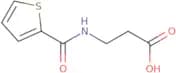
CAS:<p>Versatile small molecule scaffold</p>Formula:C7H6N4O2SPurity:Min. 95%Molecular weight:210.22 g/mol3-(Thiophen-2-ylformamido)propanoic acid
CAS:<p>Versatile small molecule scaffold</p>Formula:C8H9NO3SPurity:Min. 95%Molecular weight:199.23 g/mol3-(2-Methoxyacetamido)propanoic acid
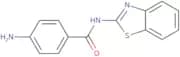
CAS:<p>Versatile small molecule scaffold</p>Formula:C6H11NO4Purity:Min. 95%Molecular weight:161.16 g/mol4-Amino-N-benzothiazol-2-yl-benzamide
CAS:<p>Versatile small molecule scaffold</p>Formula:C14H11N3OSPurity:Min. 95%Molecular weight:269.32 g/mol2-Iodoquinoxaline
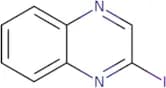
CAS:<p>2-Iodoquinoxaline is a heterocyclic compound that contains an ethyl diazoacetate group. It can be synthesised from chloroformate and ferredoxin, which are both five-membered rings. 2-Iodoquinoxaline is used to make other heterocyclic compounds, such as the phosphonium salt and the dioxolane. This molecule has also been shown to be a good acceptor for evaporation of liquids. When exposed to radiation, 2-iodoquinoxaline converts into a molybdenum (Mo) molecule, which is important in the synthesis of many organic compounds. This compound can also be synthesized by reacting styrene with olefinic molecules under appropriate conditions.</p>Formula:C8H5IN2Purity:Min. 95%Molecular weight:256.04 g/molEthyl 4-amino-3-thia-1-azatricyclo[5.2.2.0,2,6]undeca-2(6),4-diene-5-carboxylate
CAS:<p>Ethyl 4-amino-3-thia-1-azatricyclo[5.2.2.0,2,6]undeca-2(6),4-diene-5-carboxylate is an acylated amino acid that contains a cyanoacetic acid moiety with an elemental sulfur atom in the side chain. It is used in the production of acrylamide and as a precursor to various pharmaceuticals, pesticides, and dyes.</p>Formula:C12H16N2O2SPurity:Min. 95%Molecular weight:252.33 g/mol1-(1,3-Benzothiazol-2-yl)propan-2-one
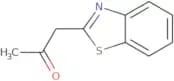
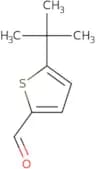
CAS:<p>1-(1,3-Benzothiazol-2-yl)propan-2-one is a type of benzene compound with substituent groups. It has the formula CHCHS. The substituents are methyl and acetate. The benzene ring is substituted with two substituents in the coplanar arrangement. Benzene rings can form condensation products through a process called electrophilic substitution. This process involves the addition of an electron pair to an atom or molecule by an electrophile to form a covalent bond. One example of this reaction is the formation of methyl acetate from 1-(1,3-benzothiazol-2-yl)propan-2-one by heating it with methanol.</p>Formula:C10H9NOSPurity:Min. 95%Molecular weight:191.25 g/mol5-(tert-Butyl)thiophene-2-carbaldehyde
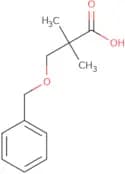
CAS:<p>Versatile small molecule scaffold</p>Formula:C9H12OSPurity:Min. 95%Molecular weight:168.26 g/mol3-(Benzyloxy)-2,2-dimethylpropanoic acid
CAS:<p>3-(Benzyloxy)-2,2-dimethylpropanoic acid (BPD) is a carboxylic acid derivative that is used as a reagent in organic synthesis. It is also used to acylate fatty acids to form esters or amides. BPD is also used in the preparation of anhydrides and halides.</p>Formula:C12H16O3Purity:Min. 95%Molecular weight:208.25 g/mol(3,4-dihydro-2h-benzo[b][1,4]oxazin-3-yl)methanol
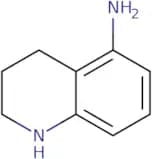
CAS:<p>Versatile small molecule scaffold</p>Formula:C9H11NO2Purity:Min. 95%Molecular weight:165.19 g/mol1,2,3,4-Tetrahydroquinolin-5-amine
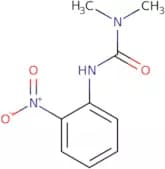
CAS:<p>1,2,3,4-Tetrahydroquinolin-5-amine (1,2,3,4-THQ) is a hydrazine derivative that has been used in organic synthesis as a reagent for the reductive amination of amines. It is also used as a precursor for the synthesis of other heteroaromatic compounds. The 1,2,3,4-THQ can be prepared by condensation of aniline with nitroethane and phenylenediamine in the presence of Raney nickel. Analogous reactions have been reported using benzylamine derivatives.</p>Formula:C9H12N2Purity:Min. 95%Molecular weight:148.2 g/mol3,3-Dimethyl-1-(2-nitrophenyl)urea
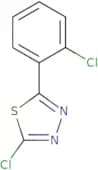
CAS:<p>Versatile small molecule scaffold</p>Formula:C9H11N3O3Purity:Min. 95%Molecular weight:209.2 g/mol2-Chloro-5-(2-chlorophenyl)-1,3,4-thiadiazole
CAS:<p>Versatile small molecule scaffold</p>Formula:C8H4Cl2N2SPurity:Min. 95%Molecular weight:231.1 g/mol1,2-Diazaspiro[2.5]oct-1-ene-6-carboxylic acid
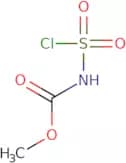
CAS:<p>Versatile small molecule scaffold</p>Formula:C7H10N2O2Purity:Min. 95%Molecular weight:154.17 g/molMethyl N-(chlorosulfonyl)carbamate
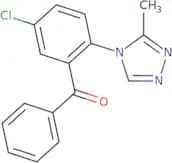
CAS:<p>Methyl N-(chlorosulfonyl)carbamate is a potential drug candidate that was developed to inhibit the activity of peptidases, an enzyme that breaks down proteins. It has been found to inhibit the activity of a variety of peptidases and is stable at temperatures up to 80°C. This reagent is used for medicinal chemistry research and can be used as a starting material for optimization and structural studies. Methyl N-(chlorosulfonyl)carbamate has also been shown to inhibit the activity of other enzymes, such as epoxide hydrolase, which breaks down epoxides. This inhibitor may have therapeutic potential in diseases such as cancer or inflammation.</p>Formula:C2H4ClNO4SPurity:Min. 95%Molecular weight:173.58 g/mol5-Chloro-2-(3-methyl-4H-1,2,4-triazol-4-yl)benzophenone
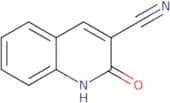
CAS:<p>5-Chloro-2-(3-methyl-4H-1,2,4-triazol-4-yl)benzophenone (CMTP) is a trifluoromethyl, chloro, fluoro, triazolyl compound. It is an intermediate in the synthesis of benzophenones and nitro compounds. CMTP can be synthesized by a multistep process from bromobenzene or chlorobenzene. This compound is used as a tranquilizer and sedative in the treatment of anxiety and insomnia.</p>Formula:C16H12ClN3OPurity:Min. 95%Molecular weight:297.74 g/mol2-Oxo-1,2-dihydroquinoline-3-carbonitrile
CAS:<p>2-Oxo-1,2-dihydroquinoline-3-carbonitrile is a chemical compound that is used as an antiallergic agent. It has been shown to inhibit the release of histamine from mast cells and also inhibits the release of prostaglandins from human platelets. The compound is synthesized by condensation of ammonium chloride with nitropropane in the presence of sodium azide. The x-ray analysis shows that this compound has a quinoline ring.</p>Formula:C10H6N2OPurity:Min. 95%Molecular weight:170.17 g/mol
![3-[(2-Bromophenyl)carbamoyl]prop-2-enoic acid](/_next/image/?url=https%3A%2Fstatic.cymitquimica.com%2Fproducts%2F3D%2Fthumb-webp%2FLBA84785.webp&w=3840&q=75)


![2-[5-(Thiophen-2-yl)-2H-1,2,3,4-tetrazol-2-yl]acetic acid](/_next/image/?url=https%3A%2Fstatic.cymitquimica.com%2Fproducts%2F3D%2Fthumb-webp%2FLBA85510.webp&w=3840&q=75)

![Ethyl 4-amino-3-thia-1-azatricyclo[5.2.2.0,2,6]undeca-2(6),4-diene-5-carboxylate](/_next/image/?url=https%3A%2Fstatic.cymitquimica.com%2Fproducts%2F3D%2Fthumb-webp%2FLBA86049.webp&w=3840&q=75)
![(3,4-dihydro-2h-benzo[b][1,4]oxazin-3-yl)methanol](/_next/image/?url=https%3A%2Fstatic.cymitquimica.com%2Fproducts%2F3D%2Fthumb-webp%2FLBA88417.webp&w=3840&q=75)
![1,2-Diazaspiro[2.5]oct-1-ene-6-carboxylic acid](/_next/image/?url=https%3A%2Fstatic.cymitquimica.com%2Fproducts%2F3D%2Fthumb-webp%2FLBA90876.webp&w=3840&q=75)