Building Blocks
This section contains fundamental products for the synthesis of organic and biological compounds. Building blocks are the essential starting materials used to construct complex molecules through various chemical reactions. They play a critical role in drug discovery, material science, and chemical research. At CymitQuimica, we offer a diverse range of high-quality building blocks to support your innovative research and industrial projects, ensuring you have the essential components for successful synthesis.
Subcategories of "Building Blocks"
- Boronic Acids & Boronic Acid Derivatives(5,756 products)
- Chiral Building Blocks(1,242 products)
- Hydrocarbon Building Blocks(6,095 products)
- Organic Building Blocks(61,038 products)
Found 196817 products of "Building Blocks"
Sort by
Purity (%)
0
100
|
0
|
50
|
90
|
95
|
100
2-Chloro-N-[4-(1-pyrrolidinyl)phenyl]acetamide
CAS:<p>Versatile small molecule scaffold</p>Formula:C12H15ClN2OPurity:Min. 95%Molecular weight:238.72 g/mol2-Chloro-N-[4-(pyrrolidin-1-yl)phenyl]propanamide
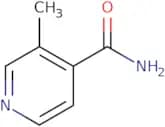
CAS:<p>Versatile small molecule scaffold</p>Formula:C13H17ClN2OPurity:Min. 95%Molecular weight:252.74 g/mol3-Methylisonicotinamide
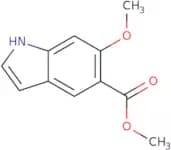
CAS:<p>3-Methylisonicotinamide is an immune-related drug that belongs to the class of heterocyclic compounds. It is an innovative therapeutic agent for inflammatory diseases and cancer. 3-Methylisonicotinamide has been shown to inhibit the production of inflammatory cytokines, chemokines, and prostaglandins. This compound also blocks the production of reactive oxygen species by inhibiting the activation of NADPH oxidase in neutrophils and macrophages. The inhibition of reactive oxygen species prevents cytotoxicity and cell death in vitro. 3-Methylisonicotinamide binds to nuclear receptor subtypes (e.g., PPARγ) that are involved in inflammation, cancer, and neuropathic pain with high affinity. These receptors are located on the surface of cells where they regulate cellular functions such as proliferation, differentiation, and apoptosis.</p>Formula:C7H8N2OPurity:Min. 95%Molecular weight:136.15 g/molMethyl 6-methoxy-1H-indole-5-carboxylate
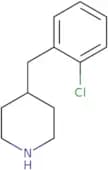
CAS:<p>Versatile small molecule scaffold</p>Formula:C11H11NO3Purity:Min. 95%Molecular weight:205.21 g/mol4-(2-Chlorobenzyl)piperidine
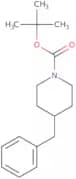
CAS:<p>Versatile small molecule scaffold</p>Formula:C12H16ClNPurity:Min. 95%Molecular weight:209.71 g/moltert-Butyl 4-benzylpiperidine-1-carboxylate
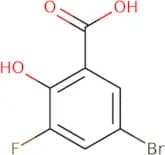
CAS:<p>Versatile small molecule scaffold</p>Formula:C17H25NO2Purity:Min. 95%Molecular weight:275.4 g/mol5-Bromo-3-fluoro-2-hydroxybenzoic acid
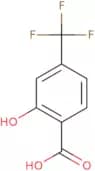
CAS:<p>Versatile small molecule scaffold</p>Formula:C7H4BrFO3Purity:Min. 95%Molecular weight:235.01 g/mol2-Hydroxy-3-(trifluoromethyl)benzoic acid
CAS:<p>Versatile small molecule scaffold</p>Formula:C8H5F3O3Purity:Min. 95%Molecular weight:206.12 g/molrac-(1R,4R,6S)-6-Phenyl-2-azabicyclo[2.2.1]heptane, exo
CAS:<p>Versatile small molecule scaffold</p>Formula:C12H15NPurity:Min. 95%Molecular weight:173.3 g/molN-Boc-[(1S)-1-(aminomethyl)propyl]amine
CAS:<p>Versatile small molecule scaffold</p>Formula:C9H20N2O2Purity:Min. 95%Molecular weight:188.27 g/mol2-{[(2-Bromophenyl)methyl]amino}ethan-1-ol
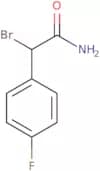
CAS:<p>Versatile small molecule scaffold</p>Formula:C9H12BrNOPurity:Min. 95%Molecular weight:230.1 g/mol2-Bromo-2-(4-fluorophenyl)acetamide
CAS:<p>Versatile small molecule scaffold</p>Formula:C8H7BrFNOPurity:Min. 95%Molecular weight:232.05 g/mol2-Azaspiro[4.5]decane-4-carboxylic acid hydrochloride
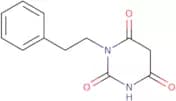
CAS:<p>Versatile small molecule scaffold</p>Formula:C10H18ClNO2Purity:Min. 95%Molecular weight:219.71 g/mol1-(2-Phenylethyl)pyrimidine-2,4,6(1H,3H,5H)-trione
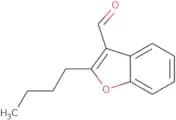
CAS:<p>1-(2-Phenylethyl)pyrimidine-2,4,6(1H,3H,5H)-trione is a polymer that has been used as a drug delivery system. The polymer can be cross-linked with a variety of agents. It is soluble in organic solvents and swellable in water. This polymer can be used to treat high blood pressure by preventing the reabsorption of sodium ions into the body through the kidneys. The termination of this polymer is acid molecules and it can be used for surface treatments on metals or ceramics. Low energy is required for this polymer to dissolve. 1-(2-Phenylethyl)pyrimidine-2,4,6(1H,3H,5H)-trione is also known as polymeric acid anhydride and its analytical method is silicon. It has been used as a conditioning agent for silicon wafers and as an analytical method for determining the concentration</p>Formula:C12H12N2O3Purity:Min. 95%Molecular weight:232.23 g/mol2-Butyl-1-benzofuran-3-carbaldehyde
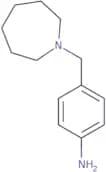
CAS:<p>Versatile small molecule scaffold</p>Formula:C13H14O2Purity:Min. 95%Molecular weight:202.25 g/mol4-Azepan-1-ylmethyl-phenylamine
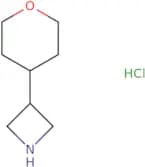
CAS:<p>Versatile small molecule scaffold</p>Formula:C13H20N2Purity:Min. 95%Molecular weight:204.32 g/mol3-(Oxan-4-yl)azetidine hydrochloride
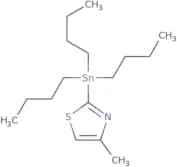
CAS:<p>Versatile small molecule scaffold</p>Formula:C8H16ClNOPurity:Min. 95%Molecular weight:177.67 g/mol4-methyl-2-(tributylstannyl)-1,3-thiazole
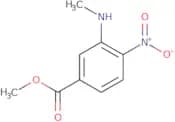
CAS:Controlled Product<p>Versatile small molecule scaffold</p>Formula:C16H31NSSnPurity:Min. 95%Molecular weight:388.2 g/molMethyl 3-(methylamino)-4-nitrobenzoate
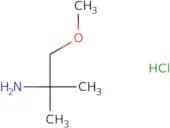
CAS:<p>Versatile small molecule scaffold</p>Formula:C9H10N2O4Purity:Min. 95%Molecular weight:210.19 g/mol1-Methoxy-2-methylpropan-2-amine hydrochloride
CAS:<p>Versatile small molecule scaffold</p>Formula:C5H14ClNOPurity:Min. 95%Molecular weight:139.62 g/mol
![2-Chloro-N-[4-(1-pyrrolidinyl)phenyl]acetamide](/_next/image/?url=https%3A%2Fstatic.cymitquimica.com%2Fproducts%2F3D%2Fthumb-webp%2FBKA09715.webp&w=3840&q=75)

![2-Chloro-N-[4-(pyrrolidin-1-yl)phenyl]propanamide](/_next/image/?url=https%3A%2Fstatic.cymitquimica.com%2Fproducts%2F3D%2Fthumb-webp%2FBKA09732.webp&w=3840&q=75)
![rac-(1R,4R,6S)-6-Phenyl-2-azabicyclo[2.2.1]heptane, exo](/_next/image/?url=https%3A%2Fstatic.cymitquimica.com%2Fproducts%2F3D%2Fthumb-webp%2FBKA32175.webp&w=3840&q=75)
![N-Boc-[(1S)-1-(aminomethyl)propyl]amine](/_next/image/?url=https%3A%2Fstatic.cymitquimica.com%2Fproducts%2F3D%2Fthumb-webp%2FBKA32589.webp&w=3840&q=75)
![2-{[(2-Bromophenyl)methyl]amino}ethan-1-ol](/_next/image/?url=https%3A%2Fstatic.cymitquimica.com%2Fproducts%2F3D%2Fthumb-webp%2FBKA32632.webp&w=3840&q=75)
![2-Azaspiro[4.5]decane-4-carboxylic acid hydrochloride](/_next/image/?url=https%3A%2Fstatic.cymitquimica.com%2Fproducts%2F3D%2Fthumb-webp%2FBKA46168.webp&w=3840&q=75)