Building Blocks
This section contains fundamental products for the synthesis of organic and biological compounds. Building blocks are the essential starting materials used to construct complex molecules through various chemical reactions. They play a critical role in drug discovery, material science, and chemical research. At CymitQuimica, we offer a diverse range of high-quality building blocks to support your innovative research and industrial projects, ensuring you have the essential components for successful synthesis.
Subcategories of "Building Blocks"
- Boronic Acids & Boronic Acid Derivatives(5,756 products)
- Chiral Building Blocks(1,242 products)
- Hydrocarbon Building Blocks(6,095 products)
- Organic Building Blocks(61,038 products)
Found 196817 products of "Building Blocks"
Sort by
Purity (%)
0
100
|
0
|
50
|
90
|
95
|
100
1-Azabicyclo[2.2.2]octan-4-amine dihydrochloride
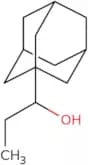
CAS:<p>Versatile small molecule scaffold</p>Formula:C7H16Cl2N2Purity:Min. 95%Molecular weight:199.12 g/mol1-(Adamantan-1-yl)propan-1-ol
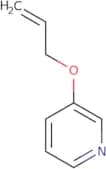
CAS:<p>Versatile small molecule scaffold</p>Formula:C13H22OPurity:Min. 95%Molecular weight:194.31 g/mol3-(Prop-2-en-1-yloxy)pyridine
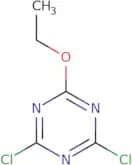
CAS:<p>3-(Prop-2-en-1-yloxy)pyridine is a chiral compound that has been used in the synthesis of homochiral polymers. It is reactive and has shown structural stability when it is quaternized with alkyl halides. 3-(Prop-2-en-1-yloxy)pyridine has been synthesized as a linker for pyridine derivatives, which have shown to be useful devices. 3-(Prop-2-en-1-yloxy)pyridine can also be used as an additive in organic semiconductors or a dopant in silicon. The reactivity of this molecule has also been studied using cytochrome p450 enzymes in animals and humans, where it was found to inhibit the activity of CYP3A4.</p>Formula:C8H9NOPurity:Min. 95%Molecular weight:135.16 g/mol2,4-Dichloro-6-ethoxy-1,3,5-triazine
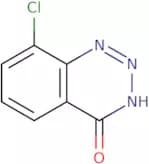
CAS:<p>Versatile small molecule scaffold</p>Formula:C5H5Cl2N3OPurity:Min. 95%Molecular weight:194.02 g/mol8-Chloro-3,4-dihydro-1,2,3-benzotriazin-4-one
CAS:<p>Versatile small molecule scaffold</p>Formula:C7H4ClN3OPurity:Min. 95%Molecular weight:181.58 g/mol4,4-Diethoxybut-2-yn-1-ol
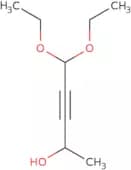
CAS:<p>Versatile small molecule scaffold</p>Formula:C8H14O3Purity:Min. 95%Molecular weight:158.2 g/mol5,5-Diethoxypent-3-yn-2-ol
CAS:<p>Versatile small molecule scaffold</p>Formula:C9H16O3Purity:Min. 95%Molecular weight:172.22 g/mol[4-(Hydroxymethyl)thiophen-3-yl]methanol
CAS:<p>Versatile small molecule scaffold</p>Formula:C6H8O2SPurity:Min. 95%Molecular weight:144.19 g/molRolziracetam
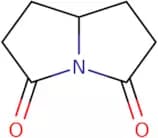
CAS:<p>Rolziracetam is a chemical substance that binds to the gamma-aminobutyric acid (GABA) receptor. It has been shown in clinical studies to be effective against epilepsy and can be used as an adjunct therapy for refractory focal epilepsies. Rolziracetam inhibits voltage-dependent calcium channels, which are responsible for the release of neurotransmitters at the synapse. Rolziracetam is also able to bind to GABA receptors, which may explain its therapeutic effects on epileptic seizures.</p>Formula:C7H9NO2Purity:Min. 95%Molecular weight:139.15 g/mol6-Methylsalicylaldehyde
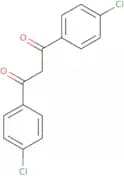
CAS:<p>6-Methylsalicylaldehyde (6MSA) is a chemical compound that is used to synthesize a variety of other organic compounds. It has two hydroxyl groups and one methyl group, which are important for its function. This compound also has an intramolecular hydrogen bond and forms a hydrogen bond with the carbonyl group in trifluoroacetic acid (TFA). 6MSA activates the TFA by functioning as a catalyst. The activation energy of this reaction is -9.0 kcal/mol. This compound can be found in hexane, which is an organic solvent that is composed of hydrogen and carbon atoms. Hexane has a boiling point of 37°C and can be distilled at atmospheric pressure. The activation energy for this reaction is -8.0 kcal/mol, which indicates that it also functions as a catalyst</p>Formula:C8H8O2Purity:Min. 95%Molecular weight:136.15 g/mol1,3-Bis(4-chlorophenyl)propane-1,3-dione
CAS:<p>1,3-Bis(4-chlorophenyl)propane-1,3-dione (BPPD) is a luminescent inhibitor that is used in biosciences to study the reticulum and the intestinal tract. BPPD has been shown to inhibit DSS-induced colitis in mice by reducing disease activity index. BPPD also has an effect on telecommunication systems and can be used as a crystal x-ray diffraction agent. In coordination chemistry, it is known for its ability to bind metals such as copper and zinc. BPPD also has an inhibitory effect on endoplasmic reticulum enzymes, which may lead to the development of new drugs for the treatment of diseases such as colitis.</p>Formula:C15H10Cl2O2Purity:Min. 95%Molecular weight:293.14 g/mol1-{Thieno[3,2-b]pyridin-6-yl}ethan-1-one
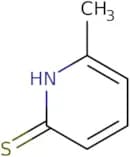
CAS:<p>Versatile small molecule scaffold</p>Formula:C9H7NOSPurity:Min. 95%Molecular weight:177.22 g/mol2-Mercapto-6-methylpyridine
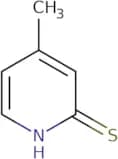
CAS:<p>2-Mercapto-6-methylpyridine is a ligand that has been used in the study of x-ray crystal structures. It is an x-ray diffraction study, and has been shown to be a hexane solvate. The sodium salt of 2-Mercapto-6-methylpyridine has been shown to have potential as a diagnostic tool for clinical chemistry and as a substrate for assays involving the skeleton. This compound has two geometric isomers, cis and trans, which are differentiated by the arrangement of substituents on the central carbon atom.</p>Formula:C6H7NSPurity:Min. 95%Molecular weight:125.19 g/mol4-Methylpyridine-2-thiol
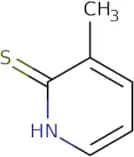
CAS:<p>4-Methylpyridine-2-thiol is a ligand that binds to metal ions. It has been shown to be an effective photoelectron scavenger for mercury and lead, as well as a wide variety of other metals. 4-Methylpyridine-2-thiol is also an important monomer in the preparation of polymers and resins. This ligand has been used in the synthesis of compounds with cyclic structures and hydrochloric acid, as well as being crystallized with x-ray crystallography. The properties of this ligand have been studied by voltammetry, spectroscopies, and crystallography. 4-Methylpyridine-2-thiol interacts with chloride ions in acetonitrile to form a salt called methylpyridinium chloride.</p>Formula:C6H7NSPurity:Min. 95%Molecular weight:125.19 g/mol3-Methyl-1,2-dihydropyridine-2-thione
CAS:<p>Versatile small molecule scaffold</p>Formula:C6H7NSPurity:Min. 95%Molecular weight:125.19 g/molTrifluoromethanesulfinylethene
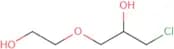
CAS:<p>Trifluoromethanesulfinylethene is a reactive compound that reacts with sulfonyl compounds to form sulfoxides. This chemical can also be used in the synthesis of 1,3-dicarbonyl compounds and cyclopropanes. Trifluoromethanesulfinylethene has been shown to react with bromine and vinyl compounds to form trifluoromethyl derivatives. The yield of this reaction is high under mild conditions.</p>Formula:C3H3F3OSPurity:Min. 95%Molecular weight:144.12 g/mol1-Chloro-3-(2-hydroxyethoxy)propan-2-ol
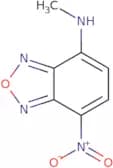
CAS:<p>Versatile small molecule scaffold</p>Formula:C5H11ClO3Purity:Min. 95%Molecular weight:154.59 g/molN-Methyl-7-nitro-2,1,3-benzoxadiazol-4-amine
CAS:<p>A new compound, N-methyl-7-nitro-2,1,3-benzoxadiazol-4-amine (NMBA), was synthesized and evaluated in a series of assays. NMBA was found to be a potent inhibitor of the peroxidase activity of microperoxidase. The inhibition rate is pH dependent and increases with the increase in substrate concentration. The IC50 value for the inhibition of peroxidases by NMBA at pH 7 was determined to be 6.5 µM. It also has been shown that NMBA inhibits acid phosphatase activity with an IC50 value of 2 µM under optimal conditions.</p>Formula:C7H6N4O3Purity:Min. 95%Molecular weight:194.15 g/mol2-{[5-(2,4-Dichlorophenyl)-4H-1,2,4-triazol-3-yl]sulfanyl}acetic acid
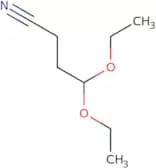
CAS:<p>Versatile small molecule scaffold</p>Formula:C10H7Cl2N3O2SPurity:Min. 95%Molecular weight:304.15 g/mol3-Cyanopropionaldehyde Diethyl Acetal
CAS:<p>3-Cyanopropionaldehyde Diethyl Acetal is a drug that belongs to the tetrazole family. It is an intestinal drug used in the treatment of hypercholesterolaemia. 3-Cyanopropionaldehyde Diethyl Acetal has been shown to inhibit the catalysis of amide and hydrolysis of ester bonds, and may therefore be useful in the design of strategies for biomolecular engineering. The presence of this compound can also lead to cyclodehydration reactions, which are important for the synthesis of drugs such as etoposide and cyclodehydration. This compound contains a carboxylic acid group, which makes it bioisosteric with carboxylate groups found in other compounds such as aglycone.</p>Formula:C8H15NO2Purity:Min. 95%Molecular weight:157.21 g/mol
![1-Azabicyclo[2.2.2]octan-4-amine dihydrochloride](/_next/image/?url=https%3A%2Fstatic.cymitquimica.com%2Fproducts%2F3D%2Fthumb-webp%2FTAA33949.webp&w=3840&q=75)

![[4-(Hydroxymethyl)thiophen-3-yl]methanol](/_next/image/?url=https%3A%2Fstatic.cymitquimica.com%2Fproducts%2F3D%2Fthumb-webp%2FTAA35473.webp&w=3840&q=75)
![1-{Thieno[3,2-b]pyridin-6-yl}ethan-1-one](/_next/image/?url=https%3A%2Fstatic.cymitquimica.com%2Fproducts%2F3D%2Fthumb-webp%2FTAA36659.webp&w=3840&q=75)

![2-{[5-(2,4-Dichlorophenyl)-4H-1,2,4-triazol-3-yl]sulfanyl}acetic acid](/_next/image/?url=https%3A%2Fstatic.cymitquimica.com%2Fproducts%2F3D%2Fthumb-webp%2FTAA37868.webp&w=3840&q=75)