Building Blocks
This section contains fundamental products for the synthesis of organic and biological compounds. Building blocks are the essential starting materials used to construct complex molecules through various chemical reactions. They play a critical role in drug discovery, material science, and chemical research. At CymitQuimica, we offer a diverse range of high-quality building blocks to support your innovative research and industrial projects, ensuring you have the essential components for successful synthesis.
Subcategories of "Building Blocks"
- Boronic Acids & Boronic Acid Derivatives(5,756 products)
- Chiral Building Blocks(1,242 products)
- Hydrocarbon Building Blocks(6,095 products)
- Organic Building Blocks(61,038 products)
Found 196817 products of "Building Blocks"
Sort by
Purity (%)
0
100
|
0
|
50
|
90
|
95
|
100
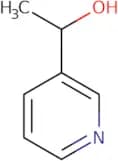
3-(1-Hydroxyethyl)pyridine
CAS:<p>3-(1-Hydroxyethyl)pyridine is a levorotatory, white solid. It is used in animal studies to study the effects on the brain and other body systems. 3-(1-Hydroxyethyl)pyridine is synthesized by a three-step process that involves converting 3-acetylpyridine into 3-(2-hydroxyethyl)pyridine, which is then converted to 3-(1-hydroxyethyl)pyridine. This compound has been shown to be an adrenergic receptor agonist and may have some potential as a drug for treating Parkinson's disease. It also has acidic properties and substructures that are enantiopure, meaning they are composed of molecules with the same chirality.</p>Formula:C7H9NOPurity:Min. 95%Molecular weight:123.2 g/molo-Cyclohexylhydroxylamine
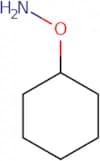
CAS:<p>Versatile small molecule scaffold</p>Formula:C6H13NOPurity:Min. 95%Molecular weight:115.17 g/mol1,3-Diethyl 2-(3-chlorophenyl)-4-hydroxy-4-methyl-6-oxocyclohexane-1,3-dicarboxylate
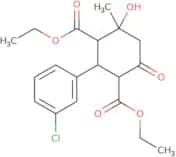
CAS:<p>Versatile small molecule scaffold</p>Formula:C19H23ClO6Purity:Min. 95%Molecular weight:382.8 g/mol1,3-Diethyl 2-(4-bromophenyl)-4-hydroxy-4-methyl-6-oxocyclohexane-1,3-dicarboxylate
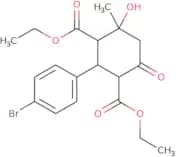
CAS:<p>Versatile small molecule scaffold</p>Formula:C19H23BrO6Purity:Min. 95%Molecular weight:427.3 g/mol4-(Trifluoromethyl)oxane-2,6-dione
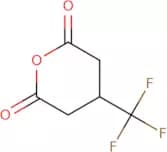
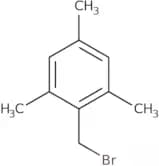
CAS:<p>Versatile small molecule scaffold</p>Formula:C6H5F3O3Purity:Min. 95%Molecular weight:182.1 g/mol2-Bromomethyl-1,3,5-trimethylbenzene
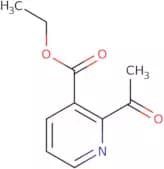
CAS:<p>2-Bromomethyl-1,3,5-trimethylbenzene is a semivolatile organic compound with a bromophenol functional group. It has been shown to react with malic acid and pyridine ring to form two isomers. The reaction rate of this compound is higher at lower temperatures than at higher temperatures. It has been shown to be a ligand that binds metal ions and reacts with them electrochemically. 2-Bromomethyl-1,3,5-trimethylbenzene has also been used as an intermediate in the synthesis of trisaccharide ligands for coordination chemistry studies.</p>Formula:C10H13BrPurity:Min. 95%Molecular weight:213.11 g/mol2-acetyl-nicotinic acid ethyl ester
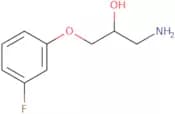
CAS:<p>Versatile small molecule scaffold</p>Formula:C10H11NO3Purity:Min. 95%Molecular weight:193.2 g/mol1-Amino-3-(3-fluorophenoxy)propan-2-ol
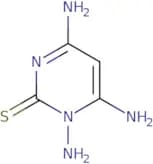
CAS:<p>Versatile small molecule scaffold</p>Formula:C9H12FNO2Purity:Min. 95%Molecular weight:185.2 g/mol1,4,6-Triamino-1,2-dihydropyrimidine-2-thione
CAS:<p>1,4,6-Triamino-1,2-dihydropyrimidine-2-thione is a chemical compound that is soluble in water and methanol. It has been shown to cleave bonds by the use of sodium hydroxide solution.</p>Formula:C4H7N5SPurity:Min. 95%Molecular weight:157.2 g/molEthyl alpha-chlorophenylacetate
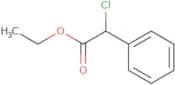
CAS:<p>Ethyl alpha-chlorophenylacetate (ECA) is a synthetic molecule that has been shown to have anti-inflammatory and neurodegenerative properties. It is a benzimidazole derivative with a hydroxyl group on the ethyl alpha-chlorophenylacetate moiety. ECA has been shown to inhibit inflammatory responses in mice by targeting transcription factors, such as NF-κB and AP-1, which are involved in the regulation of immune responses. It also has an anti-inflammatory effect on malonic acid induced colitis in mice.</p>Formula:C10H11ClO2Purity:Min. 95%Molecular weight:198.65 g/mol1-Chloro-1-phenylpropan-2-one
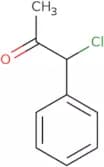
CAS:<p>1-Chloro-1-phenylpropan-2-one is an exploratory compound that has been deployed as a mechanistic probe to probe the radical mechanism of aldehydes. It has been shown that 1-chloro-1-phenylpropan-2-one can be used to generate fluorescent compounds and study the fluorescence, UV radiation, and radical mechanism of aldehydes. This molecule also has the ability to react with electron rich compounds such as aziridines to form chiral products. The substituent on this molecule will affect its biological activity.</p>Formula:C9H9ClOPurity:Min. 95%Molecular weight:168.62 g/mol4-(2,2-Dimethylpropyl)-1,3-thiazol-2-amine
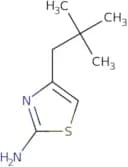
CAS:<p>Versatile small molecule scaffold</p>Formula:C8H14N2SPurity:Min. 95%Molecular weight:170.28 g/mol4-Hydroxy-1,3-dioxaindane-5-carboxylic acid
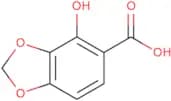
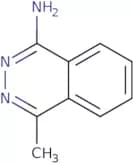
CAS:<p>Versatile small molecule scaffold</p>Formula:C8H6O5Purity:Min. 95%Molecular weight:182.13 g/mol4-Methylphthalazin-1-amine
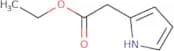
CAS:<p>4-Methylphthalazin-1-amine is a heteroaromatic compound that can be synthesized by cyclization of phenacyl bromides and bromoacetates. It has been found in Australian plants and may have a role in the development of schizophrenia. 4-Methylphthalazin-1-amine is not soluble in water, but it can be dissolved in solvents such as acetone or ethanol. It is also insoluble in most organic solvents.</p>Formula:C9H9N3Purity:Min. 95%Molecular weight:159.19 g/molEthyl 2-(1H-pyrrol-2-yl)acetate
CAS:<p>Versatile small molecule scaffold</p>Formula:C8H11NO2Purity:Min. 95%Molecular weight:153.18 g/mol1-Ethyl-1H-pyrrole-2-carboxylic acid
CAS:<p>1-Ethyl-1H-pyrrole-2-carboxylic acid is a chemical compound that is used as an organic solvent. It is also known as ethyl formate, which is a colorless liquid with a sweet odor. This ester is used to produce esters and other compounds for use in the synthesis of polymers or dyes. It can be halogenated and may be used as an acid ester or acid anhydride. 1-Ethyl-1H-pyrrole-2-carboxylic acid has shown to have some antiinflammatory properties, but it can also cause severe eye irritation and skin sensitization.</p>Formula:C7H9NO2Purity:Min. 95%Molecular weight:139.15 g/mol3-Oxa-9-azaspiro[5.5]undecane-8,10-dione
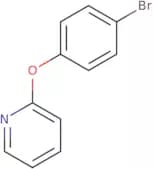
CAS:<p>Versatile small molecule scaffold</p>Formula:C9H13NO3Purity:Min. 95%Molecular weight:183.2 g/mol2-(4-Bromophenoxy)pyridine
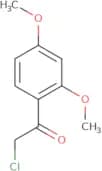
CAS:<p>Versatile small molecule scaffold</p>Formula:C11H8BrNOPurity:Min. 95%Molecular weight:250.09 g/mol2-Chloro-1-(2,4-dimethoxy-phenyl)-ethanone
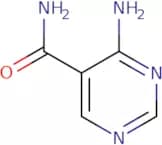
CAS:<p>Versatile small molecule scaffold</p>Formula:C10H11ClO3Purity:Min. 95%Molecular weight:214.65 g/mol4-aminopyrimidine-5-carboxamide
CAS:<p>4-Aminopyrimidine-5-carboxamide is an amide that is synthesized from the reaction of eosinophil and amine. This compound inhibits transcription in a dose-dependent manner, with a high potency for iminium and amines, but not primary amines. 4-Aminopyrimidine-5-carboxamide is orally bioavailable and has shown to be effective in animal models. The compound has been optimized for oral administration and has shown to produce good yields. 4-Aminopyrimidine-5-carboxamide also possesses transcription factor inhibitory activity against interleukin, which may provide therapeutic benefit for inflammatory disorders.</p>Formula:C5H6N4OPurity:Min. 95%Molecular weight:138.13 g/mol

![3-Oxa-9-azaspiro[5.5]undecane-8,10-dione](/_next/image/?url=https%3A%2Fstatic.cymitquimica.com%2Fproducts%2F3D%2Fthumb-webp%2FEAA78013.webp&w=3840&q=75)