Building Blocks
This section contains fundamental products for the synthesis of organic and biological compounds. Building blocks are the essential starting materials used to construct complex molecules through various chemical reactions. They play a critical role in drug discovery, material science, and chemical research. At CymitQuimica, we offer a diverse range of high-quality building blocks to support your innovative research and industrial projects, ensuring you have the essential components for successful synthesis.
Subcategories of "Building Blocks"
- Boronic Acids & Boronic Acid Derivatives(5,756 products)
- Chiral Building Blocks(1,242 products)
- Hydrocarbon Building Blocks(6,095 products)
- Organic Building Blocks(61,038 products)
Found 196817 products of "Building Blocks"
Sort by
Purity (%)
0
100
|
0
|
50
|
90
|
95
|
100
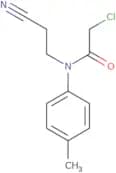
2-Chloro-N-(2-cyanoethyl)-N-(4-methylphenyl)acetamide
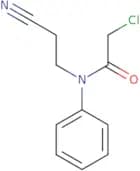
CAS:<p>Versatile small molecule scaffold</p>Formula:C12H13ClN2OPurity:Min. 95%Molecular weight:236.7 g/mol2-Chloro-N-(2-cyanoethyl)-N-phenylacetamide
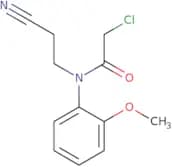
CAS:<p>Versatile small molecule scaffold</p>Formula:C11H11ClN2OPurity:Min. 95%Molecular weight:222.67 g/mol2-Chloro-N-(2-cyanoethyl)-N-(2-methoxyphenyl)acetamide
CAS:<p>Versatile small molecule scaffold</p>Formula:C12H13ClN2O2Purity:Min. 95%Molecular weight:252.69 g/molThieno[3,2-d]pyrimidin-4(1H)-one
CAS:<p>Thieno[3,2-d]pyrimidin-4(1H)-one is a synthetic compound that has been shown to inhibit cancer cell proliferation. It has an amination reaction at the 2' position of the pyrimidine ring and this pharmacophore is responsible for its anticancer activity. Thieno[3,2-d]pyrimidin-4(1H)-one inhibits leukemia HL-60 cells with a potency similar to that of imatinib. It also inhibits hepg2 cells, which are tumor cells derived from hepatocytes. The kinase selectivity profile of thieno[3,2-d]pyrimidin-4(1H)-one does not show any toxicity towards normal cells such as human skin fibroblasts or human umbilical vein endothelial cells. Thieno[3,2-d]pyrimidin-4(1H)-one exhibits a safety profile similar</p>Formula:C6H4N2OSPurity:Min. 95%Molecular weight:152.17 g/mol1-{Thieno[3,2-d]pyrimidin-4-yl}pyrrolidine
CAS:<p>Versatile small molecule scaffold</p>Formula:C10H11N3SPurity:Min. 95%Molecular weight:205.28 g/mol3-Amino-8-methyl-1,3-diazaspiro[4.5]decane-2,4-dione
CAS:<p>Versatile small molecule scaffold</p>Formula:C9H15N3O2Purity:Min. 95%Molecular weight:197.23 g/mol2-Methyl-2-[(propan-2-yl)amino]propanenitrile
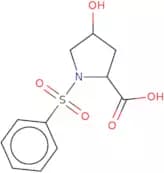
CAS:<p>Versatile small molecule scaffold</p>Formula:C7H14N2Purity:Min. 95%Molecular weight:126.2 g/mol1-(Benzenesulfonyl)-4-hydroxypyrrolidine-2-carboxylic acid
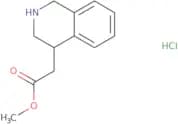
CAS:<p>Versatile small molecule scaffold</p>Formula:C11H13NO5SPurity:Min. 95%Molecular weight:271.3 g/molMethyl 2-(1,2,3,4-tetrahydroisoquinolin-4-yl)acetate hydrochloride
CAS:<p>Versatile small molecule scaffold</p>Formula:C12H16ClNO2Purity:Min. 95%Molecular weight:241.71 g/mol3,5-Dichlorobenzo[d]isoxazole
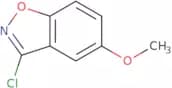
CAS:<p>Versatile small molecule scaffold</p>Formula:C7H3Cl2NOPurity:Min. 95%Molecular weight:188.01 g/mol3-Chloro-5-methoxy-1,2-benzoxazole
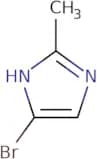
CAS:<p>Versatile small molecule scaffold</p>Formula:C8H6ClNO2Purity:Min. 95%Molecular weight:183.59 g/mol4-Bromo-2-methyl-1H-imidazole
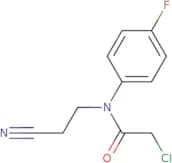
CAS:<p>4-Bromo-2-methyl-1H-imidazole is a carboxylic acid derivative that has been shown to function as a catalyst. It has been used in the synthesis of imidazoles, succinimides, and acylamino derivatives. 4-Bromo-2-methyl-1H-imidazole also has an acidic nature, which makes it useful for the synthesis of esters and amides from carboxylic acids. This compound can be used in the preparation of glycosides by reacting with sugars. 4-Bromo-2-methyl-1H-imidazole is also able to form radicals when heated with oxygen or sodium nitrite. The radical formed will react with alkyl halides and trifluoromethanesulfonic anhydride to form acyl halides and trifluoromethanesulfonamides respectively.</p>Formula:C4H5BrN2Purity:Min. 95%Molecular weight:161 g/mol2-Chloro-N-(2-cyanoethyl)-N-(4-fluorophenyl)acetamide
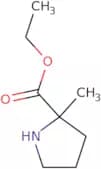
CAS:<p>Versatile small molecule scaffold</p>Formula:C11H10ClFN2OPurity:Min. 95%Molecular weight:240.66 g/molEthyl 2-methylpyrrolidine-2-carboxylate
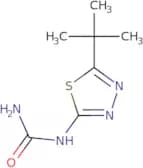
CAS:<p>Versatile small molecule scaffold</p>Formula:C8H15NO2Purity:Min. 95%Molecular weight:157.21 g/mol(5-tert-Butyl-1,3,4-thiadiazol-2-yl)urea
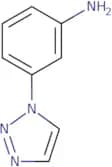
CAS:<p>Versatile small molecule scaffold</p>Formula:C7H12N4OSPurity:Min. 95%Molecular weight:200.26 g/mol3-(1H-1,2,3-Triazol-1-yl)aniline
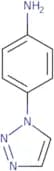
CAS:<p>Versatile small molecule scaffold</p>Formula:C8H8N4Purity:Min. 95%Molecular weight:160.18 g/mol4-(1H-1,2,3-Triazol-1-yl)aniline
CAS:<p>Versatile small molecule scaffold</p>Formula:C8H8N4Purity:Min. 95%Molecular weight:160.18 g/mol2-Phenyl-2-(propan-2-yl)oxirane
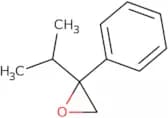
CAS:<p>Versatile small molecule scaffold</p>Formula:C11H14OPurity:Min. 95%Molecular weight:162.23 g/molThieno[3,2-d]pyrimidin-4-amine
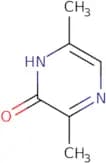
CAS:<p>Thieno[3,2-d]pyrimidin-4-amine is an inhibitor of the enzyme dihydrofolate reductase. This drug is being studied for the treatment of tuberculosis and other bacterial infections. It is a potent inhibitor of the uptake of thiocyanate by erythrocytes. The metabolic pathway for this drug has been shown to involve oxidation by cytochrome p450 enzymes, reduction by glutathione reductase, or conjugation with glucuronic acid. Thieno[3,2-d]pyrimidin-4-amine inhibits the synthesis of purine nucleotides in the mitochondria by inhibiting oxidative phosphorylation at complex III and IV. It also inhibits protein synthesis in bacteria. Thieno[3,2-d]pyrimidin-4-amine has been shown to have antiplasmodial activity against Plasmodium falciparum (</p>Formula:C6H5N3SPurity:Min. 95%Molecular weight:151.19 g/mol3,6-Dimethylpyrazin-2-ol
CAS:<p>3,6-Dimethylpyrazin-2-ol is a natural product that is found in the marine sponge Agelas mauritania. It was identified by its chemical structure and confirmed by X-ray crystallography. 3,6-Dimethylpyrazin-2-ol has been shown to inhibit the growth of E. coli bacteria and may be an effective antimicrobial agent against this type of bacteria.</p>Formula:C6H8N2OPurity:Min. 95%Molecular weight:124.14 g/mol

![Thieno[3,2-d]pyrimidin-4(1H)-one](/_next/image/?url=https%3A%2Fstatic.cymitquimica.com%2Fproducts%2F3D%2Fthumb-webp%2FRAA23410.webp&w=3840&q=75)
![1-{Thieno[3,2-d]pyrimidin-4-yl}pyrrolidine](/_next/image/?url=https%3A%2Fstatic.cymitquimica.com%2Fproducts%2F3D%2Fthumb-webp%2FRAA23448.webp&w=3840&q=75)
![3-Amino-8-methyl-1,3-diazaspiro[4.5]decane-2,4-dione](/_next/image/?url=https%3A%2Fstatic.cymitquimica.com%2Fproducts%2F3D%2Fthumb-webp%2FRAA25293.webp&w=3840&q=75)
![2-Methyl-2-[(propan-2-yl)amino]propanenitrile](/_next/image/?url=https%3A%2Fstatic.cymitquimica.com%2Fproducts%2F3D%2Fthumb-webp%2FRAA25647.webp&w=3840&q=75)
![3,5-Dichlorobenzo[d]isoxazole](/_next/image/?url=https%3A%2Fstatic.cymitquimica.com%2Fproducts%2F3D%2Fthumb-webp%2FRAA26353.webp&w=3840&q=75)
![Thieno[3,2-d]pyrimidin-4-amine](/_next/image/?url=https%3A%2Fstatic.cymitquimica.com%2Fproducts%2F3D%2Fthumb-webp%2FRAA28574.webp&w=3840&q=75)