Building Blocks
This section contains fundamental products for the synthesis of organic and biological compounds. Building blocks are the essential starting materials used to construct complex molecules through various chemical reactions. They play a critical role in drug discovery, material science, and chemical research. At CymitQuimica, we offer a diverse range of high-quality building blocks to support your innovative research and industrial projects, ensuring you have the essential components for successful synthesis.
Subcategories of "Building Blocks"
- Boronic Acids & Boronic Acid Derivatives(5,756 products)
- Chiral Building Blocks(1,242 products)
- Hydrocarbon Building Blocks(6,095 products)
- Organic Building Blocks(61,038 products)
Found 196817 products of "Building Blocks"
Sort by
Purity (%)
0
100
|
0
|
50
|
90
|
95
|
100
1-[3-(Benzyloxy)phenyl]propan-2-one
CAS:<p>Versatile small molecule scaffold</p>Formula:C16H16O2Purity:Min. 95%Molecular weight:240.3 g/mol1-(Ethanesulfonyl)piperazine
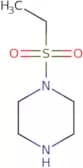
CAS:<p>1-(Ethanesulfonyl)piperazine is an oxidation product of ethylsulfonyl. It is used to inhibit the synthesis of chemokines and proteins, which are involved in inflammation. 1-(Ethanesulfonyl)piperazine has been shown to cause the release of chemokines from human serum albumin and inhibit protein synthesis in gram-negative bacteria. The absorption spectra show that this compound is able to bind to albumin at the N-terminal site and S-site, which may account for its ability to inhibit protein synthesis. 1-(Ethanesulfonyl)piperazine is also able to interact with methoxy groups on s. aureus cells, preventing them from introducing themselves into human cells by binding to the surface of these cells and blocking their adhesion sites.</p>Formula:C6H14N2O2SPurity:Min. 95%Molecular weight:178.25 g/mol1-(Carboxymethyl)cyclopentanecarboxylic acid
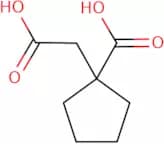
CAS:<p>1-Carboxymethylcyclopentane-1,1-dicarboxylic acid is a crosslinker that can be used for the production of polymers. It is biodegradable and can be hydrolyzed under alkaline conditions. 1-Carboxymethylcyclopentane-1,1-dicarboxylic acid reacts with an alkynyl group to form a polycarboxylic acid. This reaction product may be a monocarboxylic or dicarboxylic acid. 1-Carboxymethylcyclopentane-1,1-dicarboxylic acid has been used as a viscosity enhancer and crosslinking agent for various polymers. This compound is also an effective polymerization initiator for the production of silicone elastomers.</p>Formula:C8H12O4Purity:Min. 95%Molecular weight:172.18 g/molEthyl 2-cyano-2-(1-cyanocyclopentyl)acetate
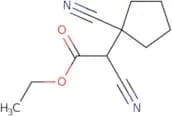
CAS:<p>Versatile small molecule scaffold</p>Formula:C11H14N2O2Purity:Min. 95%Molecular weight:206.24 g/mol6-Methoxy-2,3-dihydro-1H-indene-1-carboxylic acid
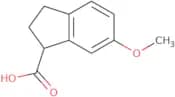
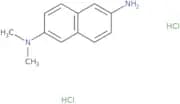
CAS:<p>Versatile small molecule scaffold</p>Formula:C11H12O3Purity:Min. 95%Molecular weight:192.21 g/molN2,N2-Dimethylnaphthalene-2,6-diamine dihydrochloride
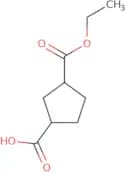
CAS:<p>Versatile small molecule scaffold</p>Formula:C12H16Cl2N2Purity:Min. 95%Molecular weight:259.17 g/molrac-(1R,3S)-3-(Ethoxycarbonyl)cyclopentane-1-carboxylic acid
CAS:<p>Versatile small molecule scaffold</p>Formula:C9H14O4Purity:Min. 95%Molecular weight:186.2 g/mol5-Chloro-2-(4-methoxyphenoxy)aniline
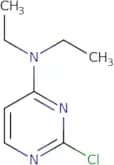
CAS:<p>Versatile small molecule scaffold</p>Formula:C13H12ClNO2Purity:Min. 95%Molecular weight:249.69 g/mol2-Chloro-4-(diethylamino)pyrimidine
CAS:<p>Versatile small molecule scaffold</p>Formula:C8H12ClN3Purity:Min. 95%Molecular weight:185.65 g/molMethyl 2-[3-(benzyloxy)phenyl]acetate
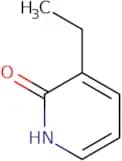
CAS:<p>Methyl 2-[3-(benzyloxy)phenyl]acetate (MBPCA) is a patent-pending lead compound with potential pharmacological applications as an inhibitor of acetyl-coa carboxylase. MBPCA has been shown to reduce plasma triglyceride levels in subchronic studies and is being developed as a potential treatment for hypertriglyceridemia. MBPCA has been shown to be effective against high fat diet-induced obesity, increasing the level of fat oxidation and reducing body weight gain. The pharmacokinetic properties of MBPCA are currently being optimized, including parameters such as bioavailability, volume of distribution, and clearance.</p>Formula:C16H16O3Purity:Min. 95%Molecular weight:256.3 g/mol3-Ethylpyridin-2-ol
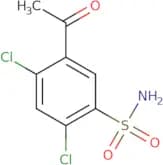
CAS:<p>Versatile small molecule scaffold</p>Formula:C7H9NOPurity:Min. 95%Molecular weight:123.15 g/mol5-Acetyl-2,4-dichlorobenzene-1-sulfonamide
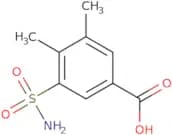
CAS:<p>Versatile small molecule scaffold</p>Formula:C8H7Cl2NO3SPurity:Min. 95%Molecular weight:268.12 g/mol3,4-Dimethyl-5-sulfamoylbenzoic acid
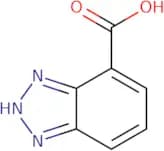
CAS:<p>Versatile small molecule scaffold</p>Formula:C9H11NO4SPurity:Min. 95%Molecular weight:229.26 g/mol3H-Benzotriazole-4-carboxylic acid
CAS:<p>3H-Benzotriazole-4-carboxylic acid is a copper chelator that has been used to study the reactivity of copper and its complexes. It is known to be reactive with hydroxyl groups, fatty acids, glycol ethers, and amines. 3H-Benzotriazole-4-carboxylic acid inhibits the growth of bacteria by binding to enzymes such as fatty acid synthase and acyl coenzyme A:cholesterol acyltransferase. This chemical binds to copper ions in enzyme active sites and prevents them from catalyzing biological reactions. 3H-Benzotriazole-4-carboxylic acid is also able to inhibit hydrogen fluoride production through its ability to bind hydrogen atoms.</p>Formula:C7H5N3O2Purity:Min. 95%Molecular weight:163.13 g/mol(5R)-5-[(1R)-2-Bromo-1-hydroxyethyl]-3,4-dihydroxy-2,5-dihydrofuran-2-one
CAS:<p>5-Bromo-2-deoxyuridine (5BrdUrd) is a nucleoside analog that is used for labeling DNA in the laboratory. It is a potent inhibitor of DNA synthesis and has been shown to be effective against cancer cells. 5BrdUrd is synthesized by coupling 5-bromouracil with an alcohol, typically bovine serum albumin, in the presence of glutathione. The product can then be isolated as its sodium salt. 5BrdUrd can also be prepared from cisplatin, which has been shown to have anticancer properties. Cisplatin binds to DNA and inhibits replication and transcription by inhibiting polymerase activity and causing crosslinking of DNA strands. This inhibition causes cell death through necrosis or apoptosis. 5BrdUrd is a better choice for labelling because it does not cause cellular toxicity in tissues or animals, as cisplatin does.</p>Formula:C6H7BrO5Purity:Min. 95%Molecular weight:239.02 g/mol2-[(Cyclohexylamino)methyl]phenol
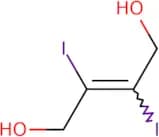
CAS:<p>Versatile small molecule scaffold</p>Formula:C13H19NOPurity:Min. 95%Molecular weight:205.3 g/mol(2E)-2,3-Diiodobut-2-ene-1,4-diol
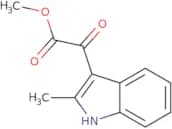
CAS:<p>Versatile small molecule scaffold</p>Formula:C4H6I2O2Purity:Min. 95%Molecular weight:339.9 g/molMethyl 2-(2-methyl-1H-indol-3-yl)-2-oxoacetate
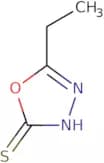
CAS:<p>Versatile small molecule scaffold</p>Formula:C12H11NO3Purity:Min. 95%Molecular weight:217.22 g/mol5-Ethyl-2,3-dihydro-1,3,4-oxadiazole-2-thione
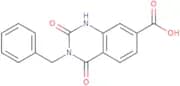
CAS:<p>Versatile small molecule scaffold</p>Formula:C4H6N2OSPurity:Min. 95%Molecular weight:130.17 g/mol3-Benzyl-2,4-dioxo-1,2,3,4-tetrahydroquinazoline-7-carboxylic acid
CAS:<p>Versatile small molecule scaffold</p>Formula:C16H12N2O4Purity:Min. 95%Molecular weight:296.28 g/mol
![1-[3-(Benzyloxy)phenyl]propan-2-one](/_next/image/?url=https%3A%2Fstatic.cymitquimica.com%2Fproducts%2F3D%2Fthumb-webp%2FMCA93275.webp&w=3840&q=75)


![Methyl 2-[3-(benzyloxy)phenyl]acetate](/_next/image/?url=https%3A%2Fstatic.cymitquimica.com%2Fproducts%2F3D%2Fthumb-webp%2FMCA96942.webp&w=3840&q=75)
![(5R)-5-[(1R)-2-Bromo-1-hydroxyethyl]-3,4-dihydroxy-2,5-dihydrofuran-2-one](/_next/image/?url=https%3A%2Fstatic.cymitquimica.com%2Fproducts%2F3D%2Fthumb-webp%2FMCA98344.webp&w=3840&q=75)
![2-[(Cyclohexylamino)methyl]phenol](/_next/image/?url=https%3A%2Fstatic.cymitquimica.com%2Fproducts%2F3D%2Fthumb-webp%2FMCA98453.webp&w=3840&q=75)