Building Blocks
This section contains fundamental products for the synthesis of organic and biological compounds. Building blocks are the essential starting materials used to construct complex molecules through various chemical reactions. They play a critical role in drug discovery, material science, and chemical research. At CymitQuimica, we offer a diverse range of high-quality building blocks to support your innovative research and industrial projects, ensuring you have the essential components for successful synthesis.
Subcategories of "Building Blocks"
- Boronic Acids & Boronic Acid Derivatives(5,778 products)
- Chiral Building Blocks(1,242 products)
- Hydrocarbon Building Blocks(6,098 products)
- Organic Building Blocks(61,034 products)
Found 199601 products of "Building Blocks"
Sort by
Purity (%)
0
100
|
0
|
50
|
90
|
95
|
100
3,4-Dimethyl-2-hydroxybenzoic acid
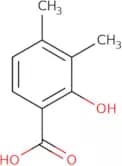
CAS:<p>3,4-Dimethyl-2-hydroxybenzoic acid is a pseudocumene derivative that is an energy source for pseudomonads. This compound is the most abundant of the 3,4-dimethylbenzoic acid isomers. It can be found in a number of techniques such as nuclear magnetic resonance and mass spectroscopy. The various 3,4-dimethylbenzoic acid isomers have been identified by their characteristic spectral data and magnetic resonance signals. The 3,4-dimethylbenzoic acid isomers are differentiated from each other by their different magnetic properties, which depend on their structure.</p>Formula:C9H10O3Purity:Min. 95%Molecular weight:166.17 g/mol3-Methyl-1-(2-methylphenyl)butan-1-one
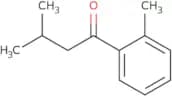
CAS:<p>Versatile small molecule scaffold</p>Formula:C12H16OPurity:Min. 95%Molecular weight:176.25 g/mol2-Iodo-6-methoxypyrazine
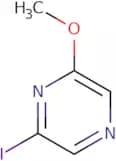
CAS:<p>2-Iodo-6-methoxypyrazine is a chemical compound that belongs to the group of aromatic compounds. It is used as an intermediate in the production of other chemicals. 2-Iodo-6-methoxypyrazine has been found to inhibit the growth of microorganisms and can be used in the production of antibiotics, antihistamines, and antioxidants. The biosynthesis of 2-iodo-6-methoxypyrazine is carried out by chondromyces crocatus (a type of fungus). This process starts with the conversion of pyruvic acid into acetaldehyde by aldehyde decarboxylase. Acetaldehyde then reacts with methyl iodide to form 2-iodoacetaldehyde. Next, this intermediate reacts with methoxyacetone phosphate, leading to methyl pyruvate and finally 2-iodo-6-methoxypyrazine.</p>Formula:C5H5IN2OPurity:Min. 95%Molecular weight:236.01 g/mol2,3-Diiodopyrazine
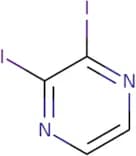
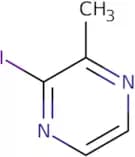
CAS:<p>Versatile small molecule scaffold</p>Formula:C4H2I2N2Purity:Min. 95%Molecular weight:331.88 g/molPyrazine, 2-iodo-3-methyl-
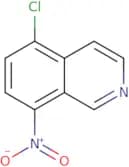
CAS:<p>Versatile small molecule scaffold</p>Formula:C5H5IN2Purity:Min. 95%Molecular weight:220.01 g/mol5-Chloro-8-nitroisoquinoline
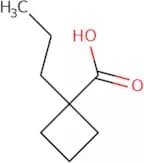
CAS:<p>5-Chloro-8-nitroisoquinoline is a cytotoxic agent that belongs to the class of pyridopyrimidines. It is an amidation product of 8-nitroisoquinoline and 5-chloroacetaldehyde, which is prepared by condensation of nitrostyrene with acetone. 5-Chloro-8-nitroisoquinoline has anticancer activity against human cancer cells in vitro and in vivo. The mechanism of action is multidrug resistance, mediated by overexpression of P glycoprotein. This drug also inhibits the reductive activation of hypoxia inducible factor (HIF) alpha, which leads to its cytotoxicity.</p>Formula:C9H5ClN2O2Purity:Min. 95%Molecular weight:208.6 g/mol1-Propylcyclobutane-1-carboxylic acid
CAS:<p>Versatile small molecule scaffold</p>Formula:C8H14O2Purity:Min. 95%Molecular weight:142.2 g/mol1-(7-Chloronaphthalen-1-yl)ethanone
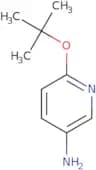
CAS:<p>Versatile small molecule scaffold</p>Formula:C12H9ClOPurity:Min. 95%Molecular weight:204.65 g/mol6-(tert-Butoxy)pyridin-3-amine
CAS:<p>Versatile small molecule scaffold</p>Formula:C9H14N2OPurity:Min. 95%Molecular weight:166.22 g/mol1-(4-chlorophenyl)-2-(3-pyridinyl)ethanone
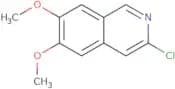
CAS:<p>Versatile small molecule scaffold</p>Formula:C13H10ClNOPurity:Min. 95%Molecular weight:231.68 g/mol3-Chloro-6,7-dimethoxyisoquinoline
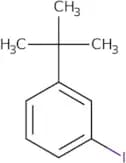
CAS:<p>Versatile small molecule scaffold</p>Formula:C11H10ClNO2Purity:Min. 95%Molecular weight:223.65 g/mol1-tert-Butyl-3-iodobenzene
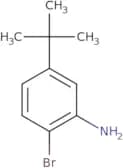
CAS:<p>Versatile small molecule scaffold</p>Formula:C10H13IPurity:Min. 95%Molecular weight:260.11 g/mol2-Bromo-5-tert-butylaniline
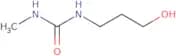
CAS:<p>Versatile small molecule scaffold</p>Formula:C10H14BrNPurity:Min. 95%Molecular weight:228.13 g/mol1-(3-Hydroxypropyl)-3-methylurea
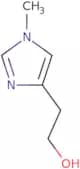
CAS:<p>Versatile small molecule scaffold</p>Formula:C5H12N2O2Purity:Min. 95%Molecular weight:132.16 g/mol2-(1-Methyl-1H-imidazol-4-yl)ethan-1-ol
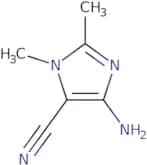
CAS:<p>Versatile small molecule scaffold</p>Formula:C6H10N2OPurity:Min. 95%Molecular weight:126.16 g/mol4-Amino-1,2-dimethyl-1H-imidazole-5-carbonitrile
CAS:<p>Versatile small molecule scaffold</p>Formula:C6H8N4Purity:Min. 95%Molecular weight:136.15 g/mol3-[(Cyclopropylmethyl)amino]propanenitrile
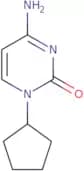
CAS:<p>Versatile small molecule scaffold</p>Formula:C7H12N2Purity:Min. 95%Molecular weight:124.18 g/mol4-Amino-1-cyclopentyl-1,2-dihydropyrimidin-2-one
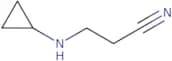
CAS:Versatile small molecule scaffoldFormula:C9H13N3OPurity:Min. 95%Molecular weight:179.22 g/mol3-(3-Cyclopropylamino)propionitrile
CAS:<p>Versatile small molecule scaffold</p>Formula:C6H10N2Purity:Min. 95%Molecular weight:110.16 g/molN-(3-Cyanophenyl)acetamide
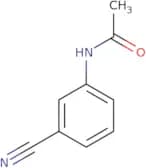
CAS:<p>N-(3-Cyanophenyl)acetamide is a hydrogen-bonding molecule that has been detected in the gas phase. It has also been observed to interact with water, forming hydrogen bonding interactions and solvatochromism. The equilibrium of N-(3-cyanophenyl)acetamide can be shifted by changing the solvent conditions and pH. This molecule has three conformations when it is in the gaseous phase, including a planar conformation. In addition, N-(3-cyanophenyl)acetamide can be used as a probe for determining hydrogen bonding interactions and conformations due to its ability to form hydrogen bonds with other molecules.</p>Formula:C9H8N2OPurity:Min. 95%Molecular weight:160.18 g/mol



![3-[(Cyclopropylmethyl)amino]propanenitrile](/_next/image/?url=https%3A%2Fstatic.cymitquimica.com%2Fproducts%2F3D%2Fthumb-webp%2FICA19634.webp&w=3840&q=75)