Building Blocks
This section contains fundamental products for the synthesis of organic and biological compounds. Building blocks are the essential starting materials used to construct complex molecules through various chemical reactions. They play a critical role in drug discovery, material science, and chemical research. At CymitQuimica, we offer a diverse range of high-quality building blocks to support your innovative research and industrial projects, ensuring you have the essential components for successful synthesis.
Subcategories of "Building Blocks"
- Boronic Acids & Boronic Acid Derivatives(5,756 products)
- Chiral Building Blocks(1,242 products)
- Hydrocarbon Building Blocks(6,095 products)
- Organic Building Blocks(61,055 products)
Found 199650 products of "Building Blocks"
Sort by
Purity (%)
0
100
|
0
|
50
|
90
|
95
|
100
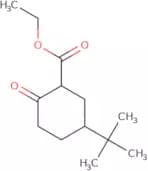
Ethyl 5-tert-butyl-2-oxocyclohexane-1-carboxylate
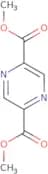
CAS:Versatile small molecule scaffoldFormula:C13H22O3Purity:Min. 95%Molecular weight:226.31 g/molDimethyl Pyrazine-2,5-dicarboxylate
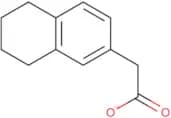
CAS:<p>Versatile small molecule scaffold</p>Formula:C8H8N2O4Purity:Min. 95%Molecular weight:196.16 g/mol(5,6,7,8-Tetrahydro-naphthalen-2-yl)-acetic acid
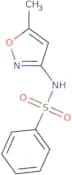
CAS:<p>Versatile small molecule scaffold</p>Formula:C12H14O2Purity:Min. 95%Molecular weight:190.24 g/molN-(5-Methyl-3-isoxazolyl)benzenesulfonamide
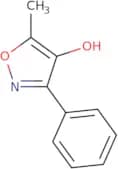
CAS:<p>Versatile small molecule scaffold</p>Formula:C10H10N2O3SPurity:Min. 95%Molecular weight:238.27 g/mol5-Methyl-3-phenyl-1,2-oxazol-4-ol
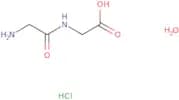
CAS:<p>Versatile small molecule scaffold</p>Formula:C10H9NO2Purity:Min. 95%Molecular weight:175.18 g/molGlycylglycine Hydrochloride Monohydrate
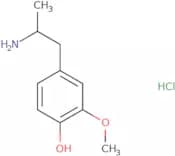
CAS:<p>Glycylglycine hydrochloride monohydrate is a glycine salt that can be used as a metal chelator. It has been shown to be an experimental model for the study of metal-binding proteins, and it can also be used as a model system for the study of benzalkonium chloride. Glycylglycine hydrochloride monohydrate has been shown to have thermodynamic data and biological studies. In vitro assays have been used to show its transfer reactions with other molecules, such as intermolecular hydrogen bonding and coordination geometry. Synchronous fluorescence has also been used to investigate the energy metabolism of glycylglycine hydrochloride monohydrate in solution.</p>Formula:C4H8N2O3·HCl·H2OPurity:Min. 95%Molecular weight:186.6 g/mol4-Hydroxy-3-methoxyamphetamine hydrochloride
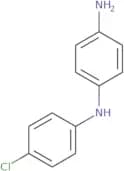
CAS:Controlled Product<p>Versatile small molecule scaffold</p>Formula:C10H16ClNO2Purity:Min. 95%Molecular weight:217.69 g/molN1-(4-Chlorophenyl)benzene-1,4-diamine
CAS:<p>Rhodella is a type of fungus that has a unique mode of growth. It is autotrophic and can grow in the absence of oxygen. Rhodella has been shown to take up galactose through a carrier-mediated facilitated transport system, which provides evidence for the existence of such a transport mechanism in unicellular organisms. The uptake process was found to be inhibited by xylose, suggesting that rhodella may use an active transport system to move galactose across the cell membrane. Autoradiography revealed that rhodella cells contain high levels of uronic acid, a type of sugar found in many plants, which supports the idea that rhodella may be closely related to plants.</p>Formula:C12H11ClN2Purity:Min. 95%Molecular weight:218.68 g/mol2,6-Diethylpyrazine
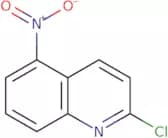
CAS:<p>Versatile small molecule scaffold</p>Formula:C8H12N2Purity:Min. 95%Molecular weight:136.19 g/mol2-Chloro-5-nitroquinoline
CAS:<p>2-Chloro-5-nitroquinoline is an oxidized aminoquinoline that is synthesized from nitric acid and benzene. It contains a nitro group, which makes it susceptible to oxidation. 2-Chloro-5-nitroquinoline is used as a solvent for rubber, plastics, and waxes. It can also be used as a solvent in the production of quinolines and other nitrogen compounds. Nitration of this compound produces 2-chloroquinoline, which can be transformed into 2-chloroquinolinium hydroxide by reaction with sodium hydroxide. The substituent on the ortho position can be determined by oleum or bromine water.</p>Formula:C9H5ClN2O2Purity:Min. 95%Molecular weight:208.6 g/molN-[Bis(methylsulfanyl)methylidene]methanesulfonamide
CAS:<p>Versatile small molecule scaffold</p>Formula:C4H9NO2S3Purity:Min. 95%Molecular weight:199.3 g/molDHODH-IN-11
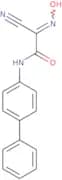
CAS:<p>DHODH-IN-11 is a peptide that was designed to be an inhibitor of the DHODH enzyme. It has been shown to inhibit the activity of this enzyme in vitro and can be used as a research tool for studying protein interactions, receptor binding, and ligand pharmacology.</p>Formula:C15H11N3O2Purity:Min. 95%Molecular weight:265.27 g/mol(6,6-Dimethyl-1,4-dioxan-2-yl)methanol
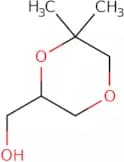
CAS:<p>Versatile small molecule scaffold</p>Formula:C7H14O3Purity:Min. 95%Molecular weight:146.18 g/mol1-Bromo-2-chloro-5-methoxy-3-nitrobenzene
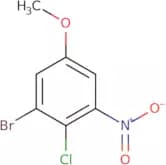
CAS:<p>Versatile small molecule scaffold</p>Formula:C7H5BrClNO3Purity:Min. 95%Molecular weight:266.47 g/mol3-Bromo-5-chlorobenzene-1-thiol
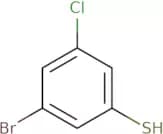
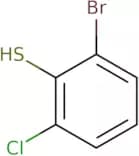
CAS:<p>Versatile small molecule scaffold</p>Formula:C6H4BrClSPurity:Min. 95%Molecular weight:223.52 g/mol2-Bromo-6-chlorobenzene-1-thiol
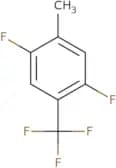
CAS:<p>Versatile small molecule scaffold</p>Formula:C6H4BrClSPurity:Min. 95%Molecular weight:223.52 g/mol1,4-Difluoro-2-methyl-5-(trifluoromethyl)benzene
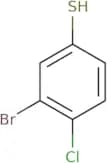
CAS:<p>Versatile small molecule scaffold</p>Formula:C8H5F5Purity:Min. 95%Molecular weight:196.12 g/mol3-Bromo-4-chlorobenzene-1-thiol
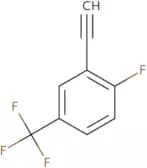
CAS:<p>Versatile small molecule scaffold</p>Formula:C6H4BrClSPurity:Min. 95%Molecular weight:223.52 g/mol2-Ethynyl-1-fluoro-4-(trifluoromethyl)benzene
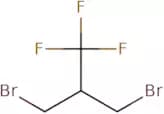
CAS:<p>Versatile small molecule scaffold</p>Formula:C9H4F4Purity:Min. 95%Molecular weight:188.12 g/mol3-Bromo-2-(bromomethyl)-1,1,1-trifluoropropane
CAS:<p>Versatile small molecule scaffold</p>Formula:C4H5Br2F3Purity:Min. 95%Molecular weight:269.89 g/mol

![N-[Bis(methylsulfanyl)methylidene]methanesulfonamide](/_next/image/?url=https%3A%2Fstatic.cymitquimica.com%2Fproducts%2F3D%2Fthumb-webp%2FNAA06810.webp&w=3840&q=75)