Building Blocks
This section contains fundamental products for the synthesis of organic and biological compounds. Building blocks are the essential starting materials used to construct complex molecules through various chemical reactions. They play a critical role in drug discovery, material science, and chemical research. At CymitQuimica, we offer a diverse range of high-quality building blocks to support your innovative research and industrial projects, ensuring you have the essential components for successful synthesis.
Subcategories of "Building Blocks"
- Boronic Acids & Boronic Acid Derivatives(5,778 products)
- Chiral Building Blocks(1,242 products)
- Hydrocarbon Building Blocks(6,098 products)
- Organic Building Blocks(61,098 products)
Found 199594 products of "Building Blocks"
Sort by
Purity (%)
0
100
|
0
|
50
|
90
|
95
|
100
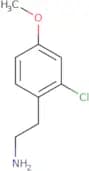
2-(2-Chloro-4-methoxyphenyl)ethan-1-amine
CAS:Controlled Product<p>Versatile small molecule scaffold</p>Formula:C9H12ClNOPurity:Min. 95%Molecular weight:185.65 g/mol5-Ethyl-2,3-dihydro-1H-indole
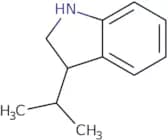
CAS:<p>Versatile small molecule scaffold</p>Formula:C10H13NPurity:Min. 95%Molecular weight:147.22 g/mol3-(Propan-2-yl)-2,3-dihydro-1H-indole
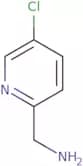
CAS:Versatile small molecule scaffoldFormula:C11H15NPurity:Min. 95%Molecular weight:161.24 g/mol(5-chloropyridin-2-yl)methanamine
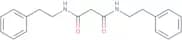
CAS:<p>Versatile small molecule scaffold</p>Formula:C6H7ClN2Purity:Min. 95%Molecular weight:142.59 g/molN,N'-Bis(2-phenylethyl)propanediamide
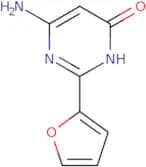
CAS:<p>Versatile small molecule scaffold</p>Formula:C19H22N2O2Purity:Min. 95%Molecular weight:310.4 g/mol6-Amino-2-(furan-2-yl)pyrimidin-4-ol
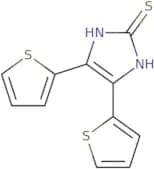
CAS:<p>Versatile small molecule scaffold</p>Formula:C8H7N3O2Purity:Min. 95%Molecular weight:177.16 g/mol4,5-Bis(thiophen-2-yl)-1H-imidazole-2-thiol
CAS:<p>Versatile small molecule scaffold</p>Formula:C11H8N2S3Purity:Min. 95%Molecular weight:264.4 g/mol2-Oxa-8-azaspiro[5.5]undecane
CAS:<p>Versatile small molecule scaffold</p>Formula:C9H17NOPurity:Min. 95%Molecular weight:155.24 g/mol2-Azaspiro[5.6]dodecane
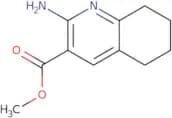
CAS:<p>Versatile small molecule scaffold</p>Formula:C11H21NPurity:Min. 95%Molecular weight:167.29 g/molMethyl 2-amino-5,6,7,8-tetrahydroquinoline-3-carboxylate
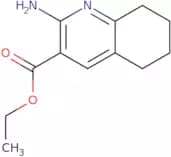
CAS:<p>Versatile small molecule scaffold</p>Formula:C11H14N2O2Purity:Min. 95%Molecular weight:206.24 g/molEthyl 2-amino-5,6,7,8-tetrahydroquinoline-3-carboxylate
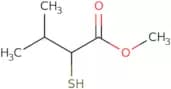
CAS:Versatile small molecule scaffoldFormula:C12H16N2O2Purity:Min. 95%Molecular weight:220.27 g/molMethyl 3-methyl-2-sulfanylbutanoate
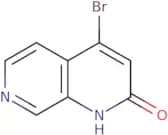
CAS:<p>Versatile small molecule scaffold</p>Formula:C6H12O2SPurity:Min. 95%Molecular weight:148.23 g/mol4-Bromo-1,2-dihydro-1,7-naphthyridin-2-one
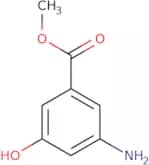
CAS:<p>Versatile small molecule scaffold</p>Formula:C8H5BrN2OPurity:Min. 95%Molecular weight:225.04 g/molMethyl 3-amino-5-hydroxybenzoate
CAS:<p>Methyl 3-amino-5-hydroxybenzoate is a chemical compound that belongs to the group of antibiotics and is used as a selective agent in microbiological cultures. It is not active against Gram-positive bacteria, but has been shown to be selectively active against Verticillatus. Methyl 3-amino-5-hydroxybenzoate prevents the synthesis of DNA by inhibiting the enzyme DNA polymerase. It also inhibits mitomycin C production by Streptomyces, which may be due to its ability to inhibit aldehyde dehydrogenase. Methyl 3-amino-5-hydroxybenzoate is an antibiotic that was first isolated from Australian soil samples.</p>Formula:C8H9NO3Purity:Min. 95%Molecular weight:167.2 g/mol2-[4-(1,3-Benzothiazol-2-yl)phenoxy]propanoic acid
CAS:Versatile small molecule scaffoldFormula:C16H13NO3SPurity:Min. 95%Molecular weight:299.3 g/mol2-[(1S)-Cyclohex-3-en-1-yl]acetic acid
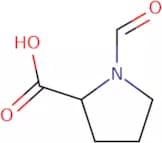
CAS:<p>Versatile small molecule scaffold</p>Formula:C8H12O2Purity:Min. 95%Molecular weight:140.18 g/mol1-Formylpyrrolidine-2-carboxylic acid
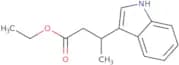
CAS:<p>1-Formylpyrrolidine-2-carboxylic acid is a compound that belongs to the group of pyrrolidines. It is soluble in water and has a strong odor. 1-Formylpyrrolidine-2-carboxylic acid is used as an intermediate for pharmaceuticals, agrochemicals, and dyestuffs. Impurities include chloral, organocatalysts (e.g., l-amino acetate) and peroxides (e.g., hydrogen peroxide). Other impurities include l-glutamic acid and l-threonine, which are naturally occurring compounds found in plants. 1-Formylpyrrolidine-2-carboxylic acid can be obtained by evaporation of its filtrated form or by reacting with chloral hydrate in the presence of potassium amide.</p>Formula:C6H9NO3Purity:Min. 95%Molecular weight:143.14 g/molEthyl 3-(1H-indol-3-yl)butanoate
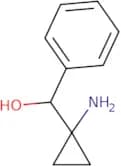
CAS:<p>Versatile small molecule scaffold</p>Formula:C14H17NO2Purity:Min. 95%Molecular weight:231.29 g/mol(1-Aminocyclopropyl)(phenyl)methanol
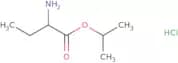
CAS:<p>Versatile small molecule scaffold</p>Formula:C10H13NOPurity:Min. 95%Molecular weight:163.22 g/molPropan-2-yl (2S)-2-aminobutanoate hydrochloride
CAS:<p>Versatile small molecule scaffold</p>Formula:C7H16ClNO2Purity:Min. 95%Molecular weight:181.66 g/mol


![2-Oxa-8-azaspiro[5.5]undecane](/_next/image/?url=https%3A%2Fstatic.cymitquimica.com%2Fproducts%2F3D%2Fthumb-webp%2FSCA95211.webp&w=3840&q=75)
![2-Azaspiro[5.6]dodecane](/_next/image/?url=https%3A%2Fstatic.cymitquimica.com%2Fproducts%2F3D%2Fthumb-webp%2FSCA95212.webp&w=3840&q=75)
![2-[4-(1,3-Benzothiazol-2-yl)phenoxy]propanoic acid](/_next/image/?url=https%3A%2Fstatic.cymitquimica.com%2Fproducts%2F3D%2Fthumb-webp%2FSCA97514.webp&w=3840&q=75)
![2-[(1S)-Cyclohex-3-en-1-yl]acetic acid](/_next/image/?url=https%3A%2Fstatic.cymitquimica.com%2Fproducts%2F3D%2Fthumb-webp%2FSCA97684.webp&w=3840&q=75)