


Building Blocks
This section contains fundamental products for the synthesis of organic and biological compounds. Building blocks are the essential starting materials used to construct complex molecules through various chemical reactions. They play a critical role in drug discovery, material science, and chemical research. At CymitQuimica, we offer a diverse range of high-quality building blocks to support your innovative research and industrial projects, ensuring you have the essential components for successful synthesis.
Subcategories of "Building Blocks"
- Boronic Acids & Boronic Acid Derivatives(5,756 products)
- Chiral Building Blocks(1,242 products)
- Hydrocarbon Building Blocks(6,093 products)
- Organic Building Blocks(60,519 products)
Found 195533 products of "Building Blocks"
Sort by
Purity (%)
0
100
|
0
|
50
|
90
|
95
|
100
2-(4-Bromophenoxy)-5-(trifluoromethyl)aniline
CAS:<p>Versatile small molecule scaffold</p>Formula:C13H9BrF3NOPurity:Min. 95%Molecular weight:332.12 g/mol4-Oxo-3-(propan-2-yl)-3,4-dihydrophthalazine-1-carbohydrazide
CAS:<p>Versatile small molecule scaffold</p>Formula:C12H14N4O2Purity:Min. 95%Molecular weight:246.27 g/mol4-Amino-3,5-dichloro-6-hydrazinylpyridine-2-carbohydrazide
CAS:<p>Versatile small molecule scaffold</p>Formula:C6H8Cl2N6OPurity:Min. 95%Molecular weight:251.07 g/mol4-(Tetrahydro-furan-2-ylmethoxy)-benzoic acid
CAS:<p>Versatile small molecule scaffold</p>Formula:C12H14O4Purity:Min. 95%Molecular weight:222.24 g/mol2-Chloro-N-[2-methoxy-5-(morpholine-4-sulfonyl)phenyl]acetamide
CAS:Controlled Product<p>2-Chloro-N-[2-methoxy-5-(morpholine-4-sulfonyl)phenyl]acetamide is a potent, selective and competitive blocker of the hERG potassium channel. It is a useful tool for the study of ion channels and their ligands. This compound has been shown to inhibit the binding of several peptide hormones to their receptors and can be used as an antibody probe in immunohistochemistry. 2-Chloro-N-[2-methoxy-5-(morpholine-4-sulfonyl)phenyl]acetamide is also used to study protein interactions and has shown potential as a therapeutic drug for the treatment of neurodegenerative diseases such as Alzheimer's disease.</p>Formula:C13H17ClN2O5SPurity:Min. 95%Molecular weight:348.8 g/molN-(2-Bromo-4-nitrophenyl)-2-chloro-2-phenylacetamide
CAS:<p>Versatile small molecule scaffold</p>Formula:C14H10BrClN2O3Purity:Min. 95%Molecular weight:369.6 g/mol5-[3-(Morpholine-4-sulfonyl)phenyl]-1,3,4-oxadiazole-2-thiol
CAS:<p>Versatile small molecule scaffold</p>Formula:C12H13N3O4S2Purity:Min. 95%Molecular weight:327.4 g/mol2-Chloro-1-(1,2,5-trimethyl-1H-pyrrol-3-yl)ethan-1-one
CAS:<p>Versatile small molecule scaffold</p>Formula:C9H12ClNOPurity:Min. 95%Molecular weight:185.65 g/mol2-Amino-N-(4-bromophenyl)-5-fluorobenzene-1-sulfonamide
CAS:Controlled Product<p>2-Amino-N-(4-bromophenyl)-5-fluorobenzene-1-sulfonamide is a competitive antagonist of the GABA receptor. It is used in research to study the role of this receptor in the regulation of neuronal activity and to investigate the mechanism of action of other competitive antagonists. The high purity, high potency, and stability of 2-Amino-N-(4-bromophenyl)-5-fluorobenzene-1-sulfonamide make it an excellent research tool for these studies.</p>Formula:C12H10BrFN2O2SPurity:Min. 95%Molecular weight:345.19 g/mol3-[N-(4-Methoxyphenyl)3,4-dimethylbenzenesulfonamido]propanoic acid
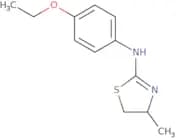
CAS:<p>Versatile small molecule scaffold</p>Formula:C18H21NO5SPurity:Min. 95%Molecular weight:363.4 g/molN-(4-Ethoxyphenyl)-4-methyl-4,5-dihydro-1,3-thiazol-2-amine
CAS:<p>Versatile small molecule scaffold</p>Formula:C12H16N2OSPurity:Min. 95%Molecular weight:236.34 g/mol3-(Carbamoylamino)-3-(3-phenoxyphenyl)propanoic acid
CAS:<p>Versatile small molecule scaffold</p>Formula:C16H16N2O4Purity:Min. 95%Molecular weight:300.31 g/mol((3-Chlorophenyl)sulfonyl)glycine
CAS:<p>Versatile small molecule scaffold</p>Formula:C8H8NO4SClPurity:Min. 95%Molecular weight:249.67 g/mol4-[4-(2,5-Dimethylbenzenesulfonyl)piperazin-1-yl]-4-oxobutanoic acid
CAS:Controlled Product<p>4-[4-(2,5-Dimethylbenzenesulfonyl)piperazin-1-yl]-4-oxobutanoic acid is a research tool that is used as an activator for ion channels and ligand for receptor. It has a molecular weight of 459.06 g/mol, CAS No. 565198-65-4, and purity of ≥98%. This substance binds to the extracellular domain of the nicotinic acetylcholine receptor and modulates its function. Additionally, it interacts with other proteins such as antibody or peptides. 4-[4-(2,5-Dimethylbenzenesulfonyl)piperazin-1-yl]-4-oxobutanoic acid has been shown to inhibit the activity of protein kinase C (PKC), which plays a role in signal transduction pathways in cells.</p>Formula:C16H22N2O5SPurity:Min. 95%Molecular weight:354.4 g/mol5-[(4-Ethylphenyl)amino]-1,3,4-thiadiazole-2-thiol
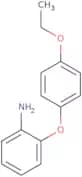
CAS:<p>Versatile small molecule scaffold</p>Formula:C10H11N3S2Purity:Min. 95%Molecular weight:237.3 g/mol2-(4-Ethoxyphenoxy)aniline
CAS:<p>Versatile small molecule scaffold</p>Formula:C14H15NO2Purity:Min. 95%Molecular weight:229.28 g/mol3-(2,4-Dimethylphenyl)-5,6-dimethyl-2-sulfanyl-3H,4H-thieno[2,3-d]pyrimidin-4-one
CAS:<p>Versatile small molecule scaffold</p>Formula:C16H16N2OS2Purity:Min. 95%Molecular weight:316.4 g/mol3-Amino-N,N-diethyl-4-(4-fluorophenoxy)benzene-1-sulfonamide
CAS:<p>Versatile small molecule scaffold</p>Formula:C16H19FN2O3SPurity:Min. 95%Molecular weight:338.4 g/mol5-(Chloromethyl)-2-(2,4-dimethoxyphenyl)-1,3-oxazolidine
CAS:<p>Versatile small molecule scaffold</p>Formula:C12H16ClNO3Purity:Min. 95%Molecular weight:257.71 g/molEthyl 2-[2-(ethylimino)-3-(2,4,6-trimethylphenyl)-2,3-dihydro-1,3-thiazol-4-yl]acetate
CAS:<p>Versatile small molecule scaffold</p>Formula:C18H24N2O2SPurity:Min. 95%Molecular weight:332.5 g/mol


![2-Chloro-N-[2-methoxy-5-(morpholine-4-sulfonyl)phenyl]acetamide](/_next/image/?url=https%3A%2Fstatic.cymitquimica.com%2Fproducts%2F3D%2Fthumb-webp%2FQXA19483.webp&w=3840&q=75)

![5-[3-(Morpholine-4-sulfonyl)phenyl]-1,3,4-oxadiazole-2-thiol](/_next/image/?url=https%3A%2Fstatic.cymitquimica.com%2Fproducts%2F3D%2Fthumb-webp%2FQXA19487.webp&w=3840&q=75)


![3-[N-(4-Methoxyphenyl)3,4-dimethylbenzenesulfonamido]propanoic acid](/_next/image/?url=https%3A%2Fstatic.cymitquimica.com%2Fproducts%2F3D%2Fthumb-webp%2FQXA19546.webp&w=3840&q=75)


![4-[4-(2,5-Dimethylbenzenesulfonyl)piperazin-1-yl]-4-oxobutanoic acid](/_next/image/?url=https%3A%2Fstatic.cymitquimica.com%2Fproducts%2F3D%2Fthumb-webp%2FQXA19865.webp&w=3840&q=75)
![5-[(4-Ethylphenyl)amino]-1,3,4-thiadiazole-2-thiol](/_next/image/?url=https%3A%2Fstatic.cymitquimica.com%2Fproducts%2F3D%2Fthumb-webp%2FQXA19866.webp&w=3840&q=75)
![3-(2,4-Dimethylphenyl)-5,6-dimethyl-2-sulfanyl-3H,4H-thieno[2,3-d]pyrimidin-4-one](/_next/image/?url=https%3A%2Fstatic.cymitquimica.com%2Fproducts%2F3D%2Fthumb-webp%2FQXA19873.webp&w=3840&q=75)


![Ethyl 2-[2-(ethylimino)-3-(2,4,6-trimethylphenyl)-2,3-dihydro-1,3-thiazol-4-yl]acetate](/_next/image/?url=https%3A%2Fstatic.cymitquimica.com%2Fproducts%2F3D%2Fthumb-webp%2FQXA20689.webp&w=3840&q=75)