


Building Blocks
This section contains fundamental products for the synthesis of organic and biological compounds. Building blocks are the essential starting materials used to construct complex molecules through various chemical reactions. They play a critical role in drug discovery, material science, and chemical research. At CymitQuimica, we offer a diverse range of high-quality building blocks to support your innovative research and industrial projects, ensuring you have the essential components for successful synthesis.
Subcategories of "Building Blocks"
- Boronic Acids & Boronic Acid Derivatives(5,756 products)
- Chiral Building Blocks(1,242 products)
- Hydrocarbon Building Blocks(6,093 products)
- Organic Building Blocks(60,522 products)
Found 195533 products of "Building Blocks"
Sort by
Purity (%)
0
100
|
0
|
50
|
90
|
95
|
100
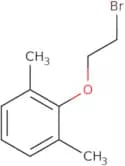
2-(2-Bromo-ethoxy)-1,3-dimethyl-benzene
CAS:<p>Versatile small molecule scaffold</p>Formula:C10H13BrOPurity:Min. 95%Molecular weight:229.12 g/mol1-(2-Bromo-ethoxy)-3,5-dimethyl-benzene
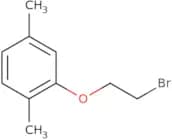
CAS:<p>1-(2-Bromo-ethoxy)-3,5-dimethyl-benzene is a potential drug that has immunosuppressive effects. It binds to the pyrimidine ring of human immunodeficiency virus (HIV) and inhibits its activity. This inhibitor blocks the synthesis of viral DNA and RNA by binding to the sulfur atom of the pyrimidine ring. The substituents on this molecule are bromine and ethoxy groups, which are alkylated.</p>Formula:C10H13BrOPurity:Min. 95%Molecular weight:229.12 g/mol2-(2-Bromo-ethoxy)-1,4-dimethyl-benzene
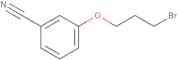
CAS:<p>Versatile small molecule scaffold</p>Formula:C10H13BrOPurity:Min. 95%Molecular weight:229.12 g/mol3-(3-Bromopropoxy)benzonitrile
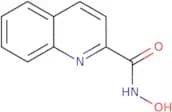
CAS:<p>Versatile small molecule scaffold</p>Formula:C10H10BrNOPurity:Min. 95%Molecular weight:240.1 g/molN-Hydroxyquinoline-2-carboxamide
CAS:<p>N-Hydoxyquinoline-2-carboxamide is a molecule that belongs to the hydroxamic acid class. It is a zirconium-containing derivative of hydroxylamine and, as such, is tautomeric with respect to the carboxylic acid moiety. This compound has been shown to be mutagenic in Salmonella typhimurium strains TA98 and TA100 and in Escherichia coli strain WP2 uvrA. N-Hydroxyquinoline-2-carboxamide has also been found to be an inducer of sulfation and conjugates with glutathione and other organic acids.</p>Formula:C10H8N2O2Purity:Min. 95%Molecular weight:188.18 g/mol7-Hydrazinyl-5-methyl-[1,2,4]triazolo[1,5-a]pyrimidine
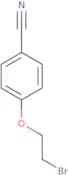
CAS:<p>Versatile small molecule scaffold</p>Formula:C6H8N6Purity:Min. 95%Molecular weight:164.17 g/mol4-(2-Bromoethoxy)benzonitrile
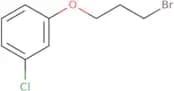
CAS:<p>Versatile small molecule scaffold</p>Formula:C9H8BrNOPurity:Min. 95%Molecular weight:226.07 g/mol1-(3-Bromopropoxy)-3-chlorobenzene
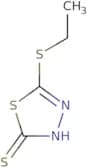
CAS:<p>Versatile small molecule scaffold</p>Formula:C9H10BrClOPurity:Min. 95%Molecular weight:249.53 g/mol2-(Ethylthio)-1,3,4-thiadiazole-5-thiol
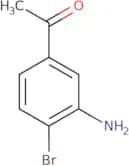
CAS:<p>Versatile small molecule scaffold</p>Formula:C4H6N2S3Purity:Min. 95%Molecular weight:178.3 g/mol3′-Amino-4′-bromoacetophenone
CAS:<p>Versatile small molecule scaffold</p>Formula:C8H8BrNOPurity:Min. 95%Molecular weight:214.06 g/mol4-[4-(Trifluoromethyl)phenyl]-1H-imidazol-2-amine
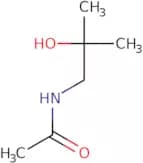
CAS:<p>Versatile small molecule scaffold</p>Formula:C10H8F3N3Purity:Min. 95%Molecular weight:227.19 g/molN-(2-Hydroxy-2-methylpropyl)acetamide
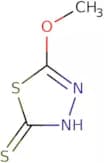
CAS:<p>N-(2-Hydroxy-2-methylpropyl)acetamide (HMPA) is a molecule inhibitor that inhibits the activity of inflammatory bowel disease (IBD)-associated kinases. HMPA is a member of a family of molecules that are inhibitors of IBD-associated kinases, which may be useful for the treatment of IBD. HMPA has shown in vitro inhibition against two kinases, JNK1 and p38 MAPK, which are both important mediators in the progression of IBD. This drug may be used to inhibit inflammation in the digestive tract by blocking these inflammatory pathways.</p>Formula:C6H13NO2Purity:Min. 95%Molecular weight:131.17 g/mol5-Methoxy-1,3,4-thiadiazole-2-thiol
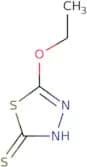
CAS:<p>Versatile small molecule scaffold</p>Formula:C3H4N2OS2Purity:Min. 95%Molecular weight:148.21 g/mol5-Ethoxy-1,3,4-thiadiazole-2-thiol
CAS:<p>5-Ethoxy-1,3,4-thiadiazole-2-thiol is a heterocyclic compound that belongs to the group of thiadiazole dimers. It has a planar structure and is composed of two five-membered heterocycles that are connected by a single bond. The molecule contains no hydrogen bonds and has a dihedral angle of about 60°.</p>Formula:C4H6N2OS2Purity:Min. 95%Molecular weight:162.2 g/mol5-(Propan-2-yloxy)-1,3,4-thiadiazole-2-thiol
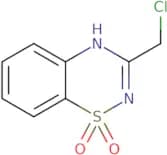
CAS:<p>Versatile small molecule scaffold</p>Formula:C5H8N2OS2Purity:Min. 95%Molecular weight:176.3 g/mol3-(Chloromethyl)-2H-1,2,4-benzothiadiazine-1,1-dione
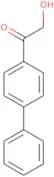
CAS:<p>Versatile small molecule scaffold</p>Formula:C8H7ClN2O2SPurity:Min. 95%Molecular weight:230.67 g/mol2-Hydroxy-1-(4-phenylphenyl)ethan-1-one
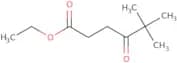
CAS:<p>Versatile small molecule scaffold</p>Formula:C14H12O2Purity:Min. 95%Molecular weight:212.24 g/molEthyl 5,5-dimethyl-4-oxohexanoate
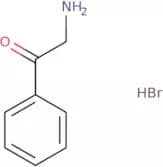
CAS:<p>Versatile small molecule scaffold</p>Formula:C10H18O3Purity:Min. 95%Molecular weight:186.25 g/molPhenacylamine hydrobromide
CAS:Controlled Product<p>Phenacylamine hydrobromide is an alkylsulfonyl carbonyl compound that has a nitro group. It is used as a plant growth regulator for horticultural purposes, and inhibits the production of dopamine and serotonin in the brain by binding to monoamine oxidase. Phenacylamine hydrobromide also has been found to be effective in treating autoimmune diseases through its ability to inhibit the production of interferon-γ. The conformational properties of phenacylamine hydrobromide are affected by the presence of deuterium, which results in an increased rate of reaction with hydroxyl groups as well as a decrease in reactivity with nitro groups.</p>Formula:C8H10BrNOPurity:Min. 95%Molecular weight:216.07 g/mol2-[(2-Methylphenyl)amino]-4,5-dihydro-1,3-thiazol-4-one
CAS:<p>Versatile small molecule scaffold</p>Formula:C10H10N2OSPurity:Min. 95%Molecular weight:206.27 g/mol


![7-Hydrazinyl-5-methyl-[1,2,4]triazolo[1,5-a]pyrimidine](/_next/image/?url=https%3A%2Fstatic.cymitquimica.com%2Fproducts%2F3D%2Fthumb-webp%2FMBA14008.webp&w=3840&q=75)
![4-[4-(Trifluoromethyl)phenyl]-1H-imidazol-2-amine](/_next/image/?url=https%3A%2Fstatic.cymitquimica.com%2Fproducts%2F3D%2Fthumb-webp%2FMBA14887.webp&w=3840&q=75)

![2-[(2-Methylphenyl)amino]-4,5-dihydro-1,3-thiazol-4-one](/_next/image/?url=https%3A%2Fstatic.cymitquimica.com%2Fproducts%2F3D%2Fthumb-webp%2FMBA39499.webp&w=3840&q=75)