Building Blocks
This section contains fundamental products for the synthesis of organic and biological compounds. Building blocks are the essential starting materials used to construct complex molecules through various chemical reactions. They play a critical role in drug discovery, material science, and chemical research. At CymitQuimica, we offer a diverse range of high-quality building blocks to support your innovative research and industrial projects, ensuring you have the essential components for successful synthesis.
Subcategories of "Building Blocks"
- Boronic Acids & Boronic Acid Derivatives(5,781 products)
- Chiral Building Blocks(1,242 products)
- Hydrocarbon Building Blocks(6,101 products)
- Organic Building Blocks(61,033 products)
Found 205320 products of "Building Blocks"
Sort by
Purity (%)
0
100
|
0
|
50
|
90
|
95
|
100
3-(Difluoromethyl)pyridine-2-carboxylic acid
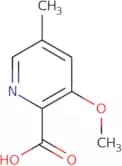
CAS:Versatile small molecule scaffoldFormula:C7H5F2NO2Purity:Min. 95%Molecular weight:173.12 g/mol3-Methoxy-5-methylpyridine-2-carboxylic acid
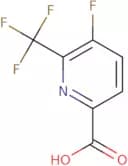
CAS:Versatile small molecule scaffoldFormula:C8H9NO3Purity:Min. 95%Molecular weight:167.16 g/mol5-Fluoro-6-(trifluoromethyl)pyridine-2-carboxylic acid
CAS:Versatile small molecule scaffoldFormula:C7H3F4NO2Purity:Min. 95%Molecular weight:209.1 g/molo-{[5-(Trifluoromethyl)pyridin-2-yl]methyl}hydroxylamine
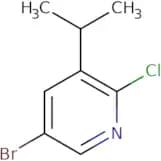
CAS:Versatile small molecule scaffoldFormula:C7H7F3N2OPurity:Min. 95%Molecular weight:192.14 g/mol5-Bromo-2-chloro-3-(propan-2-yl)pyridine
CAS:Versatile small molecule scaffold
Formula:C8H9BrClNPurity:Min. 95%Molecular weight:234.52 g/molMethyl N-(2-hydroxyethyl)-N-methylcarbamate
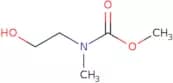
CAS:Methyl N-(2-hydroxyethyl)-N-methylcarbamate (HEMC) is a diazonium salt that is synthesized by the reaction of an amide and methyl ethyl carbamate. HEMC is a potent inhibitor of phosphodiesterase type 5 (PDE5), a type of enzyme found in cells that breaks down the important signaling molecule, cyclic guanosine monophosphate (cGMP). HEMC also has an effect on fatty acid metabolism, leading to changes in the levels of polyunsaturated fatty acids. These effects are thought to be responsible for its anti-inflammatory and emphysema properties. The use of HEMC is restricted to medical purposes. Methyl N-(2-hydroxyethyl)-N-methylcarbamate has been shown to inhibit PDE5 at nanomolar concentrations, with an IC50 value of 0.3 μM. This inhibition leads to increased cGMP levelsFormula:C5H11NO3Purity:Min. 95%Molecular weight:133.15 g/mol2-(5-Chlorothiophen-2-yl)-2-oxoacetic acid
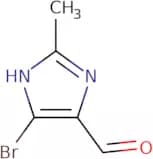
CAS:Versatile small molecule scaffoldFormula:C6H3ClO3SPurity:Min. 95%Molecular weight:190.6 g/mol4-Bromo-2-methyl-1H-imidazole-5-carbaldehyde
CAS:Versatile small molecule scaffoldFormula:C5H5BrN2OPurity:Min. 95%Molecular weight:189.01 g/mol4-[(Oxiran-2-yl)methyl]-3-phenyl-4,5-dihydro-1,2,4-oxadiazol-5-one
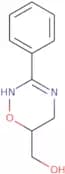
CAS:Versatile small molecule scaffoldFormula:C11H10N2O3Purity:Min. 95%Molecular weight:218.21 g/mol(3-Phenyl-5,6-dihydro-4H-1,2,4-oxadiazin-6-yl)methanol
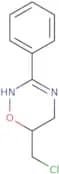
CAS:Versatile small molecule scaffoldFormula:C10H12N2O2Purity:Min. 95%Molecular weight:192.21 g/mol6-(Chloromethyl)-3-phenyl-5,6-dihydro-4H-1,2,4-oxadiazine
CAS:Versatile small molecule scaffoldFormula:C10H11ClN2OPurity:Min. 95%Molecular weight:210.66 g/molMethyl 2-oxobicyclo[2.2.1]heptane-1-carboxylate
CAS:Versatile small molecule scaffold
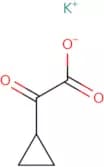
Formula:C9H12O3Purity:Min. 95%Molecular weight:168.2 g/molPotassium 2-cyclopropyl-2-oxoacetate
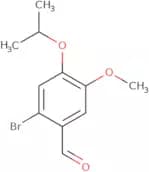
CAS:Versatile small molecule scaffoldFormula:C5H5KO3Purity:Min. 95%Molecular weight:152.19 g/mol2-Bromo-4-isopropoxy-5-methoxybenzaldehyde
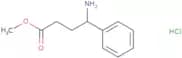
CAS:Versatile small molecule scaffoldFormula:C11H13BrO3Purity:Min. 95%Molecular weight:273.12 g/molMethyl 4-amino-4-phenylbutanoate hydrochloride
CAS:Versatile small molecule scaffoldFormula:C11H16ClNO2Purity:Min. 95%Molecular weight:229.7 g/molN-Nitrosoatrazine
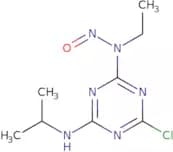
CAS:N-Nitrosoatrazine is a genotoxic compound that is used as an analytical reagent in the field of toxicology. It has been shown to be clastogenic and to cause micronucleus formation in mammalian cells. The toxicity of this compound is related to its ability to induce DNA damage, which may be due to its ability to generate reactive oxygen species by nitrating tyrosine residues on proteins in the cell. N-Nitrosoatrazine also inhibits growth rate and reduces the number of ovary cells in female rats. This effect may be due to its ability to inhibit the synthesis of amines, which are required for follicle development.Formula:C8H13ClN6OPurity:Min. 95%Molecular weight:244.68 g/mol3-Methoxy-3-methyl-1-butanol
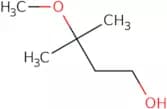
CAS:3-Methoxy-3-methyl-1-butanol is a chemical with a phase equilibrium in water. It has been shown to be effective in the treatment of lung damage caused by radiation, and is also used as an antimicrobial agent in industrial processes. This chemical is used to remove particles from air streams that are contaminated with bacteria. 3-Methoxy-3-methyl-1-butanol binds to fatty acids on the surface of bacteria, which disrupts their cell membranes and inhibits their growth. The molecular weight of this chemical is 138 g/mol.Formula:C6H14O2Purity:Min. 95%Molecular weight:118.17 g/mol3,3,3-Trifluoro-2-phenylpropionic acid
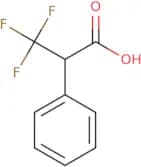
CAS:3,3,3-Trifluoro-2-phenylpropionic acid (TFPA) is a chiral molecule that can be used as a derivatizing agent to identify compounds. It has antibacterial properties and may be used in the manufacture of thin films or coatings. TFPA is insoluble in water and exhibits antibacterial activity when applied to surfaces. This compound can also be used in the synthesis of perovskite solar cells, as well as for particle size measurements. TFPA reacts with alcohols and amides to form esters and amides respectively. TFPA is also reactive with phosphines such as triphenylphosphine to form phosphonium salts. TFPA has been shown to have anti-inflammatory effects in mice by inhibiting prostaglandin synthesis.Formula:C9H7F3O2Purity:Min. 95%Molecular weight:204.15 g/mol1-(2-Furfuryl)-2-thiourea
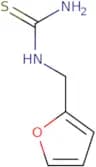
CAS:1-(2-Furfuryl)-2-thiourea is a herbicidal compound that inhibits the growth of plants by interrupting the synthesis of chlorophyll. This reaction occurs through the formation of an intermediate called betacyanin, which absorbs light at 670 nm and prevents it from being used in photosynthesis. 1-(2-Furfuryl)-2-thiourea is synthesized through a two step process, starting with the condensation of phenylurea and thiourea. The second step involves the deuteriumation of 1-(2-furfuryl)thiourea to produce 1-(2-furfuryl)-2-thiourea. The deuteriumation process is achieved by reacting 1-(2-furfuryl)thiourea with sodium borohydride in methanol solution. The yield for this reaction is about 80%.Formula:C6H8N2OSPurity:Min. 95%Molecular weight:156.2 g/mol3-Cyano-N-ethylbenzene-1-sulfonamide
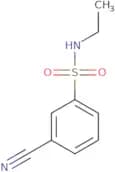
CAS:3-Cyano-N-ethylbenzene-1-sulfonamide is a drug that has been used for the treatment of tuberculosis and as an antidote for poisoning. It is a derivative of aniline that has been treated with ethyl sulfate to make it more soluble in water. 3-Cyano-N-ethylbenzene-1-sulfonamide is used to detect small amounts of drugs, such as methamphetamine, cocaine, and heroin. The detection method involves mixing the compound with a reagent called benzidine and then measuring the color change produced by the reaction. This drug can also be used to detect impurities in other medicines, such as aspirin or amphetamine.Formula:C9H10N2O2SPurity:Min. 95%Molecular weight:210.26 g/mol


![o-{[5-(Trifluoromethyl)pyridin-2-yl]methyl}hydroxylamine](/_next/image/?url=https%3A%2Fstatic.cymitquimica.com%2Fproducts%2F3D%2Fthumb-webp%2FGAC80376.webp&w=3840&q=75)

![4-[(Oxiran-2-yl)methyl]-3-phenyl-4,5-dihydro-1,2,4-oxadiazol-5-one](/_next/image/?url=https%3A%2Fstatic.cymitquimica.com%2Fproducts%2F3D%2Fthumb-webp%2FGCA49376.webp&w=3840&q=75)
![Methyl 2-oxobicyclo[2.2.1]heptane-1-carboxylate](/_next/image/?url=https%3A%2Fstatic.cymitquimica.com%2Fproducts%2F3D%2Fthumb-webp%2FGCA50563.webp&w=3840&q=75)