Building Blocks
This section contains fundamental products for the synthesis of organic and biological compounds. Building blocks are the essential starting materials used to construct complex molecules through various chemical reactions. They play a critical role in drug discovery, material science, and chemical research. At CymitQuimica, we offer a diverse range of high-quality building blocks to support your innovative research and industrial projects, ensuring you have the essential components for successful synthesis.
Subcategories of "Building Blocks"
- Boronic Acids & Boronic Acid Derivatives(5,780 products)
- Chiral Building Blocks(1,241 products)
- Hydrocarbon Building Blocks(6,100 products)
- Organic Building Blocks(61,024 products)
Found 205297 products of "Building Blocks"
Sort by
Purity (%)
0
100
|
0
|
50
|
90
|
95
|
100
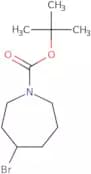
tert-Butyl 4-bromoazepane-1-carboxylate
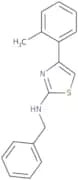
CAS:Versatile small molecule scaffoldFormula:C11H20BrNO2Purity:Min. 95%Molecular weight:278.19 g/molN-Benzyl-4-(2-methylphenyl)-1,3-thiazol-2-amine
CAS:Versatile small molecule scaffoldFormula:C17H16N2SPurity:Min. 95%Molecular weight:280.4 g/mol[2-(Dibenzylamino)ethyl][(pyridin-2-yl)methyl]amine
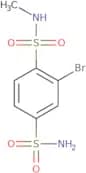
CAS:Versatile small molecule scaffoldFormula:C22H25N3Purity:Min. 95%Molecular weight:331.5 g/mol2-Bromo-N1-methylbenzene-1,4-disulfonamide
CAS:Versatile small molecule scaffoldFormula:C7H9BrN2O4S2Purity:Min. 95%Molecular weight:329.2 g/mol4-{[(1-Methylazetidin-3-yl)methyl]amino}benzoic acid
CAS:Versatile small molecule scaffoldFormula:C12H16N2O2Purity:Min. 95%Molecular weight:220.27 g/mol2,3-Dichloro-5,6-dicyano-1,4-benzoquinone
CAS:Please enquire for more information about 2,3-Dichloro-5,6-dicyano-1,4-benzoquinone including the price, delivery time and more detailed product information at the technical inquiry form on this pageFormula:C8Cl2N2O2Molecular weight:227.01 g/molRef: 3D-D-1950
1kgTo inquire5kgTo inquire10kgTo inquire500gTo inquire2500gTo inquire-Unit-kgkgTo inquire3,4-Dichlorosulfolane
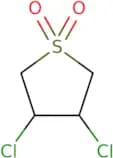
CAS:3,4-Dichlorosulfolane is a chemical compound that has been shown to have both carcinogenic and non-carcinogenic effects in animals. It is an anthropogenic gas with a high global warming potential. The rate of formation of 3,4-Dichlorosulfolane depends on the concentration of atmospheric ozone. This gas also has a role in the regulation of physiological functions and growth factors in plants. 3,4-Dichlorosulfolane can be detected by mass spectrometry and plasma, which are used for chemical analyses.Formula:C4H6Cl2O2SPurity:Min. 95%Molecular weight:189.06 g/mol2-Methyloctanoic acid
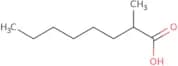
CAS:Versatile small molecule scaffoldFormula:C9H18O2Purity:Min. 95%Molecular weight:158.24 g/molCycloheptane-1,2-dione
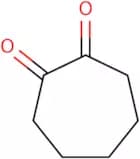
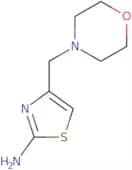
CAS:Cycloheptane-1,2-dione is an organic solvent that has a hydroxyl group and a methyl ethyl group. It is used as a reaction medium in the preparation of dioxime from ketones. Cycloheptane-1,2-dione is also used as an inhibitor in the kinetic study of reactions because it can be removed by physical methods or by adding a chlorine atom to form a compound with a nitro group. Cycloheptane-1,2-dione is also used in diagnosis tests for inhibition of compounds that are damaging to dry weight or for which radiation enhances their activity. These inhibitory compounds can be identified using cycloheptane-1,2-dione as the reagent. Cycloheptane-1,2-dione can be synthesized in large quantities and at low cost by reacting chlorine gas with dimethylcyclohexanone.Formula:C7H10O2Purity:Min. 95%Molecular weight:126.15 g/mol4-(Morpholin-4-ylmethyl)-1,3-thiazol-2-amine
CAS:Versatile small molecule scaffold
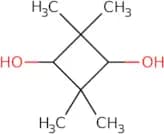
Formula:C8H13N3OSPurity:Min. 95%Molecular weight:199.27 g/mol2,2,4,4-Tetramethyl-1,3-cyclobutanediol, mixture of isomers
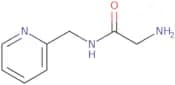
CAS:Tetramethyl-1,3-cyclobutanediol is a diacid that can be used as a monomer for the production of polyesters. It has conformational properties that are different from other diols. Tetramethyl-1,3-cyclobutanediol is soluble in hydrochloric acid and reacts with coatings containing dibutyltin oxide to produce residues. This chemical also reacts with copper oxide, resulting in the formation of copper cyclohexanol and dibutyltin oxide. Tetramethyl-1,3-cyclobutanediol is able to react with carboxylic acids to form esters. This compound has been shown to be employed in the synthesis of polycarboxylic acids such as adipic acid and sebacic acid. Tetramethyl-1,3-cyclobutanediol has been used in the production of polyester resins by reacting with ethylene glycol and tereFormula:C8H16O2Purity:Min. 95%Molecular weight:144.21 g/mol2-Amino-N-(pyridin-2-ylmethyl)acetamide
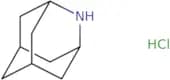
CAS:Versatile small molecule scaffoldFormula:C8H11N3OPurity:Min. 95%Molecular weight:165.19 g/mol2-azaadamantane hcl
CAS:2-Azaadamantane is a naphthalene derivative that is used as a precursor for the synthesis of other compounds. It undergoes catalytic hydrocarboxylation with hydrogen peroxide and ammonia to form 2-hydroxyadamantane. 2-Azaadamantane can also be oxidized to form 2-azaadamantane hcl. It has been shown that this compound can be used as an alternative to germanium in raman spectroscopy studies. 2-Azaadamantane hcl has a catalytic activity for hydrocarbons and iodinated compounds at temperatures below 200°C and pressures below 1 bar.Formula:C9H16ClNPurity:Min. 95%Molecular weight:173.68 g/molN-(Anilinocarbonyl)glycine
CAS:N-Anilinocarbonylglycine is a synthetic, optical, ethyl ester of hydantoin. It is produced by the reaction of aniline and glyoxylic acid in the presence of acetic anhydride and pyridine. The compound undergoes hydrolysis when treated with alkaline hydroxide solution. The kinetics of the reaction can be studied using a hydroxide solution as the base catalyst. In addition, N-Anilinocarbonylglycine has been shown to have membrane-stabilizing properties which may be due to its monocarboxylic acid group. This compound also undergoes catalytic deuterium isotope exchange reactions with chlorine gas in chloroform solution at room temperature.Formula:C9H10N2O3Purity:Min. 95%Molecular weight:194.19 g/mol2-bromo-3-methyl-2-butene
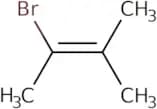
CAS:Benzothiazoles and benzoxazoles are two classes of heterocyclic compounds that can be used to synthesize other biologically active molecules. 2-Bromo-3-methyl-2-butene is a coupling product that can be used in the synthesis of benzothiazole and benzoxazole. 2-Bromo-3-methyl-2-butene is an environmentally friendly reactant that gives high yields with alkenyl and heteroaromatic bromides. In addition, it can produce trisubstituted products with bromides as the only reagent.Formula:C5H9BrPurity:Min. 95%Molecular weight:149.03 g/mol1-Phenyl-1,2,3,4-tetrahydronaphthalene
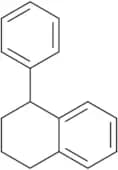
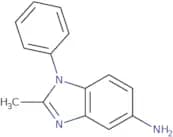
CAS:1-Phenyl-1,2,3,4-tetrahydronaphthalene is a hydroxylated aromatic hydrocarbon that is used as a monomer in polymerization reactions. It is used in the production of styrene, which is an important chemical for the manufacture of polymers. 1-Phenyl-1,2,3,4-tetrahydronaphthalene has been shown to be effective as a polymerization initiator and can be used in pharmaceutical formulations. This compound can also be used as a solvent for hydrocarbons such as benzene and toluene. The particle size of 1-phenyl-1,2,3,4-tetrahydronaphthalene dictates its processability in the manufacturing process. The smaller the particle size of 1-phenyl-1,2,3,4-tetrahydronaphthalene particles are processed at a slower rate than larger particlesFormula:C16H16Purity:Min. 95%Molecular weight:208.3 g/mol2-Methyl-1-phenyl-1H-1,3-benzodiazol-5-amine
CAS:Versatile small molecule scaffold
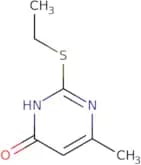
Formula:C14H13N3Purity:Min. 95%Molecular weight:223.27 g/mol2-Ethylsulfanyl-6-methyl-pyrimidin-4-ol
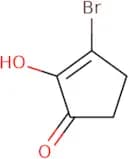
CAS:2-Ethylsulfanyl-6-methyl-pyrimidin-4-ol is a nitrogen heterocycle that can be used as a research chemical. It has been shown to have tumor necrosis factor activity and 6-methyluracil, which is an adamantyl substituent. This compound may also be an activator of hydrocarbon exocyclic radicals.Formula:C7H10N2OSPurity:Min. 95%Molecular weight:170.23 g/mol3-Bromo-2-hydroxycyclopent-2-en-1-one
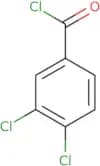
CAS:3-Bromo-2-hydroxycyclopent-2-en-1-one is used as a cycloaddition and aldol reaction catalyst. It has been shown to produce the highest yields in both reactions, with excellent synlett yields of β-unsaturated aldehydes and cyclopentenones. 3-Bromo-2-hydroxycyclopent-2-en-1-one can be used for the synthesis of tetracyclic, dihydrofuran, and other compounds that contain functional groups. 3Bromo 2HCPE is also lithiated to produce an intermediate in the synthesis of pharmaceuticals.Formula:C5H5BrO2Purity:Min. 95%Molecular weight:177 g/mol3,4-Dichlorobenzoyl Chloride
CAS:3,4-Dichlorobenzoyl chloride is an organic compound that is used as a building block in the synthesis of other compounds. It reacts with amines to form benzamides. 3,4-Dichlorobenzoyl chloride is also used to synthesize 5-nitrosalicylic acid, which is used for the treatment of degenerative diseases. 3,4-Dichlorobenzoyl chloride has been shown to inhibit efflux pumps in bacteria and inflammatory diseases by interacting with ATP binding cassette transporters. This compound can also reversibly oxidize nitrogen atoms in an electron reduction reaction.Formula:C7H3Cl3OPurity:Min. 95%Molecular weight:209.46 g/mol

![[2-(Dibenzylamino)ethyl][(pyridin-2-yl)methyl]amine](/_next/image/?url=https%3A%2Fstatic.cymitquimica.com%2Fproducts%2F3D%2Fthumb-webp%2FCZC44915.webp&w=3840&q=75)
![4-{[(1-Methylazetidin-3-yl)methyl]amino}benzoic acid](/_next/image/?url=https%3A%2Fstatic.cymitquimica.com%2Fproducts%2F3D%2Fthumb-webp%2FCZC93797.webp&w=3840&q=75)