


Building Blocks
This section contains fundamental products for the synthesis of organic and biological compounds. Building blocks are the essential starting materials used to construct complex molecules through various chemical reactions. They play a critical role in drug discovery, material science, and chemical research. At CymitQuimica, we offer a diverse range of high-quality building blocks to support your innovative research and industrial projects, ensuring you have the essential components for successful synthesis.
Subcategories of "Building Blocks"
- Boronic Acids & Boronic Acid Derivatives(5,756 products)
- Chiral Building Blocks(1,242 products)
- Hydrocarbon Building Blocks(6,095 products)
- Organic Building Blocks(61,038 products)
Found 196817 products of "Building Blocks"
Sort by
Purity (%)
0
100
|
0
|
50
|
90
|
95
|
100
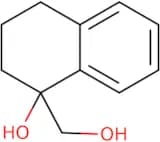
1-(Hydroxymethyl)-1,2,3,4-tetrahydronaphthalen-1-ol
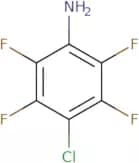
CAS:<p>Versatile small molecule scaffold</p>Formula:C11H14O2Purity:Min. 95%Molecular weight:178.23 g/mol4-Chloro-2,3,5,6-tetrafluoroaniline
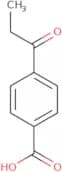
CAS:<p>Versatile small molecule scaffold</p>Formula:C6H2ClF4NPurity:Min. 95%Molecular weight:199.53 g/mol4-Propionylbenzoic acid
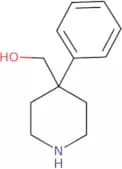
CAS:<p>4-Propionylbenzoic acid (4PB) is a racemic mixture of the two enantiomers, 4-propionyloxybenzoic acid and 4-hydroxybenzoic acid. It is an ester formed from terephthalic or isophthalic acids and a propionic acid. The ester group in 4PB reacts with alcohols to form esters, diesters, and condensation products. This compound acts as a muscle relaxant by blocking the action of calcium ions in nerve cells. Its active form can be formed by enzymatic oxidation from its inactive form, 4-hydroxybenzoic acid.</p>Formula:C10H10O3Purity:Min. 95%Molecular weight:178.18 g/mol(4-Phenylpiperidin-4-yl)methanol
CAS:<p>4-Phenylpiperidin-4-yl)methanol (PPI) is a compound that inhibits motility and can be used as an analgesic. It is a white solid with a molecular weight of 174.2 g/mol. PPI is soluble in organic solvents such as acetone, ethyl acetate, and chloroform. The most common side effects are dizziness, drowsiness, and headache. These side effects may be due to the piperidine substituent in the molecule or because it can cause an increase in blood pressure and heart rate.</p>Formula:C12H17NOPurity:Min. 95%Molecular weight:191.27 g/mol4,4-Dimethoxybutanoic Acid Methyl Ester
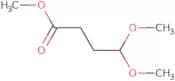
CAS:<p>4,4-Dimethoxybutanoic Acid Methyl Ester is a synthetic compound that can be synthesized by ring-opening of the iminium salt. The stereoselective synthesis of this compound has been achieved through the use of a chiral auxiliary. This compound has shown biological properties in some studies, such as inhibition of glutamic and threonine amide synthesis. 4,4-Dimethoxybutanoic Acid Methyl Ester also has the potential to be used in natural product synthesis.</p>Formula:C7H14O4Purity:Min. 95%Molecular weight:162.18 g/mol1-(4-Methylpiperazin-1-yl)propan-2-ol
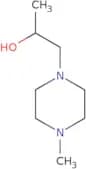
CAS:<p>1-(4-Methylpiperazin-1-yl)propan-2-ol is a piperazine derivative that acts as an analgesic. It is structurally related to the morpholine and piperazine class of drugs, with the addition of a methyl group in the para position on the phenyl ring. This addition may alter the binding site for 5-HT receptors and other sites that are involved in migraines. 1-(4-Methylpiperazin-1-yl)propan-2-ol has shown no anti-migraine effects in experimental studies, but it does have antimigraine effects when given to rats. It also has been shown to interact with indolylalkylamines and halogens.</p>Formula:C8H18N2OPurity:Min. 95%Molecular weight:158.24 g/mol6-Iodohexanoic acid
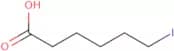
CAS:<p>6-Iodohexanoic acid is a chemical compound that belongs to the group of 6-hydroxyhexanoic acid fatty acids. It is synthesized by reacting the corresponding nitro compound with an acceptor such as 6-hydroxyhexanoic acid. The synthetic route for 6-iodohexanoic acid includes the use of phenyliodine diacetate and nitric acid. 6-Iodohexanoic acid has been shown to have activity against pests such as lepidoptera, which are insects that include butterflies and moths.<br>6-Iodohexanoic acid is also known to be an important histone deacetylase inhibitor. This inhibitor suppresses cancer cell growth and proliferation, which may be due to its ability to inhibit the activity of enzymes involved in the synthesis of prostaglandins.</p>Formula:C6H11IO2Purity:Min. 95%Molecular weight:242.05 g/mol4,6-Dimethoxy-2,3-dihydro-1-benzofuran-3-one
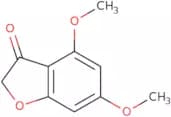
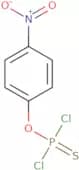
CAS:<p>Versatile small molecule scaffold</p>Formula:C10H10O4Purity:Min. 95%Molecular weight:194.18 g/mol(4-Nitrophenoxy)phosphonothioyl dichloride
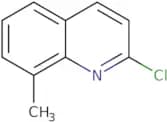
CAS:<p>Versatile small molecule scaffold</p>Formula:C6H4Cl2NO3PSPurity:Min. 95%Molecular weight:272.04 g/mol2-Chloro-8-methylquinoline
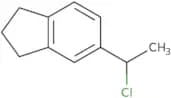
CAS:<p>2-Chloro-8-methylquinoline is a chlorinated aromatic compound that has antioxidant properties. It inhibits monoamine oxidase activity and has been shown to have an inhibitory effect on clomipramine, which is a type of antidepressant. 2-Chloro-8-methylquinoline has also been shown to have neurotoxic effects in vitro and can cause the death of neurons by inhibiting their growth. The mechanism of this inhibition is not yet clear, but it may involve the inhibition of amine uptake or the inhibition of amine synthesis. 2-Chloro-8-methylquinoline has also been shown to be effective in vivo and can cause an increase in locomotor activity in rats.</p>Formula:C10H8ClNPurity:Min. 95%Molecular weight:177.63 g/mol5-(1-Chloroethyl)-2,3-dihydro-1H-indene
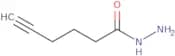
CAS:<p>Versatile small molecule scaffold</p>Formula:C11H13ClPurity:Min. 95%Molecular weight:180.67 g/molHex-5-ynehydrazide
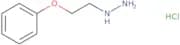
CAS:<p>Versatile small molecule scaffold</p>Formula:C6H10N2OPurity:Min. 95%Molecular weight:126.16 g/mol1-(2-phenoxyethyl)hydrazine
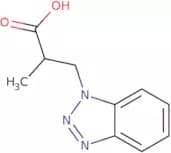
CAS:<p>Versatile small molecule scaffold</p>Formula:C8H13ClN2OPurity:Min. 95%Molecular weight:188.65 g/mol3-(1H-1,2,3-Benzotriazol-1-yl)-2-methylpropanoic acid
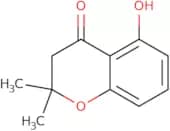
CAS:<p>Versatile small molecule scaffold</p>Formula:C10H11N3O2Purity:Min. 95%Molecular weight:205.21 g/mol5-Hydroxy-2,2-dimethyl-3,4-dihydro-2H-1-benzopyran-4-one
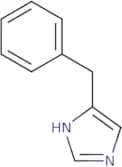
CAS:<p>Versatile small molecule scaffold</p>Formula:C11H12O3Purity:Min. 95%Molecular weight:192.21 g/mol4-Benzyl-1H-imidazole
CAS:<p>4-Benzyl-1H-imidazole is an imidazole derivative that is synthetically produced. It has been shown to inhibit β-glucosidase, which may be a byproduct of cancer cells. 4-Benzyl-1H-imidazole also inhibits the activity of the h3 receptor, which is found in human neutrophils and T cells. 4-Benzyl-1H-imidazole has antibacterial activity against gram positive bacteria such as Staphylococcus aureus and Streptococcus pneumoniae, but not against gram negative bacteria such as Escherichia coli or Pseudomonas aeruginosa.</p>Formula:C10H10N2Purity:Min. 95%Molecular weight:158.2 g/mol2-Oxo-1,2,5,6,7,8-hexahydro-3-quinolinecarbonitrile
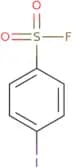
CAS:<p>Versatile small molecule scaffold</p>Formula:C10H10N2OPurity:Min. 95%Molecular weight:174.2 g/mol4-Iodobenzene-1-sulfonyl fluoride
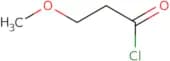
CAS:<p>Versatile small molecule scaffold</p>Formula:C6H4FIO2SPurity:Min. 95%Molecular weight:286.06 g/mol3-Methoxypropanoyl chloride
CAS:<p>3-Methoxypropanoyl chloride is a pharmaceutical drug that has been used to treat restenosis. It is also used in the preparation of pharmaceuticals, and as a modifier for receptors. 3-Methoxypropanoyl chloride can be taken up by cells and may be converted to other compounds through oxidation or reduction reactions. 3-Methoxypropanoyl chloride has been shown to have anticancer activity at low energy levels. This compound has also been shown to decrease inflammation in animal models of inflammatory diseases. 3-Methoxypropanoyl chloride may act as an affinity ligand when coupled with amide, which can potentiate its antagonist effects on receptor activity in vitro.</p>Formula:C4H7ClO2Purity:Min. 95%Molecular weight:122.55 g/mol3-[(Ethoxycarbonyl)amino]propanoic acid
CAS:<p>Versatile small molecule scaffold</p>Formula:C6H11NO4Purity:Min. 95%Molecular weight:161.16 g/mol

![3-[(Ethoxycarbonyl)amino]propanoic acid](/_next/image/?url=https%3A%2Fstatic.cymitquimica.com%2Fproducts%2F3D%2Fthumb-webp%2FEAA24481.webp&w=3840&q=75)