Building Blocks
This section contains fundamental products for the synthesis of organic and biological compounds. Building blocks are the essential starting materials used to construct complex molecules through various chemical reactions. They play a critical role in drug discovery, material science, and chemical research. At CymitQuimica, we offer a diverse range of high-quality building blocks to support your innovative research and industrial projects, ensuring you have the essential components for successful synthesis.
Subcategories of "Building Blocks"
- Boronic Acids & Boronic Acid Derivatives(5,774 products)
- Chiral Building Blocks(1,237 products)
- Hydrocarbon Building Blocks(6,098 products)
- Organic Building Blocks(60,970 products)
Found 205134 products of "Building Blocks"
Sort by
Purity (%)
0
100
|
0
|
50
|
90
|
95
|
100
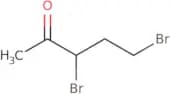
3,5-Dibromopentan-2-one
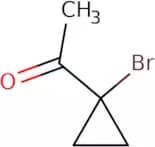
CAS:Versatile small molecule scaffoldFormula:C5H8Br2OPurity:Min. 95%Molecular weight:243.92 g/mol1-(1-Bromocyclopropyl)ethanone
CAS:Versatile small molecule scaffold
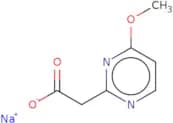
Formula:C5H7OBrPurity:Min. 95%Molecular weight:163.01 g/molSodium 2-(4-methoxypyrimidin-2-yl)acetate
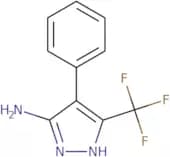
CAS:Versatile small molecule scaffoldFormula:C7H7N2NaO3Purity:Min. 95%Molecular weight:190.1 g/mol4-Phenyl-3-(trifluoromethyl)-1H-pyrazol-5-amine
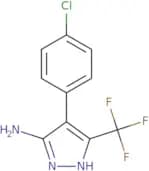
CAS:Versatile small molecule scaffoldFormula:C10H8F3N3Purity:Min. 95%Molecular weight:227.19 g/mol4-(4-Chlorophenyl)-3-(trifluoromethyl)-1H-pyrazol-5-amine
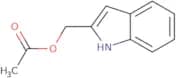
CAS:Versatile small molecule scaffoldFormula:C10H7N3F3ClPurity:Min. 95%Molecular weight:261.63 g/mol1H-Indol-2-ylmethyl acetate
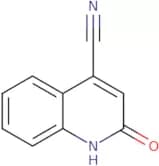
CAS:Versatile small molecule scaffoldFormula:C11H11NO2Purity:Min. 95%Molecular weight:189.21 g/mol2-Oxo-1,2-dihydroquinoline-4-carbonitrile
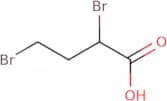
CAS:Versatile small molecule scaffoldFormula:C10H6N2OPurity:Min. 95%Molecular weight:170.17 g/mol2,4-Dibromo-butyric acid
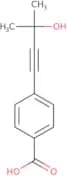
CAS:2,4-Dibromo-butyric acid is an organic compound that is a dimethyl ester of 2,4-dibromobutanoic acid. It is used as a synthetic intermediate in the production of oximes and immobilized enzymes. 2,4-Dibromo-butyric acid has been shown to inhibit lipase activity and to reduce the production of proinflammatory cytokines such as tumor necrosis factor-α (TNF-α) and interleukin 1β (IL1β). The synthesis of 2,4-dibromo-butyric acid can be achieved by chemoenzymatic coupling of two molecules of bromobenzene with one molecule of ethyl acetate or with one molecule of ethoxycarbonyl chloride.Formula:C4H6Br2O2Purity:Min. 95%Molecular weight:245.9 g/mol4-(3-Hydroxy-3-methylbut-1-yn-1-yl)benzoic acid
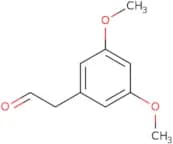
CAS:Versatile small molecule scaffoldFormula:C12H12O3Purity:Min. 95%Molecular weight:204.22 g/mol2-(3,5-Dimethoxyphenyl)acetaldehyde
CAS:Versatile small molecule scaffoldFormula:C10H12O3Purity:Min. 95%Molecular weight:180.2 g/mol[1,2,4]Triazolo[1,5-a]pyrazin-2-amine
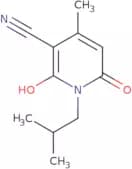
CAS:Versatile small molecule scaffoldFormula:C5H5N5Purity:Min. 95%Molecular weight:135.13 g/mol6-Hydroxy-4-methyl-1-(2-methylpropyl)-2-oxo-1,2-dihydropyridine-3-carbonitrile
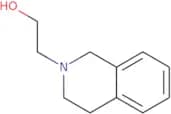
CAS:Versatile small molecule scaffoldFormula:C11H14N2O2Purity:Min. 95%Molecular weight:206.24 g/mol2-(3,4-Dihydroisoquinolin-2(1H)-yl)ethanol
CAS:2-(3,4-Dihydroisoquinolin-2(1H)-yl)ethanol is a quinoline derivative that has been shown to inhibit the growth of tumour cells. It has been shown to induce cell death in hepatoma cell lines and inhibit the proliferation of human tumour cells. This compound binds to choline receptors on the surface of cancer cells, inhibiting the release of neurotransmitter acetylcholine which is involved in many cellular processes including muscle contraction and nerve conduction. 2-(3,4-Dihydroisoquinolin-2(1H)-yl)ethanol also inhibits lipid peroxidation and induces apoptosis by binding to iron in mitochondria.Formula:C11H15NOPurity:Min. 95%Molecular weight:177.24 g/mol3-(1,2,3,4-Tetrahydroquinolin-1-yl)propan-1-ol
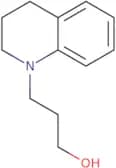
CAS:Versatile small molecule scaffoldFormula:C12H17NOPurity:Min. 95%Molecular weight:191.27 g/molN-(2-Aminoethyl)morpholine-4-carboxamide hydrochloride
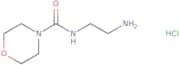
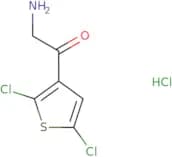
CAS:Versatile small molecule scaffoldFormula:C7H16ClN3O2Purity:Min. 95%Molecular weight:209.67 g/mol2-Amino-1-(2,5-dichlorothiophen-3-yl)ethan-1-one hydrochloride
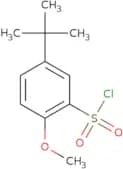
CAS:Versatile small molecule scaffoldFormula:C6H6Cl3NOSPurity:Min. 95%Molecular weight:246.5 g/mol5-tert-Butyl-2-methoxy-benzenesulfonyl chloride
CAS:Versatile small molecule scaffoldFormula:C11H15ClO3SPurity:Min. 95%Molecular weight:262.76 g/molMethyl imidazo[1,2-a]pyridine-5-carboxylate
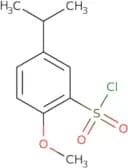
CAS:Methyl imidazo[1,2-a]pyridine-5-carboxylate is a fluorescent compound that can be used as a reagent to measure the activity of esterases. It has been shown to bind to 4-methylumbelliferone and react with it in a process that is catalyzed by esterases. 4-Methylumbelliferone is a fluorescent compound that can be used as a substrate for estersase activity.Formula:C9H8N2O2Purity:Min. 95%Molecular weight:176.17 g/mol5-Isopropyl-2-methoxybenzene-1-sulfonyl chloride
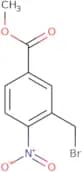
CAS:Versatile small molecule scaffoldFormula:C10H13ClO3SPurity:Min. 95%Molecular weight:248.73 g/molMethyl 3-(bromomethyl)-4-nitrobenzoate
CAS:Methyl 3-(bromomethyl)-4-nitrobenzoate is a chemical compound that belongs to the group of medicinal compounds. It has been shown to be nontoxic in mice, and stimulates the production of nitric oxide in macrophages by activating toll-like receptor-4. Methyl 3-(bromomethyl)-4-nitrobenzoate is also catalytic for the synthesis of palladium complexes with a variety of ligands, including acetates, carbonates, and chlorides. This chemical has been used as a probe for identifying proteins involved in cell signaling pathways and as a screening tool for the identification of new therapeutic targets.
Formula:C9H8BrNO4Purity:Min. 95%Molecular weight:274.07 g/mol

![[1,2,4]Triazolo[1,5-a]pyrazin-2-amine](/_next/image/?url=https%3A%2Fstatic.cymitquimica.com%2Fproducts%2F3D%2Fthumb-webp%2FNDA00233.webp&w=3840&q=75)
![Methyl imidazo[1,2-a]pyridine-5-carboxylate](/_next/image/?url=https%3A%2Fstatic.cymitquimica.com%2Fproducts%2F3D%2Fthumb-webp%2FNDA04755.webp&w=3840&q=75)