Building Blocks
This section contains fundamental products for the synthesis of organic and biological compounds. Building blocks are the essential starting materials used to construct complex molecules through various chemical reactions. They play a critical role in drug discovery, material science, and chemical research. At CymitQuimica, we offer a diverse range of high-quality building blocks to support your innovative research and industrial projects, ensuring you have the essential components for successful synthesis.
Subcategories of "Building Blocks"
- Boronic Acids & Boronic Acid Derivatives(5,778 products)
- Chiral Building Blocks(1,243 products)
- Hydrocarbon Building Blocks(6,099 products)
- Organic Building Blocks(61,038 products)
Found 205376 products of "Building Blocks"
Sort by
Purity (%)
0
100
|
0
|
50
|
90
|
95
|
100
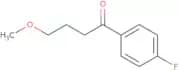
1-(4-Fluorophenyl)-4-methoxybutan-1-one
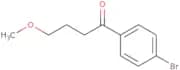
CAS:Versatile small molecule scaffoldFormula:C11H13FO2Purity:Min. 95%Molecular weight:196.22 g/mol1-(4-Bromophenyl)-4-methoxybutan-1-one
CAS:Versatile small molecule scaffoldFormula:C11H13BrO2Purity:Min. 95%Molecular weight:257.12 g/mol7-Phenyl-3H,4H,5H-pyrrolo[3,2-d]pyrimidin-4-one
CAS:Versatile small molecule scaffold
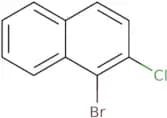
Formula:C12H9N3OPurity:Min. 95%Molecular weight:211.22 g/mol1-Bromo-2-chloronaphthalene
CAS:1-Bromo-2-chloronaphthalene is a nucleophilic carbanion that is used in the synthesis of other compounds. 1-Bromo-2-chloronaphthalene can be prepared by the reaction of anhydrous hydrazine and chloroform in a solvent, followed by reaction with an acidified solution of sodium bromide. This compound can also be synthesized from 1-cyanonaphthalene, which undergoes electrophilic substitution by chlorine. 1-Bromo-2-chloronaphthalene has been used as a reagent for the reduction of anions to produce neutral molecules. The nature of this molecule is cyclic with two identical aromatic rings joined by one carbon atom. It has been shown to have antibacterial properties against staphylococcus and anthrax, as well as antifungal properties against penicillium and candida.Formula:C10H6BrClPurity:Min. 95%Molecular weight:241.51 g/mol2-Amino-1,3-dimethylguanidine hydroiodide
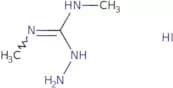
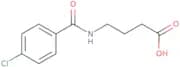
CAS:Versatile small molecule scaffoldFormula:C3H11IN4Purity:Min. 95%Molecular weight:230.05 g/mol4-(4-Chloro-benzoylamino)-butyric acid
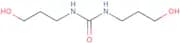
CAS:Versatile small molecule scaffoldFormula:C11H12ClNO3Purity:Min. 95%Molecular weight:241.67 g/mol1,3-Bis(3-hydroxypropyl)urea
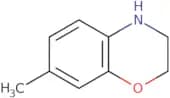
CAS:Versatile small molecule scaffoldFormula:C7H16N2O3Purity:Min. 95%Molecular weight:176.21 g/mol7-Methyl-3,4-dihydro-2H-1,4-benzoxazine
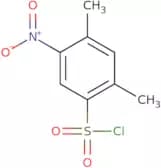
CAS:Versatile small molecule scaffoldFormula:C9H11NOPurity:Min. 95%Molecular weight:149.19 g/mol2,4-Dimethyl-5-nitrobenzene-1-sulfonyl chloride
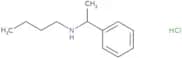
CAS:Versatile small molecule scaffoldFormula:C8H8ClNO4SPurity:Min. 95%Molecular weight:249.67 g/molButyl(1-phenylethyl)amine hydrochloride
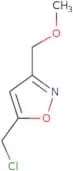
CAS:Versatile small molecule scaffoldFormula:C12H20ClNPurity:Min. 95%Molecular weight:213.75 g/mol5-(Chloromethyl)-3-(methoxymethyl)-1,2-oxazole
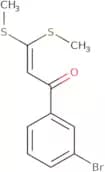
CAS:Versatile small molecule scaffoldFormula:C6H8ClNO2Purity:Min. 95%Molecular weight:161.58 g/mol1-(3-Bromophenyl)-3,3-bis(methylsulfanyl)prop-2-en-1-one
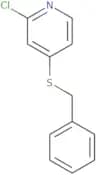
CAS:Versatile small molecule scaffoldFormula:C11H11BrOS2Purity:Min. 95%Molecular weight:303.2 g/mol4-(Benzylsulfanyl)-2-chloropyridine
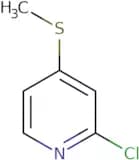
CAS:Versatile small molecule scaffoldFormula:C12H10ClNSPurity:Min. 95%Molecular weight:235.73 g/mol2-Chloro-4-(methylthio)pyridine
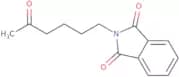
CAS:Versatile small molecule scaffoldFormula:C6H6ClNSPurity:Min. 95%Molecular weight:159.63 g/mol2-(5-Oxohexyl)-2,3-dihydro-1H-isoindole-1,3-dione
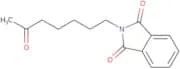
CAS:Versatile small molecule scaffoldFormula:C14H15NO3Purity:Min. 95%Molecular weight:245.27 g/mol2-(6-Oxoheptyl)-2,3-dihydro-1H-isoindole-1,3-dione
CAS:Versatile small molecule scaffoldFormula:C15H17NO3Purity:Min. 95%Molecular weight:259.3 g/mol2-Methyl-3-nitrobenzonitrile
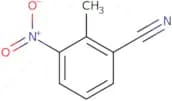
CAS:2-Methyl-3-nitrobenzonitrile is a colorless crystalline solid with a melting point of -81.8°C and a boiling point of 206.6°C. The crystal structure is shown to be an oriented, six-membered ring with hydrogen bonds and conformations that are asymmetric and dihedral. It has the molecular formula C7H5N3O2, which consists of three methyl groups and one nitro group on the benzene nucleus. 2-Methyl-3-nitrobenzonitrile is used as a starting material in organic synthesis reactions because it can undergo electrophilic substitution reactions with alkyl halides or Grignard reagents to form substituted benzenes.Formula:C8H6N2O2Purity:Min. 95%Molecular weight:162.15 g/mol2-Hydroxybenzene-1-sulfonyl fluoride
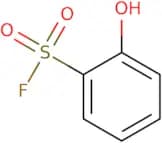
CAS:Versatile small molecule scaffoldFormula:C6H5FO3SPurity:Min. 95%Molecular weight:176.17 g/mol4-Amino-1-methyl-1H-imidazole-5-sulfonamide
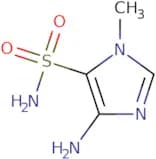
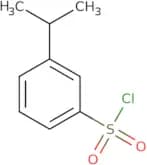
CAS:Versatile small molecule scaffoldFormula:C4H8N4O2SPurity:Min. 95%Molecular weight:176.2 g/mol3-Isopropylbenzene-1-sulfonyl chloride
CAS:Versatile small molecule scaffoldFormula:C9H11ClO2SPurity:Min. 95%Molecular weight:218.7 g/mol

![7-Phenyl-3H,4H,5H-pyrrolo[3,2-d]pyrimidin-4-one](/_next/image/?url=https%3A%2Fstatic.cymitquimica.com%2Fproducts%2F3D%2Fthumb-webp%2FWCA43539.webp&w=3840&q=75)