Building Blocks
This section contains fundamental products for the synthesis of organic and biological compounds. Building blocks are the essential starting materials used to construct complex molecules through various chemical reactions. They play a critical role in drug discovery, material science, and chemical research. At CymitQuimica, we offer a diverse range of high-quality building blocks to support your innovative research and industrial projects, ensuring you have the essential components for successful synthesis.
Subcategories of "Building Blocks"
- Boronic Acids & Boronic Acid Derivatives(5,778 products)
- Chiral Building Blocks(1,243 products)
- Hydrocarbon Building Blocks(6,099 products)
- Organic Building Blocks(61,038 products)
Found 205376 products of "Building Blocks"
Sort by
Purity (%)
0
100
|
0
|
50
|
90
|
95
|
100
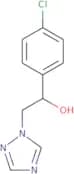
1-(4-Chlorophenyl)-2-(1H-1,2,4-triazol-1-yl)ethan-1-ol
CAS:Versatile small molecule scaffoldFormula:C10H10ClN3OPurity:Min. 95%Molecular weight:223.66 g/mol2-p-Tolyloxazole
CAS:2-p-Tolyloxazole is a soluble drug, which is a benzyl derivative of p-tolyloxazole. It has an acidic character and can be dissolved in solvents such as dimethyl sulfoxide, dimethylformamide, and acetone. 2-p-Tolyloxazole has been shown to be effective against Gram-positive bacteria such as Staphylococcus aureus and Streptococcus pyogenes. 2-p-Tolyloxazole is also active against Gram negative bacteria such as Escherichia coli and Pseudomonas aeruginosa. The mechanism of action of this compound is not well understood but it is hypothesized that the drug interacts with the ribosome to inhibit protein synthesis.Formula:C10H9NOPurity:Min. 95%Molecular weight:159.18 g/mol2-(4-Nitrophenyl)oxazole
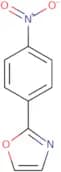
CAS:Versatile small molecule scaffold
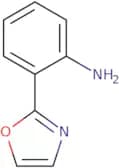
Formula:C9H6N2O3Purity:Min. 95%Molecular weight:190.16 g/mol2-(1,3-Oxazol-2-yl)aniline
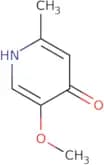
CAS:Versatile small molecule scaffoldFormula:C9H8N2OPurity:Min. 95%Molecular weight:160.17 g/mol5-Methoxy-2-methyl-1,4-dihydropyridin-4-one
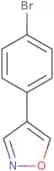
CAS:Versatile small molecule scaffoldFormula:C7H9NO2Purity:Min. 95%Molecular weight:139.15 g/mol4-(4-Bromophenyl)-1,2-oxazole
CAS:Versatile small molecule scaffold
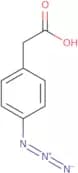
Formula:C9H6BrNOPurity:Min. 95%Molecular weight:224.05 g/mol(4-Azidophenyl)acetic acid
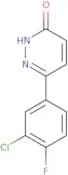
CAS:4-Azidophenylacetic acid is a glutamate receptor antagonist that has been shown to be selective for the AMPA receptor. It has been shown to inhibit the production of inflammatory mediators, such as prostaglandin E2, from cells by inhibiting COX-2. 4-Azidophenylacetic acid also inhibits the binding of glutamate to its receptors and blocks NMDA receptors. The compound has been shown to be biodegradable, due to its reversible binding with proteins and nucleic acids. This drug has shown inhibitory potency against COX-2 and is being developed as an anti-inflammatory drug.Formula:C8H7N3O2Purity:Min. 95%Molecular weight:177.16 g/mol6-(3-Chloro-4-fluorophenyl)-2,3-dihydropyridazin-3-one
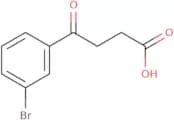
CAS:Versatile small molecule scaffoldFormula:C10H6ClFN2OPurity:Min. 95%Molecular weight:224.62 g/mol4-(3-Bromophenyl)-4-oxobutyric acid
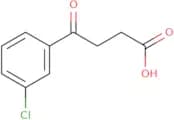
CAS:Versatile small molecule scaffoldFormula:C10H9BrO3Purity:Min. 95%Molecular weight:257.08 g/mol4-(3-Chlorophenyl)-4-oxobutyric acid
CAS:Versatile small molecule scaffoldFormula:C10H9ClO3Purity:Min. 95%Molecular weight:212.63 g/mol5-Methylpyrazolo[1,5-a]pyrimidine-3-carboxylic acid
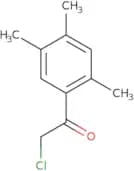
CAS:Versatile small molecule scaffoldFormula:C8H7N3O2Purity:Min. 95%Molecular weight:177.16 g/mol2-Chloro-1-(2,4,5-trimethylphenyl)ethan-1-one
CAS:Versatile small molecule scaffoldFormula:C11H13ClOPurity:Min. 95%Molecular weight:196.67 g/molEthyl[(2-methylphenyl)methyl]amine
CAS:Versatile small molecule scaffoldFormula:C10H15NPurity:Min. 95%Molecular weight:149.23 g/mol[(2-Chlorophenyl)methyl](ethyl)amine
CAS:Versatile small molecule scaffoldFormula:C9H12ClNPurity:Min. 95%Molecular weight:169.65 g/mol[(2-chloro-6-fluorophenyl)methyl](propyl)amine
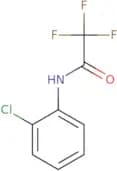
CAS:Versatile small molecule scaffoldFormula:C10H13ClFNPurity:Min. 95%Molecular weight:201.67 g/molN-(2-Chlorophenyl)-2,2,2-trifluoroacetamide
CAS:Versatile small molecule scaffoldFormula:C8H5ClF3NOPurity:Min. 95%Molecular weight:223.58 g/mol2-Amino-1-[3-(benzyloxy)phenyl]ethan-1-ol
CAS:Versatile small molecule scaffold
Formula:C15H17NO2Purity:Min. 95%Molecular weight:243.3 g/mol1-[3-(Benzyloxy)phenyl]propan-2-one
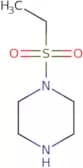
CAS:Versatile small molecule scaffoldFormula:C16H16O2Purity:Min. 95%Molecular weight:240.3 g/mol1-(Ethanesulfonyl)piperazine
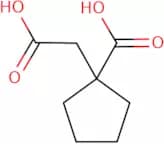
CAS:1-(Ethanesulfonyl)piperazine is an oxidation product of ethylsulfonyl. It is used to inhibit the synthesis of chemokines and proteins, which are involved in inflammation. 1-(Ethanesulfonyl)piperazine has been shown to cause the release of chemokines from human serum albumin and inhibit protein synthesis in gram-negative bacteria. The absorption spectra show that this compound is able to bind to albumin at the N-terminal site and S-site, which may account for its ability to inhibit protein synthesis. 1-(Ethanesulfonyl)piperazine is also able to interact with methoxy groups on s. aureus cells, preventing them from introducing themselves into human cells by binding to the surface of these cells and blocking their adhesion sites.Formula:C6H14N2O2SPurity:Min. 95%Molecular weight:178.25 g/mol1-(Carboxymethyl)cyclopentanecarboxylic acid
CAS:1-Carboxymethylcyclopentane-1,1-dicarboxylic acid is a crosslinker that can be used for the production of polymers. It is biodegradable and can be hydrolyzed under alkaline conditions. 1-Carboxymethylcyclopentane-1,1-dicarboxylic acid reacts with an alkynyl group to form a polycarboxylic acid. This reaction product may be a monocarboxylic or dicarboxylic acid. 1-Carboxymethylcyclopentane-1,1-dicarboxylic acid has been used as a viscosity enhancer and crosslinking agent for various polymers. This compound is also an effective polymerization initiator for the production of silicone elastomers.Formula:C8H12O4Purity:Min. 95%Molecular weight:172.18 g/mol


![5-Methylpyrazolo[1,5-a]pyrimidine-3-carboxylic acid](/_next/image/?url=https%3A%2Fstatic.cymitquimica.com%2Fproducts%2F3D%2Fthumb-webp%2FMCA90885.webp&w=3840&q=75)
![Ethyl[(2-methylphenyl)methyl]amine](/_next/image/?url=https%3A%2Fstatic.cymitquimica.com%2Fproducts%2F3D%2Fthumb-webp%2FMCA92460.webp&w=3840&q=75)
amine](/_next/image/?url=https%3A%2Fstatic.cymitquimica.com%2Fproducts%2F3D%2Fthumb-webp%2FMCA92461.webp&w=3840&q=75)
amine](/_next/image/?url=https%3A%2Fstatic.cymitquimica.com%2Fproducts%2F3D%2Fthumb-webp%2FMCA92465.webp&w=3840&q=75)
![2-Amino-1-[3-(benzyloxy)phenyl]ethan-1-ol](/_next/image/?url=https%3A%2Fstatic.cymitquimica.com%2Fproducts%2F3D%2Fthumb-webp%2FMCA93274.webp&w=3840&q=75)
![1-[3-(Benzyloxy)phenyl]propan-2-one](/_next/image/?url=https%3A%2Fstatic.cymitquimica.com%2Fproducts%2F3D%2Fthumb-webp%2FMCA93275.webp&w=3840&q=75)