Building Blocks
This section contains fundamental products for the synthesis of organic and biological compounds. Building blocks are the essential starting materials used to construct complex molecules through various chemical reactions. They play a critical role in drug discovery, material science, and chemical research. At CymitQuimica, we offer a diverse range of high-quality building blocks to support your innovative research and industrial projects, ensuring you have the essential components for successful synthesis.
Subcategories of "Building Blocks"
- Boronic Acids & Boronic Acid Derivatives(5,778 products)
- Chiral Building Blocks(1,242 products)
- Hydrocarbon Building Blocks(6,098 products)
- Organic Building Blocks(61,059 products)
Found 199580 products of "Building Blocks"
Sort by
Purity (%)
0
100
|
0
|
50
|
90
|
95
|
100
N-[(4-Aminophenyl)sulfonyl]-N-(3,4-dimethyl-5-isoxazolyl)acetamide
CAS:<p>N-(4-aminophenylsulfonyl)-N-(3,4-dimethyl-5-isoxazolyl)acetamide (CAS: 83833-30-1) is a small molecule antibiotic that inhibits bacterial fatty acid synthesis. It binds to the 3'-phosphoadenosine 5'-phosphosulfate (PAPS) synthetase enzyme, which is responsible for converting adenosine 5'-phosphosulfate (APS) to PAPS. This binding prevents the production of APS, blocking the synthesis of fatty acids. In addition, N-(4-aminophenylsulfonyl)-N-(3,4-dimethyl-5-isoxazolyl)acetamide is a potent inhibitor of microbial infection in vitro and in vivo. It has been shown to be effective against viruses and bacteria such as Escherichia coli and Staphylococcus aureus.</p>Formula:C13H15N3O4SPurity:Min. 95%Molecular weight:309.34 g/mol2-Nitrobenzenesulfonic Acid Hydrate
CAS:<p>2-Nitrobenzenesulfonic acid hydrate (2NBS) is a reactive, sulfonated organic compound that has been used for many years as a precursor for pharmaceuticals. 2NBS reacts with sodium carbonate to form a mixture of nitrobenzenesulfonic acids. This process is known as sulfonation and can be used for biological treatment, such as wastewater treatment. 2NBS is also known to react with styryl dye in an intramolecular hydrogen bond to form the corresponding hydroxyl group. 2NBS also has antiinflammatory activities and has been found to inhibit the inflammatory response in rat models of inflammatory bowel disease.</p>Formula:C6H5NO5S·xH2OPurity:Min. 95%Molecular weight:203.17 g/mol2-Aminonaphthalene-5-sulfonic acid
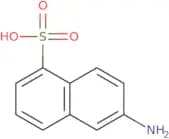
CAS:<p>2-Aminonaphthalene-5-sulfonic acid is a sulfonated aromatic amine that can be synthesized by reacting sodium salt of 2-naphthol with sulfur trioxide. It is a structural isomer of 1-aminoanthracene and has been used in the synthesis of other sulfonated compounds. 2-Aminonaphthalene-5-sulfonic acid has carcinogenic activity, and its use as an intermediate in chemical synthesis should be limited to short reaction times at low temperatures.</p>Formula:C10H9NO3SPurity:Min. 95%Molecular weight:223.25 g/mol1-Amino-4-bromo-2-methylanthraquinone
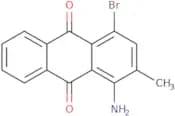
CAS:<p>1-Amino-4-bromo-2-methylanthraquinone is a hypervalent molecule that binds to the iron atom in human liver and human lymphocytes. It has been shown to have a protective effect against radiation, and also may have potential as an antiviral agent. 1-Amino-4-bromo-2-methylanthraquinone has been shown to inhibit the replication of retroviruses, such as HIV, by binding to the virus and preventing it from entering into host cells. The colorant properties of this compound are used in paints and dyes. 1-Amino-4-bromo-2-methylanthraquinone can be synthesized by reacting bromobenzene with ethyleneimine.</p>Formula:C15H10BrNO2Purity:Min. 95%Molecular weight:316.15 g/mol2-Amino-1-chloro-9,10-dihydroanthracene-9,10-dione
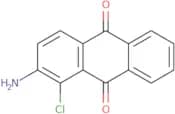
CAS:2-Amino-1-chloro-9,10-dihydroanthracene-9,10-dione is a naphthalene derivative that can be used as an intermediate in the synthesis of dyes. It has been shown to be an acid binder and can react with nitrotoluene, dimethylamide, and copper chloride to form 2-aminoantranilic acid. The nitrogen atom in this molecule is also reactive and can bind to chlorides, iodides, and chlorine molecules to form 2-aminobenzylidene, 4-chloroiodobenzene, or 4-(2'-nitrobenzylidene)phenol.Formula:C14H8ClNO2Purity:Min. 95%Molecular weight:257.67 g/mol6-Iodo-2,4,5-trichlorophenol
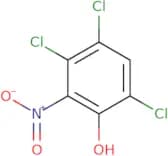
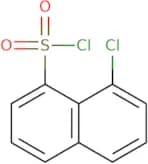
CAS:<p>6-Iodo-2,4,5-trichlorophenol is a fungicide that inhibits fungal growth by interfering with the synthesis of ergosterol, a component of the cell membrane. This chemical can be found as pale yellow or yellow crystals and has a volatile odor. It is used in pesticides and preservatives because it has fungicidal properties. 6-Iodo-2,4,5-trichlorophenol is effective against fungi such as Aspergillus niger and Penicillium chrysogenum.</p>Formula:C6H2Cl3NO3Purity:Min. 95%Molecular weight:242.4 g/mol8-Chloro-1-naphthalenesulfonyl chloride
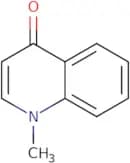
CAS:<p>Versatile small molecule scaffold</p>Formula:C10H6Cl2O2SPurity:Min. 95%Molecular weight:261.12 g/mol1-Methyl-1,4-dihydroquinolin-4-one
CAS:<p>1-Methyl-1,4-dihydroquinolin-4-one is a cholinergic agent that is used in medicines. It is a hydrochloric acid salt of quinoline derivatives and exhibits clinical use as an anticholinesterase. This drug has also been shown to have locomotor activity in animals. The effective dose of 1-methyl-1,4-dihydroquinolin-4-one is 0.3mg/kg body weight (bw). This chemical has been shown to be toxic when given with radiation or echinopsidine and can inhibit protein synthesis in the cell.</p>Formula:C10H9NOPurity:Min. 95%Molecular weight:159.18 g/mol8-Amino-1-naphthol-5-sulfonic acid
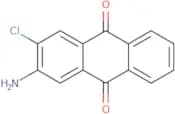
CAS:<p>8-Amino-1-naphthol-5-sulfonic acid is a fluorescent compound that reacts with phosphate groups of proteins and nucleic acids. The conjugate between 8-amino-1-naphthol and sulfonic acid, i.e., 8ANAS, is used as a probe to identify phosphatases and hydroxyproline in polyvinyl. The chromatographic separation of 8ANAS from the reaction mixture is accomplished by piperazine as an acidic mobile phase. The phosphorylation assay using 8ANAS can be used for the measurement of protein kinase activity in cells and tissues. In addition, it has been found that 8ANAS has anti-inflammatory properties against various inflammatory diseases such as neuro2a cells.</p>Formula:C10H9NO4SPurity:Min. 95%Molecular weight:239.25 g/mol2-Amino-3-chloro-9,10-dihydroanthracene-9,10-dione
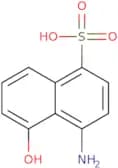
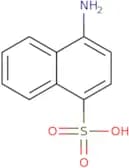
CAS:Versatile small molecule scaffoldFormula:C14H8ClNO2Purity:Min. 95%Molecular weight:257.67 g/mol4-Amino-1-naphthalenesulfonic Acid
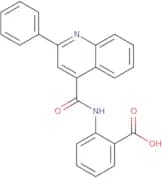
CAS:<p>4-Amino-1-naphthalenesulfonic acid (ANS) is a sulphanilic, hydroxyl group, nitrogen atoms, and amine. ANS has been shown to induce genotoxic effects in the presence of nitrite ion. ANS reacts with amines to form diazonium salts which are unstable and can undergo electrochemical reactions. This instability can lead to DNA damage in the presence of oxygen. 4-Amino-1-naphthalenesulfonic acid (ANS) is an analytical reagent that is used for the detection of fatty acids.</p>Formula:C10H9NO3SPurity:Min. 95%Molecular weight:223.25 g/mol2-(2-Phenylquinoline-4-amido)benzoic acid
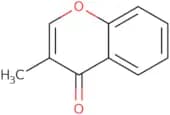
CAS:Versatile small molecule scaffoldFormula:C23H16N2O3Purity:Min. 95%Molecular weight:368.4 g/mol3-Methyl-4H-chromen-4-one
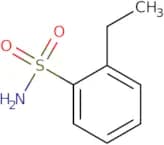
CAS:<p>3-Methyl-4H-chromen-4-one is a natural compound that has been shown to be effective against various bowel diseases. It is synthesized in the body by hydrolysis of 3,4-dihydroxybenzoic acid and can also be found in plants. This compound is a prodrug for the formation of 4-hydroxyphenylacetic acid, which then undergoes a glycosidic bond with collagen to form 3,4-dihydroxybenzoic acid. The hydroxyl group on this molecule also reacts with benzylic amino groups on proteins and nucleophilic groups on carbohydrates to form covalent bonds. These reactions lead to the formation of a variety of compounds that can be used as drugs for inflammatory bowel disease.</p>Formula:C10H8O2Purity:Min. 95%Molecular weight:160.17 g/mol2-Ethylbenzene-1-sulfonamide
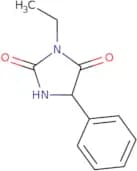
CAS:<p>Versatile small molecule scaffold</p>Formula:C8H11NO2SPurity:Min. 95%Molecular weight:185.25 g/molEthotoin-d5
CAS:<p>Ethotoin is a hydantoin antiepileptic drug. It acts by blocking the action of the sodium/potassium ATPase pump, which is important in maintaining the electrochemical gradient necessary for nerve cell repolarization and subsequent synaptic transmission. This leads to an increase in neuronal excitability and seizures, making it an effective antiepileptic drug. Ethotoin is also used to treat depression and other mental disorders. The uptake of ethotoin into nervous tissue can be inhibited by calcium ions, stabilizing membranes and preventing depolarization.</p>Formula:C11H7D5N2O2Purity:Min. 95%Molecular weight:209.26 g/mol2-Hydroxycarbazole
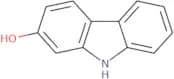
CAS:<p>2-Hydroxycarbazole is a molecule that binds to the dinucleotide phosphate and inhibits its enzymatic activity. It has been shown to be membrane permeable and reversible, with irreversible inhibition of protein synthesis in cancer cells. 2-Hydroxycarbazole has been shown to inhibit growth factor-induced DNA synthesis in cardiac cells. This compound binds irreversibly to the ryanodine receptor, which is involved in the release of calcium from sarcoplasmic reticulum vesicles, leading to an increase in cytosolic calcium concentration. This can be done using electrochemical impedance spectroscopy on model systems.</p>Formula:C12H9NOPurity:Min. 95%Molecular weight:183.21 g/molSalicylanilide
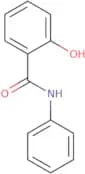
CAS:<p>Salicylanilide is an anthelmintic drug that belongs to the group of salicylanilides. It is used to treat infectious diseases such as bowel disease, which can be caused by protozoa or helminths. Salicylanilide has been shown to have in vivo antifungal activity against Candida albicans and in vitro activity against Trichophyton mentagrophytes. The mechanism of action of this drug is not known, but it has shown potential as a drug target for interfering with the polymerase chain reaction (PCR) process. Salicylanilide inhibits the growth of bacteria by inhibiting DNA synthesis and RNA synthesis. This drug also has a potent effect on human serum, and may be useful for analytical methods such as high-performance liquid chromatography (HPLC).</p>Formula:C13H11NO2Purity:Min. 95%Color and Shape:PowderMolecular weight:213.23 g/mol2-tert-Butylphenol
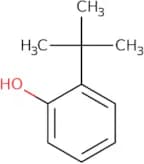
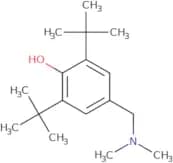
CAS:<p>2-tert-Butylphenol is a specific agonist of the enzyme activity of fatty acid hydroxylase (Fah). 2-tert-Butylphenol also has an inhibitory effect on hexane oxidation and p-hydroxybenzoic acid production. This compound is used in industrial chemicals as well as in the synthesis of pharmaceuticals. The hydroxyl group in 2-tert-butylphenol can be activated by an oxidizing agent, such as sodium hypochlorite or hydrogen peroxide, to form a reactive hydroxy group. The hydroxy group may react with other molecules to form adducts or free radicals. In tissue culture, 2-tert-butylphenol is used for the activation of enzymes that are involved in the synthesis of fatty acids and prostaglandins.</p>Formula:C10H14OPurity:Min. 95%Molecular weight:150.22 g/mol2,6-Di-tert-butyl-4-(dimethylaminomethyl)phenol
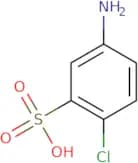
CAS:<p>2,6-Di-tert-butyl-4-(dimethylaminomethyl)phenol is a synthetic antioxidant that has been used as a corrosion inhibitor and to protect against long-term exposure to radiation. It is found in many commercial products, including plastics and rubber products, paints and coatings, textiles, and detergents. 2,6-Di-tert-butyl-4-(dimethylaminomethyl)phenol has been shown to have antioxidant properties which may be due to its ability to scavenge free radicals or inhibit lipid peroxidation. This active form reacts with oxygen at high temperatures. The reaction products are soluble in organic solvents but not in water. It is also reactive with strong oxidizing agents such as potassium permanganate or nitric acid.</p>Formula:C17H29NOPurity:Min. 95%Molecular weight:263.42 g/mol4-Chloroaniline-3-sulfonic acid
CAS:<p>4-Chloroaniline-3-sulfonic acid is a dianhydride that can be used for the synthesis of graphene oxide. The ionic nature of this compound is demonstrated by its ability to generate an electric current when in contact with a metal electrode. It has been shown to have sensing properties and can be used in experimental sensors. Its monomeric nature makes it an ideal precursor for the production of conductive membranes made of graphene oxide. 4-Chloroaniline-3-sulfonic acid also has ionic properties, which make it useful as a proton conductor and synergistic effects with naphthalenic derivatives.</p>Formula:C6H6ClNSO3Purity:Min. 95%Molecular weight:207.64 g/mol
![N-[(4-Aminophenyl)sulfonyl]-N-(3,4-dimethyl-5-isoxazolyl)acetamide](/_next/image/?url=https%3A%2Fstatic.cymitquimica.com%2Fproducts%2F3D%2Fthumb-webp%2FAAA08074.webp&w=3840&q=75)