Building Blocks
This section contains fundamental products for the synthesis of organic and biological compounds. Building blocks are the essential starting materials used to construct complex molecules through various chemical reactions. They play a critical role in drug discovery, material science, and chemical research. At CymitQuimica, we offer a diverse range of high-quality building blocks to support your innovative research and industrial projects, ensuring you have the essential components for successful synthesis.
Subcategories of "Building Blocks"
- Boronic Acids & Boronic Acid Derivatives(5,778 products)
- Chiral Building Blocks(1,242 products)
- Hydrocarbon Building Blocks(6,098 products)
- Organic Building Blocks(61,084 products)
Found 198714 products of "Building Blocks"
Sort by
Purity (%)
0
100
|
0
|
50
|
90
|
95
|
100
1-[(1,2-Dimethyl-1H-imidazol-4-yl)sulfonyl]piperazine
CAS:Versatile small molecule scaffoldFormula:C9H16N4O2SPurity:Min. 95%Molecular weight:244.32 g/mol2-Chloro-4-N-cyclopentylpyrimidine-4,5-diamine
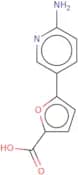
CAS:Versatile small molecule scaffoldFormula:C9H13ClN4Purity:Min. 95%Molecular weight:212.68 g/mol5-(6-Aminopyridin-3-yl)furan-2-carboxylic acid
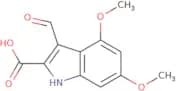
CAS:<p>Versatile small molecule scaffold</p>Formula:C10H8N2O3Purity:Min. 95%Molecular weight:204.2 g/mol3-Formyl-4,6-dimethoxy-1H-indole-2-carboxylic acid
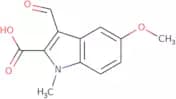
CAS:Versatile small molecule scaffoldFormula:C12H11NO5Purity:Min. 95%Molecular weight:249.22 g/mol3-Formyl-5-methoxy-1-methyl-1H-indole-2-carboxylic acid
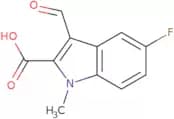
CAS:<p>Versatile small molecule scaffold</p>Formula:C12H11NO4Purity:Min. 95%Molecular weight:233.22 g/mol5-Fluoro-3-formyl-1-methyl-1H-indole-2-carboxylic acid
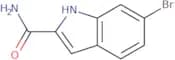
CAS:Versatile small molecule scaffoldFormula:C11H8FNO3Purity:Min. 95%Molecular weight:221.18 g/mol6-Bromo-1H-indole-2-carboxamide
CAS:<p>Versatile small molecule scaffold</p>Formula:C9H7BrN2OPurity:Min. 95%Molecular weight:239.07 g/mol{[4-Methoxy-3-(morpholin-4-ylmethyl)phenyl]methyl}(methyl)amine
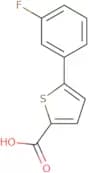
CAS:<p>Versatile small molecule scaffold</p>Formula:C14H22N2O2Purity:Min. 95%Molecular weight:250.34 g/mol5-(3-Fluorophenyl)thiophene-2-carboxylic acid
CAS:Versatile small molecule scaffoldFormula:C11H7FO2SPurity:Min. 95%Molecular weight:222.24 g/mol2-Fluoro-4-[2-(trifluoromethyl)phenyl]aniline
CAS:<p>Versatile small molecule scaffold</p>Formula:C13H9F4NPurity:Min. 95%Molecular weight:255.21 g/mol1-[5-(2-Chlorophenyl)thiophen-2-yl]ethan-1-one
CAS:Versatile small molecule scaffoldFormula:C12H9ClOSPurity:Min. 95%Molecular weight:236.72 g/mol2'-Hydroxy[1,1'-biphenyl]-3-carboxylic acid
CAS:2'-Hydroxy[1,1'-biphenyl]-3-carboxylic acid (HBC) is a linear model that can be used to describe the deployment of cables. Techniques such as simulations, algorithms, and positioning are used to create HBC models. HBC is an algorithm that calculates the mathematical model for a cable's trajectory in water. The kinetic energy of the cable is calculated by using the HBC model and its position at a given time. The mathematical model of the cable's motion underwater also includes factors such as buoyancy, drag force, and electrostatic forces on the cable.Formula:C13H10O3Purity:Min. 95%Color and Shape:PowderMolecular weight:214.22 g/mol3'-(Methoxycarbonyl)[1,1'-biphenyl]-3-carboxylic acid
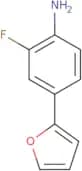
CAS:Versatile small molecule scaffoldFormula:C15H12O4Purity:Min. 95%Molecular weight:256.26 g/mol2-Fluoro-4-(furan-2-yl)aniline
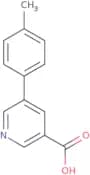
CAS:<p>Versatile small molecule scaffold</p>Formula:C10H8FNOPurity:Min. 95%Molecular weight:177.17 g/mol5-p-Tolylnicotinic acid
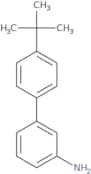
CAS:Versatile small molecule scaffoldFormula:C13H11NO2Purity:Min. 95%Molecular weight:213.24 g/mol3-(4-tert-Butylphenyl)aniline
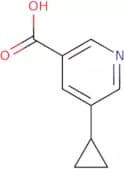
CAS:<p>Versatile small molecule scaffold</p>Formula:C16H19NPurity:Min. 95%Molecular weight:225.33 g/mol5-Cyclopropylnicotinic acid
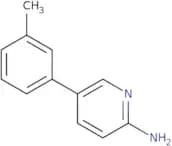
CAS:<p>Versatile small molecule scaffold</p>Formula:C9H9NO2Purity:Min. 95%Molecular weight:163.18 g/mol5-(3-Methylphenyl)pyridin-2-amine
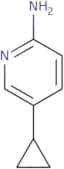
CAS:<p>Versatile small molecule scaffold</p>Formula:C12H12N2Purity:Min. 95%Molecular weight:184.24 g/mol5-Cyclopropylpyridin-2-amine
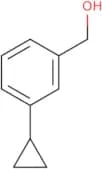
CAS:<p>5-Cyclopropylpyridin-2-amine is a pharmaceutical product that has been shown to be reactive, impurities, and mutagenic. It is sensitive to evaluating algorithms, such as harmonization and solvents. The yields can be maximized by using solvents such as halides and organic solvents. 5-Cyclopropylpyridin-2-amine reacts with the Suzuki reaction to form a compound called 3-chloroquinoline. This chemical compound can then be used in the production of pharmaceuticals.</p>Formula:C8H10N2Purity:Min. 95%Molecular weight:134.18 g/mol3-Cyclopropylbenzyl alcohol
CAS:<p>Versatile small molecule scaffold</p>Formula:C10H12OPurity:Min. 95%Molecular weight:148.21 g/mol
![1-[(1,2-Dimethyl-1H-imidazol-4-yl)sulfonyl]piperazine](/_next/image/?url=https%3A%2Fstatic.cymitquimica.com%2Fproducts%2F3D%2Fthumb-webp%2FTKB72764.webp&w=3840&q=75)


![{[4-Methoxy-3-(morpholin-4-ylmethyl)phenyl]methyl}(methyl)amine](/_next/image/?url=https%3A%2Fstatic.cymitquimica.com%2Fproducts%2F3D%2Fthumb-webp%2FTKB73253.webp&w=3840&q=75)
![2-Fluoro-4-[2-(trifluoromethyl)phenyl]aniline](/_next/image/?url=https%3A%2Fstatic.cymitquimica.com%2Fproducts%2F3D%2Fthumb-webp%2FTKB73333.webp&w=3840&q=75)
![1-[5-(2-Chlorophenyl)thiophen-2-yl]ethan-1-one](/_next/image/?url=https%3A%2Fstatic.cymitquimica.com%2Fproducts%2F3D%2Fthumb-webp%2FTKB73505.webp&w=3840&q=75)
![2'-Hydroxy[1,1'-biphenyl]-3-carboxylic acid](/_next/image/?url=https%3A%2Fstatic.cymitquimica.com%2Fproducts%2F3D%2Fthumb-webp%2FTKB73672.webp&w=3840&q=75)
![3'-(Methoxycarbonyl)[1,1'-biphenyl]-3-carboxylic acid](/_next/image/?url=https%3A%2Fstatic.cymitquimica.com%2Fproducts%2F3D%2Fthumb-webp%2FTKB73681.webp&w=3840&q=75)