Building Blocks
This section contains fundamental products for the synthesis of organic and biological compounds. Building blocks are the essential starting materials used to construct complex molecules through various chemical reactions. They play a critical role in drug discovery, material science, and chemical research. At CymitQuimica, we offer a diverse range of high-quality building blocks to support your innovative research and industrial projects, ensuring you have the essential components for successful synthesis.
Subcategories of "Building Blocks"
- Boronic Acids & Boronic Acid Derivatives(5,778 products)
- Chiral Building Blocks(1,242 products)
- Hydrocarbon Building Blocks(6,098 products)
- Organic Building Blocks(61,063 products)
Found 197855 products of "Building Blocks"
Sort by
Purity (%)
0
100
|
0
|
50
|
90
|
95
|
100
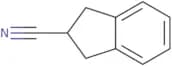
2,3-Dihydro-1H-indene-2-carbonitrile
CAS:<p>2,3-Dihydro-1H-indene-2-carbonitrile is a chemical compound that is used to synthesize enantiopure naphthalenes. It reacts with benzylpiperidine in the presence of sodium methoxide and potassium carbonate in a kinetic, stereoselective manner to form a 2,3-dihydro-1H-indene derivative. The compound can also be decyanated with dichromate to yield an olefinic product. The 2,3-dihydro-1H-indene derivative can be converted into its corresponding indane by catalyzed hydrogenation or stereochemical means through the use of dichroism spectroscopy.</p>Formula:C10H9NPurity:Min. 95%Molecular weight:143.18 g/mol4-Cyclopentyloxy-phenylamine
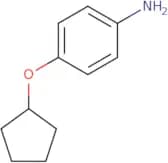
CAS:<p>Versatile small molecule scaffold</p>Formula:C11H15NOPurity:Min. 95%Molecular weight:177.24 g/molMethyl 2-chlorobutanoate
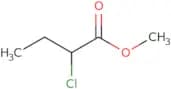
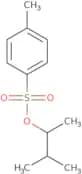
CAS:<p>Methyl 2-chlorobutanoate is an alkanoic acid that is used in pharmaceutical preparations and as a solvent. It has been shown to be effective in autoimmune diseases and cell lysis. Methyl 2-chlorobutanoate also inhibits the production of gamma-aminobutyric acid, which is important for muscle contractions, in cardiac cells. The compound has also been used to measure light emission, which can be used in the diagnosis of fatty acid disorders. Methyl 2-chlorobutanoate is found naturally in fruits and may have beneficial effects on skin cells.</p>Formula:C5H9ClO2Purity:Min. 95%Molecular weight:136.58 g/mol3-Methylbutan-2-yl 4-methylbenzene-1-sulfonate
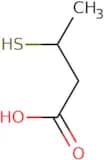
CAS:Versatile small molecule scaffoldFormula:C12H18O3SPurity:Min. 95%Molecular weight:242.34 g/mol3-Sulfanylbutanoic acid
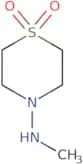
CAS:Versatile small molecule scaffoldFormula:C4H8O2SPurity:Min. 95%Molecular weight:120.17 g/molN-Methyl-4-thiomorpholinamine 1,1-dioxide
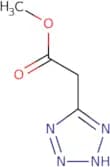
CAS:<p>Versatile small molecule scaffold</p>Formula:C5H12N2O2SPurity:Min. 95%Molecular weight:164.23 g/molMethyl 2-(2H-1,2,3,4-tetrazol-5-yl)acetate
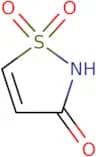
CAS:<p>Versatile small molecule scaffold</p>Formula:C4H6N4O2Purity:Min. 95%Molecular weight:142.12 g/mol3(2H)-Isothiazolone 1,1-dioxide
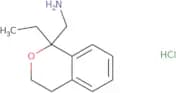
CAS:<p>Versatile small molecule scaffold</p>Formula:C3H3NO3SPurity:Min. 95%Molecular weight:133.13 g/mol(1-Ethyl-3,4-dihydro-1H-2-benzopyran-1-yl)methanamine hydrochloride
CAS:Versatile small molecule scaffoldFormula:C12H18ClNOPurity:Min. 95%Molecular weight:227.73 g/mol1-[2-(Methylsulfanyl)phenoxy]-3-[(propan-2-yl)amino]propan-2-ol
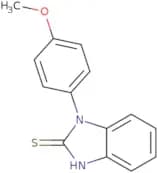
CAS:1-[2-(Methylsulfanyl)phenoxy]-3-[(propan-2-yl)amino]propan-2-ol is a compound that has been shown to inhibit the production of proprotein convertase subtilisin/kexin type 9 (PCSK9), a protein that regulates cholesterol homeostasis. PCSK9 is an enzyme that cleaves the proprotein, converting it into its mature form. The inhibition of PCSK9 by 1-[2-(Methylsulfanyl)phenoxy]-3-[(propan-2-yl)amino]propan-2-ol leads to increased levels of low density lipoprotein (LDL), which can be beneficial for the treatment of hypercholesterolemia and cardiovascular disease. In addition, this compound has been shown to have antihypertensive properties which may be due to its ability to lower blood pressure.Formula:C13H21NO2SPurity:Min. 95%Molecular weight:255.38 g/mol1-(4-Methoxyphenyl)-1H-1,3-benzodiazole-2-thiol
CAS:<p>Versatile small molecule scaffold</p>Formula:C14H12N2OSPurity:Min. 95%Molecular weight:256.32 g/molEthyl 5-methylfuran-3-carboxylate
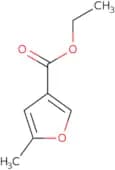
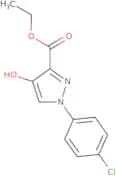
CAS:<p>Ethyl 5-methylfuran-3-carboxylate is a synthetic, unsaturated, unsaturated lactone. It is used as a precursor to the synthesis of dienes, esters and other compounds. In one example, ethyl 5-methylfuran-3-carboxylate was converted to ethyl 2-(5-methylthiophenoxy)propionate in a three step sequence that involved the use of anhydrous pyridine and an acid catalyst. The resulting product was used in the synthesis of a variety of organic compounds including an antiarrhythmic drug.</p>Formula:C8H10O3Purity:Min. 95%Molecular weight:154.16 g/mol1-(4-Chloro-phenyl)-4-hydroxy-1H-pyrazole-3-carboxylic acid ethyl ester
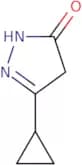
CAS:Versatile small molecule scaffoldFormula:C12H11ClN2O3Purity:Min. 95%Molecular weight:266.68 g/mol3-Cyclopropyl-4,5-dihydro-1H-pyrazol-5-one
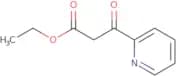
CAS:<p>Versatile small molecule scaffold</p>Formula:C6H8N2OPurity:Min. 95%Molecular weight:124.14 g/molEthyl picolinoylacetate
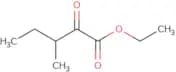
CAS:Ethyl picolinoylacetate is an organic compound with the molecular formula CH2=C(O)CH(CO2Et)CO2Et. It is a colorless liquid with a boiling point of 153-154 °C and a density of 0.907 g/mL at 20 °C. Ethyl picolinoylacetate is used as a diluent for coloring compounds in pharmaceuticals and cosmetics. It has been shown to have congestive effects on the heart, including cardiomyopathy and congestive heart failure when administered to rats for 2 weeks. Previous studies have also shown that ethyl picolinoylacetate can cause sclerosis, which may be due to its ability to form n-oxides.Formula:C10H11NO3Purity:Min. 95%Molecular weight:193.2 g/mol3-Methyl-2-oxo-valeric acid ethyl ester
CAS:<p>Versatile small molecule scaffold</p>Formula:C8H14O3Purity:Min. 95%Molecular weight:158.19 g/mol1-Methyl-1,2,3,4-tetrahydronaphthalene-1-carboxylic acid
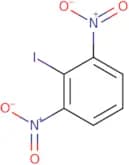
CAS:<p>Versatile small molecule scaffold</p>Formula:C12H14O2Purity:Min. 95%Molecular weight:190.24 g/mol2-Iodo-1,3-dinitrobenzene
CAS:<p>Versatile small molecule scaffold</p>Formula:C6H3IN2O4Purity:Min. 95%Molecular weight:294 g/molN-[1-(Adamantan-1-yl)propylidene]hydroxylamine
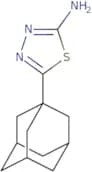
CAS:<p>Versatile small molecule scaffold</p>Formula:C13H21NOPurity:Min. 95%Molecular weight:207.31 g/mol5-(Adamantan-1-yl)-1,3,4-thiadiazol-2-amine
CAS:<p>Versatile small molecule scaffold</p>Formula:C12H17N3SPurity:Min. 95%Molecular weight:235.35 g/mol

![1-[2-(Methylsulfanyl)phenoxy]-3-[(propan-2-yl)amino]propan-2-ol](/_next/image/?url=https%3A%2Fstatic.cymitquimica.com%2Fproducts%2F3D%2Fthumb-webp%2FBBA48151.webp&w=3840&q=75)

![N-[1-(Adamantan-1-yl)propylidene]hydroxylamine](/_next/image/?url=https%3A%2Fstatic.cymitquimica.com%2Fproducts%2F3D%2Fthumb-webp%2FBBA52523.webp&w=3840&q=75)