Building Blocks
This section contains fundamental products for the synthesis of organic and biological compounds. Building blocks are the essential starting materials used to construct complex molecules through various chemical reactions. They play a critical role in drug discovery, material science, and chemical research. At CymitQuimica, we offer a diverse range of high-quality building blocks to support your innovative research and industrial projects, ensuring you have the essential components for successful synthesis.
Subcategories of "Building Blocks"
- Boronic Acids & Boronic Acid Derivatives(5,781 products)
- Chiral Building Blocks(1,242 products)
- Hydrocarbon Building Blocks(6,101 products)
- Organic Building Blocks(61,033 products)
Found 205320 products of "Building Blocks"
Sort by
Purity (%)
0
100
|
0
|
50
|
90
|
95
|
100
4-(Chloromethyl)-1-[(4-chlorophenyl)methyl]-3,5-dimethyl-1H-pyrazole hydrochloride
CAS:Controlled ProductVersatile small molecule scaffold
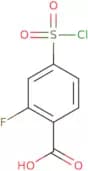
Formula:C13H15Cl3N2Purity:Min. 95%Molecular weight:305.6 g/mol4-(chlorosulfonyl)-2-fluorobenzoic acid
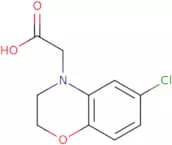
CAS:Versatile small molecule scaffoldFormula:C7H4ClFO4SPurity:Min. 95%Molecular weight:238.61 g/mol2-(6-Chloro-3,4-dihydro-2H-1,4-benzoxazin-4-yl)acetic acid
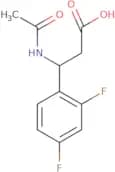
CAS:Versatile small molecule scaffoldFormula:C10H10ClNO3Purity:Min. 95%Molecular weight:227.64 g/mol3-(2,4-Difluorophenyl)-3-acetamidopropanoic acid
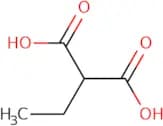
CAS:Versatile small molecule scaffoldFormula:C11H11F2NO3Purity:Min. 95%Molecular weight:243.21 g/molEthylmalonic Acid
CAS:Ethylmalonic acid (EA) is a metabolic intermediate that is synthesized in the mitochondria. It is a product of the oxidation of malonyl-CoA and succinyl-CoA by the enzyme dehydrogenase. EA has been shown to be produced in vivo, and can be used as a marker for mitochondrial dysfunction. EA levels are increased in patients with metabolic disorders such as diabetes mellitus and obesity, as well as other diseases such as cancer, Alzheimer’s disease, Parkinson’s disease, Huntington’s disease, multiple sclerosis, amyotrophic lateral sclerosis (ALS), heart failure, chronic obstructive pulmonary disorder (COPD), kidney diseases, liver diseases and anemia. EA levels can also be used to diagnose mitochondrial disorders such as mitochondrial DNA depletion syndrome and Kearns-Sayre syndrome.Formula:C5H8O4Purity:Min. 95%Molecular weight:132.11 g/molMethyl 1-[(3-methoxyphenyl)methyl]piperidine-4-carboxylate
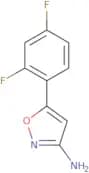
CAS:Versatile small molecule scaffoldFormula:C15H21NO3Purity:Min. 95%Molecular weight:263.33 g/mol5-(2,4-Difluorophenyl)-1,2-oxazol-3-amine
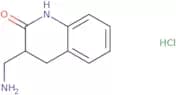
CAS:Versatile small molecule scaffoldFormula:C9H6F2N2OPurity:Min. 95%Molecular weight:196.15 g/mol3-(Aminomethyl)-1,2,3,4-tetrahydroquinolin-2-one hydrochloride
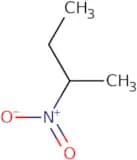
CAS:Versatile small molecule scaffoldFormula:C10H13ClN2OPurity:Min. 95%Molecular weight:212.67 g/mol2-Nitrobutane
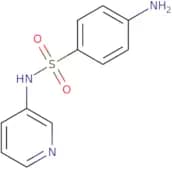
CAS:Versatile small molecule scaffoldFormula:C4H9NO2Purity:Min. 95%Molecular weight:103.12 g/mol4-Amino-N-pyridin-3-ylbenzenesulfonamide
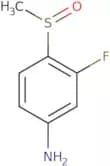
CAS:Versatile small molecule scaffoldFormula:C11H11N3O2SPurity:Min. 95%Molecular weight:249.29 g/mol3-Fluoro-4-methanesulfinylaniline
CAS:Versatile small molecule scaffoldFormula:C7H8FNOSPurity:Min. 95%Molecular weight:173.21 g/mol3-{[2-(Trifluoromethoxy)phenyl]methyl}azetidine hydrochloride
CAS:Versatile small molecule scaffoldFormula:C11H13ClF3NOPurity:Min. 95%Molecular weight:267.67 g/mol4-Cumylphenol
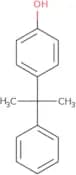
CAS:4-Cumylphenol is a cumylphenol that inhibits the aromatase enzyme, which converts androgens to estrogens. 4-Cumylphenol is used in wastewater treatment as an inhibitor of hydrogen sulfide production. It has also been shown to have anti-inflammatory properties due to its inhibition of prostaglandin synthesis. The detection time for 4-cumylphenol is approximately 1 hour.Formula:C15H16OPurity:Min. 95%Molecular weight:212.29 g/mol4,N-Dimethyl-N-phenyl-benzenesulfonamide
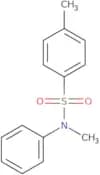
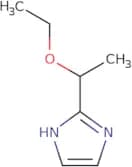
CAS:4,N-Dimethyl-N-phenyl-benzenesulfonamide is an acceptor that coordinates with a metal ion to form a complex. It has been shown to form complexes with aluminum, lithium aluminum hydride (LAH), and hydrogen. 4,N-Dimethyl-N-phenyl-benzenesulfonamide binds to the nitrogen atoms of diamines and chlorides to form complexes. The crystal structure of this complex has been determined using X-ray diffraction. 4,N-Dimethyl-N-phenyl-benzenesulfonamide is chiral at the carbon atom of the diethyl group on the nitrogen atom.Formula:C14H15NO2SPurity:Min. 95%Molecular weight:261.34 g/mol2-(1-Ethoxyethyl)-1H-imidazole
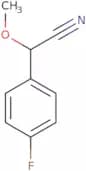
CAS:Versatile small molecule scaffoldFormula:C7H12N2OPurity:Min. 95%Molecular weight:140.18 g/mol2-(4-Fluorophenyl)-2-methoxyacetonitrile
CAS:Versatile small molecule scaffold
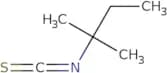
Formula:C9H8FNOPurity:Min. 95%Molecular weight:165.16 g/mol2-Isothiocyanato-2-methylbutane
CAS:2-Isothiocyanato-2-methylbutane is a compound that has been shown to have estrogenic activity. It has been shown to induce mammary cancer in female rats and promote proliferation of breast cancer cells. This chemical has been detected in the environment, where it is an outlier among other environmental estrogens. 2-Isothiocyanato-2-methylbutane has been found to bind to estrogen receptors and trigger receptor-mediated effects. The mechanism of action of 2-isothiocyanato-2-methylbutane is not fully understood but appears to be mediated through estrogen receptors, as seen with other estrogens.
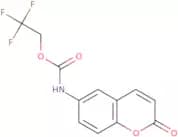
Formula:C6H11NSPurity:Min. 95%Molecular weight:129.23 g/mol2,2,2-Trifluoroethyl N-(2-oxo-2H-chromen-6-yl)carbamate
CAS:Versatile small molecule scaffoldFormula:C12H8F3NO4Purity:Min. 95%Molecular weight:287.19 g/mol3-[(2,6-Difluorophenyl)methyl]azetidine hydrochloride
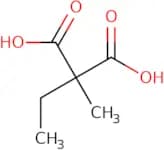
CAS:Versatile small molecule scaffoldFormula:C10H12ClF2NPurity:Min. 95%Molecular weight:219.66 g/mol2-Ethyl-2-methylpropanedioic acid
CAS:2-Ethyl-2-methylpropanedioic acid is a molecule with the chemical formula CH3CO(CH2)4COOH. It is used in the production of calcium carbonate, which is used as a filler in paints, plastics and paper. 2-Ethyl-2-methylpropanedioic acid has a carboxyl group and hydroxyl group that are reactive with silicon. It also contains a fatty acid group and nitrogen atoms. The most common functional groups present in this molecule are the carbonyl group and the hydrocarbon group. It can be found on polyvinylpyrrolidone or as an additive in paint to increase its hardness and flexibility.Formula:C6H10O4Purity:Min. 95%Molecular weight:146.14 g/mol
![4-(Chloromethyl)-1-[(4-chlorophenyl)methyl]-3,5-dimethyl-1H-pyrazole hydrochloride](/_next/image/?url=https%3A%2Fstatic.cymitquimica.com%2Fproducts%2F3D%2Fthumb-webp%2FEEC96230.webp&w=3840&q=75)

![Methyl 1-[(3-methoxyphenyl)methyl]piperidine-4-carboxylate](/_next/image/?url=https%3A%2Fstatic.cymitquimica.com%2Fproducts%2F3D%2Fthumb-webp%2FEEC96218.webp&w=3840&q=75)
![3-{[2-(Trifluoromethoxy)phenyl]methyl}azetidine hydrochloride](/_next/image/?url=https%3A%2Fstatic.cymitquimica.com%2Fproducts%2F3D%2Fthumb-webp%2FEEC96196.webp&w=3840&q=75)
![3-[(2,6-Difluorophenyl)methyl]azetidine hydrochloride](/_next/image/?url=https%3A%2Fstatic.cymitquimica.com%2Fproducts%2F3D%2Fthumb-webp%2FEEC96174.webp&w=3840&q=75)