


Building Blocks
Subcategories of "Building Blocks"
- Boronic Acids & Boronic Acid Derivatives(5,783 products)
- Chiral Building Blocks(1,242 products)
- Hydrocarbon Building Blocks(6,105 products)
- Organic Building Blocks(61,055 products)
Found 205383 products of "Building Blocks"
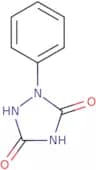
1-Phenyl-1,2,4-triazolidine-3,5-dione
CAS:1-Phenyl-1,2,4-triazolidine-3,5-dione is a molecule that can be used for biological purposes. It has the chemical formula of C6H4N2O3 and a molecular weight of 180.14 g/mol. The hydrogen bonds between the hydroxyl group and the skeleton are strong enough to keep the molecule in shape. The molecule is thermally developable; it can be developed after exposure to heat or light. 1-Phenyl-1,2,4-triazolidine-3,5-dione has been shown to react with silver ions and metal surfaces such as aluminum and titanium oxide. This compound may also be useful for coatings that are reactive to light or heat because it will form a film when exposed to either one.
Formula:C8H7N3O2Purity:Min. 95%Molecular weight:177.16 g/molN-(3-Bromo-4-methoxyphenyl)acetamide
CAS:Versatile small molecule scaffold
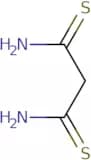
Formula:C9H10BrNO2Purity:Min. 95%Molecular weight:244.08 g/molPropanedithioamide
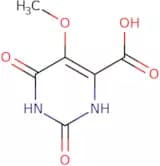
CAS:Propanedithioamide is an organic compound that shows surfactant properties. It has a hydrophobic character and can be used as a coating or stabilizer. Propanedithioamide reacts with metal ions in the environment, such as chloride ions, to form metal-dithiocarbamate complexes that are soluble in organic solvents. The ligand is also able to react with hydroxyl groups on surfaces, which leads to bond cleavage and a new coating. The chemical reactions of propanedithioamide are often used as catalysts for other reactions.Formula:C3H6N2S2Purity:Min. 95%Molecular weight:134.23 g/mol5-Methoxyorotic acid
CAS:Versatile small molecule scaffoldFormula:C6H6N2O5Purity:Min. 95%Molecular weight:186.12 g/mol2-Aminocyclohexanone hydrochloride
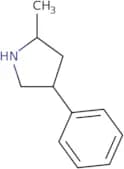
CAS:2-Aminocyclohexanone hydrochloride is a hydroxy nitro compound that has shown inhibitory effects on nicotinic acetylcholine receptors of the crth2 type. It is an aromatic hydrocarbon, which contains a fluorine atom and a nitro group. 2-Aminocyclohexanone hydrochloride is structurally related to pyridine compounds and reacts with chlorine in the presence of acid catalysts. The geometric isomers are designated by the prefixes "cis-" or "trans-" and can be differentiated by their physical properties.Formula:C6H12ClNOPurity:Min. 95%Molecular weight:149.62 g/mol2-Methyl-4-phenylpyrrolidine
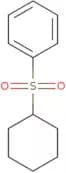
CAS:2-Methyl-4-phenylpyrrolidine is an aryl group that is assembled with a sequence of cyclic, stereoselective, substituent, and organic chemistry. It is reductively alkene and chiral in nature. 2-Methyl-4-phenylpyrrolidine has efficient functional group properties.Formula:C11H15NPurity:Min. 95%Molecular weight:161.24 g/mol(Cyclohexanesulfonyl)benzene
CAS:Cyclohexanesulfonyl)benzene is a chemical compound that can be synthesized by reacting nitrobenzene with benzyl halides in the presence of copper(II) salt. Cyclohexanesulfonyl)benzene can be used for the synthesis of epoxides and anion, which are important intermediates in organic chemistry. Cyclohexanesulfonyl)benzene is also known to have a respiratory disease-preventing effect. It has been shown to prevent radiation-induced damage to the lungs in animals. This effect may be due to its ability to inhibit cyclic nucleotide phosphodiesterase, an enzyme that breaks down cyclic nucleotides and is responsible for bronchoconstriction.
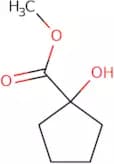
Formula:C12H16O2SPurity:Min. 95%Molecular weight:224.32 g/molMethyl 1-hydroxycyclopentane-1-carboxylate
CAS:Versatile small molecule scaffold
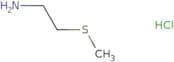
Formula:C7H12O3Purity:Min. 95%Molecular weight:144.17 g/mol2-(Methylthio)ethanamine HCl
CAS:2-Methylthioethanamine HCl is an insecticide that belongs to the group of sulfide compounds. It has been shown to have high insecticidal activity against plutella xylostella at temperatures below 20 degrees Celsius. The bioassay results suggest that 2-Methylthioethanamine HCl is a non-systemic, contact and stomach poison, with no significant toxicity to mammals. This compound has been shown to be photostable and can be used as a stabilizer for perovskite solar cells. 2-Methylthioethanamine HCl inhibits the larval development of Plutella xylostella by interacting with the electron transport chain and blocking ATP synthesis.
Formula:C3H10ClNSPurity:Min. 95%Molecular weight:127.64 g/mol3-[(Pyridin-3-ylmethyl)amino]propan-1-ol
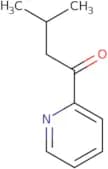
CAS:Versatile small molecule scaffoldFormula:C9H14N2OPurity:Min. 95%Molecular weight:166.22 g/mol2-(Isobutylcarbonyl)pyridine
CAS:Versatile small molecule scaffoldFormula:C10H13NOPurity:Min. 95%Molecular weight:163.22 g/mol2-Chlorobenzhydrol-d5
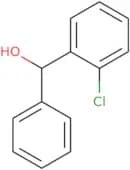
CAS:2-Chlorobenzhydrol-d5 is a ligand that forms complexes with palladium. It is used as a catalyst in the recycling of phosphine, which has been shown to be more efficient than other catalysts. 2-Chlorobenzhydrol-d5 can also react with aldehydes to form carbinols and is used in the production of toluene and diethyl ether. This compound can be isolated by distillation and reused up to six times without significant loss of activity. 2-Chlorobenzhydrol-d5 also has volatile properties, so it can be isolated by vacuum distillation and yields are high when compared to other compounds.Formula:C13H6D5ClOPurity:Min. 95%Molecular weight:223.71 g/molEthyl 2,2-dichloro-2-ethoxyacetate
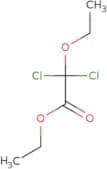
CAS:Ethyl 2,2-dichloro-2-ethoxyacetate is a heterocyclic chemical substance that has been used as an analytical reagent for the detection of chloride ions. It can be used as an enhancer to increase the sensitivity and selectivity of various analytical methods. This compound has also been shown to have a high degree of sensitivity and high selectivity for benzofuran, which is a heterocycle with two double bonds in its ring system. Ethyl 2,2-dichloro-2-ethoxyacetate has since been used as a reference standard for the analysis of oxazole and naphthyl compounds by GC/MS.Formula:C6H10Cl2O3Purity:Min. 95%Molecular weight:201.04 g/mol3-Methyl-5-nitropyridine
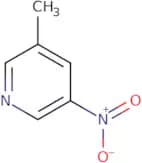
CAS:3-Methyl-5-nitropyridine is a synthetic chemical that is used as a reagent for the synthesis of other organic compounds. It is also used in analytical chemistry for the preparation of 3-bromo-5-methylpyridine. The reaction yield and reaction time depend on the concentration of 3-methylpyridine, malonate, and nitrite. The filtrate should be distilled to remove the azobenzene and xylene.Formula:C6H6N2O2Purity:Min. 95%Molecular weight:138.12 g/mol2-Quinoxalinethiol
CAS:2-Quinoxalinethiol is an organic compound that belongs to the group of sulfa drugs. It is a reactive, low molecular weight chemical that reacts with carbaryl, a common pesticide, to form an inhibitor molecule. 2-Quinoxalinethiol has been shown to be a potent antimicrobial agent against bacteria and fungi. It also acts as a detergent additive for laundry detergent compositions. 2-Quinoxalinethiol can be used in model systems for studying the oxidation of sulfhydryl groups by hydrochloric acid or thiolate compounds.Formula:C8H6N2SPurity:Min. 95%Molecular weight:162.21 g/mol2-Amino-1-methylpyridin-1-ium iodide
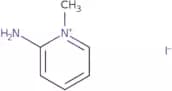
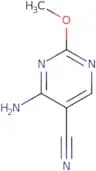
CAS:Versatile small molecule scaffoldFormula:C6H9IN2Purity:Min. 95%Molecular weight:236.05 g/mol4-Amino-2-methoxypyrimidine-5-carbonitrile
CAS:Versatile small molecule scaffoldFormula:C6H6N4OPurity:Min. 95%Molecular weight:150.14 g/mol2-Amino-5H,6H,7H,8H-pyrido[2,3-d]pyrimidin-4-ol
CAS:Versatile small molecule scaffoldFormula:C7H10N4OPurity:Min. 95%Molecular weight:166.18 g/mol2-(4-Chlorophenyl)-N'-hydroxyethanimidamide
CAS:Versatile small molecule scaffoldFormula:C8H9ClN2OPurity:Min. 95%Molecular weight:184.62 g/mol2-Phenylmethanesulfonamidoacetic acid
CAS:Versatile small molecule scaffoldFormula:C9H11NO4SPurity:Min. 95%Molecular weight:229.26 g/mol



![3-[(Pyridin-3-ylmethyl)amino]propan-1-ol](/_next/image/?url=https%3A%2Fstatic.cymitquimica.com%2Fproducts%2F3D%2Fthumb-webp%2FGAA95100.webp&w=3840&q=75)

![2-Amino-5H,6H,7H,8H-pyrido[2,3-d]pyrimidin-4-ol](/_next/image/?url=https%3A%2Fstatic.cymitquimica.com%2Fproducts%2F3D%2Fthumb-webp%2FGAA96495.webp&w=3840&q=75)

