Building Blocks
Subcategories of "Building Blocks"
- Boronic Acids & Boronic Acid Derivatives(5,783 products)
- Chiral Building Blocks(1,242 products)
- Hydrocarbon Building Blocks(6,105 products)
- Organic Building Blocks(61,055 products)
Found 205383 products of "Building Blocks"
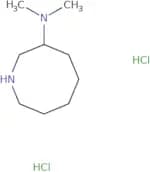
N,N-Dimethylazocan-3-amine dihydrochloride
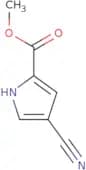
CAS:Versatile small molecule scaffoldFormula:C9H22Cl2N2Purity:Min. 95%Molecular weight:229.2 g/molMethyl 4-cyano-1H-pyrrole-2-carboxylate
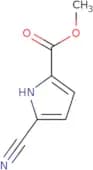
CAS:Versatile small molecule scaffoldFormula:C7H6N2O2Purity:Min. 95%Molecular weight:150.13 g/molMethyl 5-cyano-1H-pyrrole-2-carboxylate
CAS:Methyl 5-cyano-1H-pyrrole-2-carboxylate is a chiral, intramolecular catalysis inhibitor of the enzyme acetylcholinesterase. It is a potent compound that inhibits the activity of this enzyme and prevents the breakdown of acetylcholine in the brain. Methyl 5-cyano-1H-pyrrole-2-carboxylate binds to the active site with an axial orientation and has been shown to be selective for parp-1. This molecule also inhibits other enzymes that are involved in protein synthesis and cell signaling, such as alkenes and alkaloids. Methyl 5-cyano-1H-pyrrole-2-carboxylate may have therapeutic value as a treatment for Alzheimer's disease due to its ability to inhibit acetylcholinesterase activity.Formula:C7H6N2O2Purity:Min. 95%Molecular weight:150.13 g/mol4-(Aminomethyl)-2,6-dimethylphenol hydrochloride
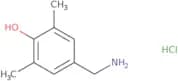
CAS:Versatile small molecule scaffoldFormula:C9H14ClNOPurity:Min. 95%Molecular weight:187.66 g/molPhenyl acrylate
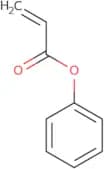
CAS:Phenyl acrylate is a molecule that belongs to the class of aliphatic hydrocarbons. It is a boron nitride-based film-forming polymer and has been shown to have potential as a coating material for radiation protection. Phenyl acrylate is able to form films that are resistant to chloride erosion and can be used in nuclear power plants, where it can be used as an efficient method for preventing the release of radioactive materials.Formula:C9H8O2Purity:Min. 95%Molecular weight:148.16 g/mol2,2-dimethyl-1-phenylpropan-1-one
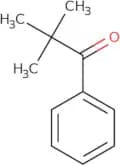
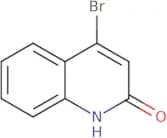
CAS:2,2-dimethyl-1-phenylpropan-1-one is a reactive chemical that reacts with phosphorus pentachloride to form 2,2-dimethyloxirane. This compound has been shown to react with methoxy groups to form the oxirane ring. The UV absorption spectrum of this compound shows two bands at 222 nm and 246 nm. This reaction can be performed in a lab by combining the reactants in a hydroxide solution or sodium hydroxide solution. The transfer reactions can be performed using a solid catalyst such as silica gel, aluminum chloride, or titanium tetrachloride. The reaction mechanism for this compound is a free radical addition of the methyl group to the phosphorus pentachloride molecule. The activation energies for this reaction are low because there are relatively few steps involved.Formula:C11H14OPurity:Min. 95%Molecular weight:162.23 g/mol4-Bromoquinolin-2-one
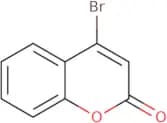
CAS:Versatile small molecule scaffoldFormula:C9H6BrNOPurity:Min. 95%Molecular weight:224.06 g/mol4-Bromo-2H-chromen-2-one
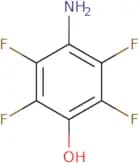
CAS:4-Bromo-2H-chromen-2-one is a coumaryl derivative that can be synthesized by the coupling of an aryl boronic acid with a chlorocoumarin. Coumarin derivatives are important for their vibrational, stereoselective, and synthetic properties. Coumarin derivatives have been used to synthesize arylboronates and palladium catalyzed cross couplings. They also inhibit the activity of soybean lipoxygenase in vitro and are used as anti-inflammatory agents. Coumarin derivatives are often found in natural products such as plants and animals. They can be differentiated from other aromatic compounds due to their functional groups, halides, or palladium catalyzed coupling reactions.Formula:C9H5BrO2Purity:Min. 95%Molecular weight:225.04 g/mol4-Amino-2,3,5,6-tetrafluorophenol
CAS:4-Amino-2,3,5,6-tetrafluorophenol is a hydrolyzing agent that is used in the production of nitrides. It hydrolyzes to form an amino group and a tetrafluorohydroxyl group. The industrial applications of 4-amino-2,3,5,6-tetrafluorophenol include its use as a target compound for the determination of the rate constant for hydrolysis. In addition to this application, it is also used as a reagent in organic synthesis.
Formula:C6H3F4NOPurity:Min. 95%Molecular weight:181.09 g/mol1-(3-chloro-2-hydroxyphenyl)propan-1-one
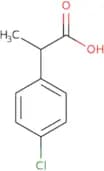
CAS:Versatile small molecule scaffoldFormula:C9H9O2ClPurity:Min. 95%Molecular weight:184.61 g/mol2-(4-Chlorophenyl)propanoic acid
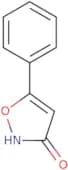
CAS:2-(4-Chlorophenyl)propanoic acid is a chiral compound that can be used as a chiral selector. The compound has been investigated for its use in the separation of enantiomers and racemates by enantioseparation. It has also been investigated as a potential benzene ring substituent in research. Countercurrent chromatography was used to investigate the enantiomer properties of 2-(4-chlorophenyl)propanoic acid. The compound is not suitable for the separation of β-cyclodextrin or other cyclodextrins due to its hydrophobic nature.Formula:C9H9ClO2Purity:Min. 95%Molecular weight:184.62 g/mol5-Phenyl-1,2-oxazol-3-ol
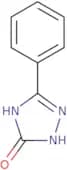
CAS:5-Phenyl-1,2-oxazol-3-ol is an organophosphorus insecticide that binds to acetylcholine receptors in the neuromuscular junction. It is a synthetic substance that has been shown to have carcinogenic effects on animal tissue. It is metabolized by hydrolysis of the ammonium group, and then undergoes methylation and oxidation. The metabolites are excreted through the urine or bile. 5-Phenyl-1,2-oxazol-3-ol can be used as a binding agent for isolating proteins from cellular extracts.Formula:C9H7NO2Purity:Min. 95%Molecular weight:161.16 g/mol3-Phenyl-4,5-dihydro-1H-1,2,4-triazol-5-one
CAS:Versatile small molecule scaffoldFormula:C8H7N3OPurity:Min. 95%Molecular weight:161.16 g/mol5-pyridin-4-yl-2,4-dihydro-[1,2,4]triazol-3-one
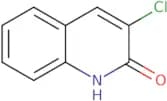
CAS:Versatile small molecule scaffoldFormula:C7H6N4OPurity:Min. 95%Molecular weight:162.14 g/mol3-Chloroquinolin-2(1H)-one
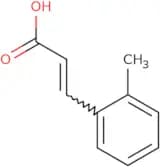
CAS:3-Chloroquinolin-2(1H)-one is an antimicrobial agent that contains a chlorine atom. It is used in the treatment of cancer, and has been shown to inhibit the replication of DNA by binding to the nitrogen atoms in DNA. 3-Chloroquinolin-2(1H)-one is also used as an anti-infective agent and has been shown to have inhibitory activities against Gram positive bacteria, such as Staphylococcus aureus, and Gram negative bacteria, such as Escherichia coli. 3-Chloroquinolin-2(1H)-one binds to the chloride ion on the bacterial cell wall membrane, which prevents the transport of essential nutrients into the cell and leads to cell death. The chemical structure of 3-chloroquinein-2(1H)-one consists of two enantiomers (mirror images), one being more active than the other. The less active form can be convertedFormula:C9H6ClNOPurity:Min. 95%Molecular weight:179.6 g/mol(E)-3-(o-Tolyl)acrylic acid
CAS:(E)-3-(o-Tolyl)acrylic acid is a boronic acid with the chemical structure of an ester. Boronic acids are electron-deficient, which makes them good ligands for metal ions such as ruthenium. In this case, the boronic acid is used to form a ruthenium complex. The compound can be used in a Suzuki coupling reaction to form C–H bonds. It also has acidic properties and hydrogenations that make it useful for synthetic purposes. (E)-3-(o-Tolyl)acrylic acid is able to bind to prostanoid receptors, which are a type of ligand in the body that interacts with prostanoids (hormones). This makes it useful as a synthetic ligand for radioligands or radioactive isotopes.
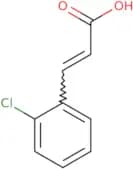
Formula:C10H10O2Purity:Min. 95%Molecular weight:162.18 g/mol(E)-3-(2-Chlorophenyl)acrylic acid
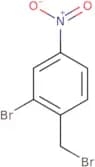
CAS:(E)-3-(2-Chlorophenyl)acrylic acid is a byproduct of the reaction between 2-chlorocinnamic acid and dioxane. It is a reactive compound that reacts with cellulose acetate to form a cinnamic acid derivative. The chloride ion in this compound can be removed by filtration, which leaves behind decarboxylated (E)-3-(2-chlorophenyl)acrylic acid. Decarboxylation of (E)-3-(2-chlorophenyl)acrylic acid yields caffeic acid. This compound also thermally decomposes into cinnamic acid derivatives, which are also reactive compounds.Formula:C9H7ClO2Purity:Min. 95%Molecular weight:182.6 g/mol2-Bromo-1-(bromomethyl)-4-nitrobenzene
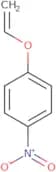
CAS:Versatile small molecule scaffoldFormula:C7H5Br2NO2Purity:Min. 95%Molecular weight:294.93 g/mol1-(Ethenyloxy)-4-nitrobenzene
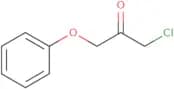
CAS:1-Ethoxy-4-nitrobenzene (ENB) is a glycolaldehyde that is used as a food additive and has been shown to have tumorigenic properties. ENB has been found to interact with the enzyme activities of copper salt, which can lead to the formation of epoxides. This chemical has also been shown to induce skin tumors in mice. In addition, ENB can react with chloride ions to form polymers, which are known carcinogens. Furthermore, 1-Ethoxy-4-nitrobenzene reacts with hydroxylamine and methane monooxygenase, leading to the production of ethyl nitrite and ethyl nitrate respectively. These compounds are known skin tumor promoters in rats.Formula:C8H7NO3Purity:Min. 95%Molecular weight:165.15 g/mol1-chloro-3-phenoxypropan-2-one
CAS:1-Chloro-3-phenoxypropan-2-one (1CPP) is a chemical that belongs to the group of ketones. It is a colorless liquid with a sweet, acetone odor. 1CPP is used as an intermediate in organic synthesis, mainly for the preparation of acetylcholinesterase inhibitors. This compound has been found to be a potent inhibitor of acetylcholinesterase and shows irreversible inhibition. 1CPP also reacts with epoxide, dehalogenases, and transition metals to form epoxides.
Formula:C9H9ClO2Purity:Min. 95%Molecular weight:184.62 g/mol


![5-pyridin-4-yl-2,4-dihydro-[1,2,4]triazol-3-one](/_next/image/?url=https%3A%2Fstatic.cymitquimica.com%2Fproducts%2F3D%2Fthumb-webp%2FAAA93908.webp&w=3840&q=75)