Building Blocks
Subcategories of "Building Blocks"
- Boronic Acids & Boronic Acid Derivatives(5,784 products)
- Chiral Building Blocks(1,243 products)
- Hydrocarbon Building Blocks(6,105 products)
- Organic Building Blocks(61,066 products)
Found 205426 products of "Building Blocks"
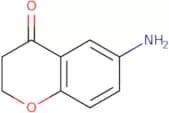
6-Amino-3,4-dihydro-2H-1-benzopyran-4-one
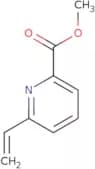
CAS:Versatile small molecule scaffoldFormula:C9H9NO2Purity:Min. 95%Molecular weight:163.17 g/molMethyl 6-ethenylpyridine-2-carboxylate
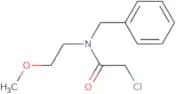
CAS:Versatile small molecule scaffoldFormula:C9H9NO2Purity:Min. 95%Molecular weight:163.17 g/molN-Benzyl-2-chloro-N-(2-methoxyethyl)acetamide
CAS:Versatile small molecule scaffold
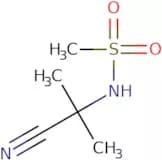
Formula:C12H16ClNO2Purity:Min. 95%Molecular weight:241.71 g/molN-(1-Cyano-1-methylethyl)methanesulfonamide
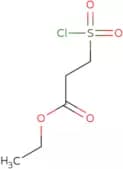
CAS:Versatile small molecule scaffoldFormula:C5H10N2O2SPurity:Min. 95%Molecular weight:162.21 g/molEthyl 3-(chlorosulfonyl)propanoate
CAS:Versatile small molecule scaffold
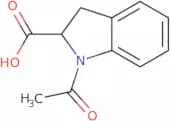
Formula:C5H9ClO4SPurity:Min. 95%Molecular weight:200.64 g/mol(2R)-1-Acetyl-2,3-dihydro-1H-indole-2-carboxylic acid
CAS:Versatile small molecule scaffoldFormula:C11H11NO3Purity:Min. 95%Molecular weight:205.21 g/mol(1R,5S)-Bicyclo[3.1.0]hexane-1,5-dicarbaldehyde
CAS:Versatile small molecule scaffoldFormula:C8H10O2Purity:Min. 95%Molecular weight:138.2 g/mol1',2'-Dihydrospiro[cyclobutane-1,3'-indole]-2'-one
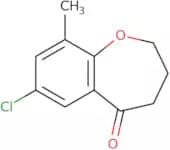
CAS:1',2'-Dihydrospiro[cyclobutane-1,3'-indole]-2'-one is a bromodomain inhibitor that targets the bromodomain of histone deacetylases. It is an experimental agent in the treatment of cancer.Formula:C11H11NOPurity:Min. 95%Molecular weight:173.21 g/mol7-Chloro-9-methyl-2,3,4,5-tetrahydro-1-benzoxepin-5-one
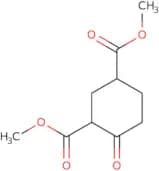
CAS:Versatile small molecule scaffoldFormula:C11H11ClO2Purity:Min. 95%Molecular weight:210.65 g/mol1,3-Dimethyl 4-oxocyclohexane-1,3-dicarboxylate
CAS:Versatile small molecule scaffold
Formula:C10H14O5Purity:Min. 95%Molecular weight:214.21 g/mol4,7-Dibromo-2,3-dihydro-1H-inden-1-one
CAS:Versatile small molecule scaffold
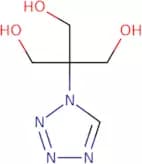
Formula:C9H6Br2OPurity:Min. 95%Molecular weight:289.95 g/mol2-(Hydroxymethyl)-2-(1H-1,2,3,4-tetrazol-1-yl)propane-1,3-diol
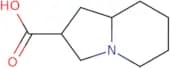
CAS:2-(Hydroxymethyl)-2-(1H-1,2,3,4-tetrazol-1-yl)propane-1,3-diol is a chemical compound that contains an alkyl group with a hydroxymethyl substituent and a tetrazole substituent. The compound has been shown to be an effective inhibitor of bacterial growth in the presence of chlorides. 2-(Hydroxymethyl)-2-(1H-1,2,3,4-tetrazol-1-yl)propane-1,3-diol inhibits bacterial synthesis by binding to the active site of bacterial xanthine dehydrogenase. It also inhibits the growth of bacteria such as Staphylococcus aureus and reduces their ability to produce protein. 2-(Hydroxymethyl)-2-(1H-1,2,3,4-tetrazol-1-yl)propane 1Formula:C5H10N4O3Purity:Min. 95%Molecular weight:174.16 g/molOctahydroindolizine-2-carboxylic acid
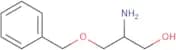
CAS:Versatile small molecule scaffoldFormula:C9H15NO2Purity:Min. 95%Molecular weight:169.22 g/mol2-Amino-3-(benzyloxy)propan-1-ol
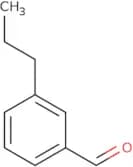
CAS:Versatile small molecule scaffoldFormula:C10H15NO2Purity:Min. 95%Molecular weight:181.23 g/mol3-Propylbenzaldehyde
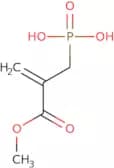
CAS:3-Propylbenzaldehyde is a ketone that is used as a catalyst in organic synthesis. 3-Propylbenzaldehyde has been shown to function as an electron donor and can be used as a catalyst for the hydrothermal oxidation of cyclohexanones. 3-Propylbenzaldehyde can be used in magnetic or electron donating techniques, such as nanocatalysis, which are catalytic techniques that use magnetic or electrostatic fields to increase the efficiency of reactions. This compound is also reusable and can be used with acid catalysts for increased stability.Formula:C10H12OPurity:Min. 95%Molecular weight:148.2 g/mol(3-Methoxy-2-methylidene-3-oxopropyl)phosphonic acid
CAS:Versatile small molecule scaffoldFormula:C5H9O5PPurity:Min. 95%Molecular weight:180.1 g/mol2-[2-(Trimethylsilyl)ethynyl]benzenamine
CAS:2-[2-(Trimethylsilyl)ethynyl]benzenamine is an aromatic compound that is used as a starting material for the synthesis of other chemicals. It is prepared by reaction of 2-bromobenzene with ethynylmagnesium bromide and p-toluenesulfonic acid in the presence of aluminum chloride. The yield of the reaction product depends on the time and temperature. Elemental analysis reveals that the compound contains an alkyne group, which facilitates its conversion to quinoline derivatives. The chemical has been shown to react with x-rays to produce diffraction patterns, which can be analyzed to determine the structure of the molecule. X-ray diffraction analysis also revealed that this compound contains a quinoline ring system, which may contribute to its anti-inflammatory effects.
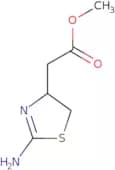
Formula:C11H15NSiPurity:Min. 95%Molecular weight:189.33 g/molMethyl 2-(2-amino-4,5-dihydro-1,3-thiazol-4-yl)acetate
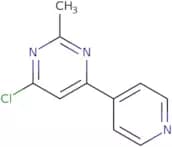
CAS:Versatile small molecule scaffoldFormula:C6H10N2O2SPurity:Min. 95%Molecular weight:174.22 g/mol4-Chloro-2-methyl-6-(pyridin-4-yl)pyrimidine
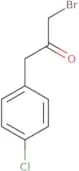
CAS:Versatile small molecule scaffoldFormula:C10H8ClN3Purity:Min. 95%Molecular weight:205.64 g/mol1-Bromo-3-(4-chlorophenyl)propan-2-one
CAS:Versatile small molecule scaffoldFormula:C9H8BrClOPurity:Min. 95%Molecular weight:247.51 g/mol

![(1R,5S)-Bicyclo[3.1.0]hexane-1,5-dicarbaldehyde](/_next/image/?url=https%3A%2Fstatic.cymitquimica.com%2Fproducts%2F3D%2Fthumb-webp%2FDEA47824.webp&w=3840&q=75)
![1',2'-Dihydrospiro[cyclobutane-1,3'-indole]-2'-one](/_next/image/?url=https%3A%2Fstatic.cymitquimica.com%2Fproducts%2F3D%2Fthumb-webp%2FDEA49052.webp&w=3840&q=75)

![2-[2-(Trimethylsilyl)ethynyl]benzenamine](/_next/image/?url=https%3A%2Fstatic.cymitquimica.com%2Fproducts%2F3D%2Fthumb-webp%2FDEA52916.webp&w=3840&q=75)