Building Blocks
Subcategories of "Building Blocks"
- Boronic Acids & Boronic Acid Derivatives(5,805 products)
- Chiral Building Blocks(1,248 products)
- Hydrocarbon Building Blocks(6,122 products)
- Organic Building Blocks(61,463 products)
Found 208442 products of "Building Blocks"
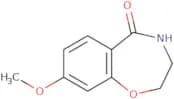
8-Methoxy-2,3,4,5-tetrahydro-1,4-benzoxazepin-5-one
CAS:Versatile small molecule scaffold
Formula:C10H11NO3Purity:Min. 95%Molecular weight:193.2 g/mol3-(tert-Butylsulfanyl)propan-1-ol
CAS:Versatile small molecule scaffold
Formula:C7H16OSPurity:Min. 95%Molecular weight:148.27 g/mol2-[(3-Phenylpropyl)sulfanyl]ethan-1-ol
CAS:Versatile small molecule scaffold
Formula:C11H16OSPurity:Min. 95%Molecular weight:196.31 g/mol2-[(2-Bromoethyl)sulfanyl]-2-methylpropane
CAS:Versatile small molecule scaffold
Formula:C6H13BrSPurity:Min. 95%Molecular weight:197.14 g/mol[(2-Bromoethyl)sulfanyl]cyclohexane
CAS:Versatile small molecule scaffoldFormula:C8H15BrSPurity:Min. 95%Molecular weight:223.18 g/mol2-[(2-Bromoethyl)sulfanyl]propane
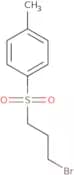
CAS:Versatile small molecule scaffoldFormula:C22H25N3O5SPurity:Min. 95%Molecular weight:443.5 g/mol1-(3-Bromopropanesulfonyl)-4-methylbenzene
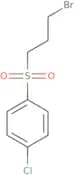
CAS:Versatile small molecule scaffoldFormula:C10H13BrO2SPurity:Min. 95%Molecular weight:277.18 g/mol1-(3-Bromopropanesulfonyl)-4-chlorobenzene
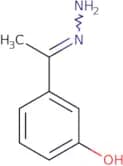
CAS:Versatile small molecule scaffoldFormula:C9H10BrClO2SPurity:Min. 95%Molecular weight:297.6 g/mol3-Ethanehydrazonoylphenol
CAS:Versatile small molecule scaffold
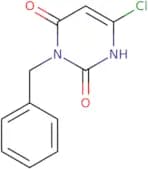
Formula:C8H10N2OPurity:Min. 95%Molecular weight:150.18 g/mol3-Benzyl-6-chloro-1H-pyrimidine-2,4-dione
CAS:Versatile small molecule scaffoldFormula:C11H9ClN2O2Purity:Min. 95%Molecular weight:236.65 g/mol5-Chloro-1H-imidazo[4,5-b]pyridin-2(3H)-one
CAS:5-Chloro-1H-imidazo[4,5-b]pyridin-2(3H)-one is a chemical compound that is used in analytical chemistry as an insecticide. It has been shown to cause genotoxic activity in weevils exposed to light. The compound has also been shown to have long term efficacy in plants and toxicity studies on animals. 5-Chloro-1H-imidazo[4,5-b]pyridin-2(3H)-one is metabolized by detoxification enzymes and excreted through the urine.Purity:Min. 95%6-Chloro-1-methylpyridin-2(1H)-one
CAS:6-Chloro-1-methylpyridin-2(1H)-one is an insecticide and a heterocyclic compound. It is used to kill insects such as mites, ticks, and fleas. 6-Chloro-1-methylpyridin-2(1H)-one is also known as chlorantraniliprole, which has been shown to be effective against arthropods that are resistant to other compounds. This compound has an n-oxide group on the pyridine ring, which makes it more toxic than other compounds that have only one nitro group.Purity:Min. 95%Cyclopropyl isocyanate
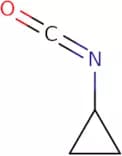
CAS:Cyclopropyl isocyanate (CPC) is an aliphatic hydrocarbon that is structurally similar to butane. Cyclopropyl isocyanate has a variety of functional groups including a hydroxy group, a serine protease, and an amino group. CPC has been shown to be a potent activator of the enzyme histone h3 lysine 4 trimethyltranferase, which is involved in the regulation of inflammatory diseases. The synthesis of cyclopropyl isocyanate can be done through the reaction with diazomethane and zinc chloride or by treating 1-chlorocyclohexene with nitrous acid.
Formula:C4H5NOPurity:Min. 95%Color and Shape:Clear LiquidMolecular weight:83.09 g/mol4-Chloro-2,3-dimethylpyridine N-oxide
CAS:4-Chloro-2,3-dimethylpyridine N-oxide is a chemical compound that belongs to the class of medicines. It is used in the manufacture of hydrogen peroxide, which is an oxidizing agent and a bleaching agent. 4-Chloro-2,3-dimethylpyridine N-oxide has been used as a reagent for organic synthesis and as a catalyst in organic reactions. This compound also has the ability to inhibit proton pumps, which are membrane proteins that pump protons across biological membranes. The presence of sodium impurities can lead to scaling problems because it affects the solubility of 4-chloro-2,3-dimethylpyridine N-oxide. The exothermic reaction with chlorine leads to the formation of chloride, sulfoxide, and chloride ions. These products are more soluble than 4-chloro-2,3-dimethylpyridine N-oxide itself.
Formula:C7H8ClNOPurity:Min. 95%Color and Shape:Off-White PowderMolecular weight:157.6 g/molCarboprost tromethamine
CAS:Carboprost tromethamine is a synthetic prostaglandin analogue that is used to induce labor in pregnant women. Carboprost tromethamine has minimal toxicity and can be combined with other drugs to improve efficacy. This drug has been shown to be effective in combination therapy groups, with minimal side effects. Carboprost tromethamine inhibits the activity of the enzyme phospholipase A2, which is responsible for the breakdown of fatty acids and production of inflammatory mediators. It also has anti-inflammatory properties and can be used as a treatment for metabolic disorders such as bladder dysfunction. Carboprost tromethamine is not active against bacteria or fungi, but it does have some antibacterial properties that may come from its ability to inhibit bacterial rRNA synthesis at high concentrations. Carboprost tromethamine should not be used during pregnancy or breastfeeding due to its potential risk of uterine contractions after childbirth, which can interfere with placentalFormula:C25H47NO8Purity:Min. 95%Color and Shape:SolidMolecular weight:489.64 g/molCyanomethylenetributylphosphorane
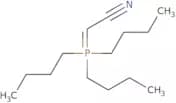
CAS:Cyanomethylenetributylphosphorane (CMTP) is an agent used for the diagnosis of body formation. It is a chemical compound that can be used to produce images of tissue and organs by detecting apoptosis, or programmed cell death. CMTP binds to the glucose-dependent insulinotropic polypeptide receptor (GIPR), stimulating the release of insulin in the pancreas. CMTP also has therapeutic potential for metabolic disorders, as it has been shown to reduce triglycerides and increase HDL cholesterol levels in human serum. CMTP is synthesized from trifluoroacetic acid, which is then reacted with a cyclic peptide containing an amino acid derivative and 1-methyl-2-pyrrolidinone. This reaction produces a molecule with one free amino group at one end and two free carboxylic acid groups at the other end. The molecule can be reacted with epidermal growth factor (EGF) or insulin to
Formula:C14H28NPPurity:Min. 95%Color and Shape:Yellow To Dark Brown Clear LiquidMolecular weight:241.35 g/molCopper(I) trifluoromethanesulfonate benzene complex
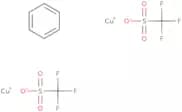
CAS:Copper trifluoromethanesulfonate is a copper complex that inhibits the activity of thrombin receptor and other diazo compounds. It has been shown to inhibit the activity of the cannabinoid receptors, sodium channels, and voltage-gated potassium channels. Copper trifluoromethanesulfonate can be used in organic chemistry as an alkylating agent or to form thioacetals. The activity of this compound is chiral, meaning that it can exist as two different enantiomers: (1) (S)-(+)-Copper(I) trifluoromethanesulfonate benzene complex and (2) (R)-(-)-Copper(I) trifluoromethanesulfonate benzene complex. These two enantiomers have different chemical properties, including their ability to bind to protein receptors.Formula:(CF3SO3Cu)2•C6H6Purity:Min. 95%Color and Shape:PowderMolecular weight:503.34 g/mol1,4-Dichloro-2-butyne
CAS:1,4-Dichloro-2-butyne is a colorless liquid with a sweet odor. It is used as an intermediate in organic synthesis. 1,4-Dichloro-2-butyne can be prepared by the reaction of ethylene diamine and benzyl chloride in the presence of xylenes to form the corresponding ethyl diazoacetate. The ethyl diazoacetate is then reacted with chlorosulfonic acid to produce 1,4-dichlorobutane. This compound can be converted into other compounds such as amides, ethers, and esters using ethyl diazoacetate.Formula:C4H4Cl2Purity:Min. 95%Color and Shape:Colorless Clear LiquidMolecular weight:122.98 g/mol2,3-Diaminobenzoic acid
CAS:2,3-Diaminobenzoic acid is a benzimidazole derivative that is used in the treatment of microbial infections. It has been shown to inhibit the growth of bacteria by binding to their ribosomes and inhibiting protein synthesis. The reaction solution of 2,3-diaminobenzoic acid has fluorescence properties that can be used to detect contaminating substances. The conjugates formed with p-hydroxyphenylacetic acid are more soluble than those formed with hydroxybenzoic acid. 2,3-Diaminobenzoic acid is not very toxic and does not cause any detectable changes in enzyme activities or other biochemical parameters in short term exposure. It can be easily decomposed by sodium chloride into chlorine gas and hydrochloric acid, which are both highly reactive with water.
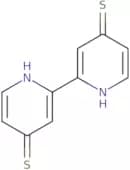
Formula:C7H8N2O2Purity:Min. 95%Color and Shape:PowderMolecular weight:152.15 g/mol4,4'-Dithio-2,2'-bipyridine
CAS:Please enquire for more information about 4,4'-Dithio-2,2'-bipyridine including the price, delivery time and more detailed product information at the technical inquiry form on this pageFormula:C10H8N2S2Purity:Min. 95%Color and Shape:PowderMolecular weight:220.32 g/mol


![2-[(3-Phenylpropyl)sulfanyl]ethan-1-ol](/_next/image/?url=https%3A%2Fstatic.cymitquimica.com%2Fproducts%2F3D%2Fthumb-webp%2FFAA75557.webp&w=3840&q=75)
![2-[(2-Bromoethyl)sulfanyl]-2-methylpropane](/_next/image/?url=https%3A%2Fstatic.cymitquimica.com%2Fproducts%2F3D%2Fthumb-webp%2FFAA75560.webp&w=3840&q=75)
![[(2-Bromoethyl)sulfanyl]cyclohexane](/_next/image/?url=https%3A%2Fstatic.cymitquimica.com%2Fproducts%2F3D%2Fthumb-webp%2FFAA75561.webp&w=3840&q=75)
![2-[(2-Bromoethyl)sulfanyl]propane](/_next/image/?url=https%3A%2Fstatic.cymitquimica.com%2Fproducts%2F3D%2Fthumb-webp%2FFAA75562.webp&w=3840&q=75)
![5-Chloro-1H-imidazo[4,5-b]pyridin-2(3H)-one](/_next/image/?url=https%3A%2Fstatic.cymitquimica.com%2Fproducts%2F3D%2Fthumb-webp%2FFC142316.webp&w=3840&q=75)