


Building Blocks
This section contains fundamental products for the synthesis of organic and biological compounds. Building blocks are the essential starting materials used to construct complex molecules through various chemical reactions. They play a critical role in drug discovery, material science, and chemical research. At CymitQuimica, we offer a diverse range of high-quality building blocks to support your innovative research and industrial projects, ensuring you have the essential components for successful synthesis.
Subcategories of "Building Blocks"
- Boronic Acids & Boronic Acid Derivatives(5,805 products)
- Chiral Building Blocks(1,248 products)
- Hydrocarbon Building Blocks(6,118 products)
- Organic Building Blocks(61,447 products)
Found 208423 products of "Building Blocks"
Sort by
Purity (%)
0
100
|
0
|
50
|
90
|
95
|
100
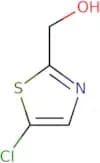
(5-Chloro-1,3-thiazol-2-yl)methanol
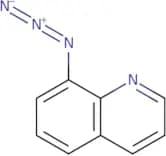
CAS:Versatile small molecule scaffoldFormula:C4H4NOSClPurity:Min. 95%Molecular weight:149.59 g/mol8-Azidoquinoline
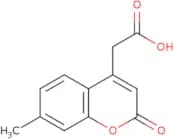
CAS:8-Azidoquinoline is a chemical compound that belongs to the class of x-ray crystal structures. It has been shown to have cytotoxic effects on kidney cells in culture. 8-Azidoquinoline can be used as a precursor for the synthesis of other derivatives that are useful in cancer research, such as 8-azidopurine and 8-azidoadenosine. This chemical can also be used for cross-coupling reactions with amines, which isomerizes the ring and opens it for further reactions. The isomers of this molecule are formed by the replacement of one or more hydrogen atoms with an azide group.Formula:C9H6N4Purity:Min. 95%Molecular weight:170.17 g/mol(7-Methyl-2-oxo-2H-chromen-4-yl)acetic acid
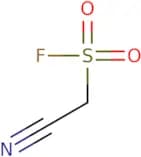
CAS:(7-Methyl-2-oxo-2H-chromen-4-yl)acetic acid is a coumarin derivative that is used as a fluorescent probe to study the interaction of electron donors and acceptors. This compound has been shown to have photophysical properties, such as fluorescence and photoinduced electron transfer, which can be modulated by the presence of electron donors, such as piperidine or styryl. (7-Methyl-2-oxo-2H-chromen-4-yl)acetic acid belongs to the group of ethylenic compounds with moieties that are similar to those found in coumarin and phenothiazine.Formula:C12H10O4Purity:Min. 95%Molecular weight:218.21 g/molCyanomethanesulfonyl fluoride
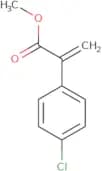
CAS:Versatile small molecule scaffoldFormula:C2H2FNO2SPurity:Min. 95%Molecular weight:123.11 g/molMethyl 2-(4-chlorophenyl)prop-2-enoate
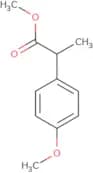
CAS:Versatile small molecule scaffoldFormula:C10H9ClO2Purity:Min. 95%Molecular weight:196.63 g/molMethyl 2-(4-methoxyphenyl)propanoate
CAS:Versatile small molecule scaffold
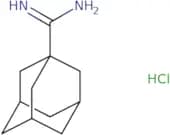
Formula:C11H14O3Purity:Min. 95%Molecular weight:194.23 g/molAdamantane-1-carboxamidine hydrochloride
CAS:Versatile small molecule scaffold
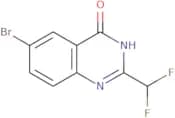
Formula:C11H19ClN2Purity:Min. 95%Molecular weight:214.73 g/mol6-Bromo-2-(difluoromethyl)-3,4-dihydroquinazolin-4-one
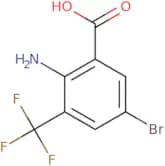
CAS:Versatile small molecule scaffoldFormula:C9H5BrF2N2OPurity:Min. 95%Molecular weight:275.05 g/mol2-Amino-5-bromo-3-(trifluoromethyl)benzoic acid
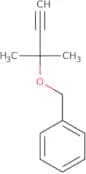
CAS:Versatile small molecule scaffoldFormula:C8H5NO2F3BrPurity:Min. 95%Molecular weight:284.03 g/mol(((2-Methylbut-3-yn-2-yl)oxy)methyl)benzene
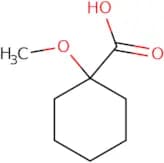
CAS:Versatile small molecule scaffoldFormula:C12H14OPurity:Min. 95%Molecular weight:174.24 g/mol1-Methoxycyclohexane-1-carboxylic acid
CAS:1-Methoxycyclohexane-1-carboxylic acid is a potent histone deacetylase (HDAC) inhibitor. It binds to the catalytic site of HDACs and prevents them from removing acetyl groups from lysine residues on histones, which are proteins that are important for gene expression. 1-Methoxycyclohexane-1-carboxylic acid has been shown to inhibit the proliferation of recombinant cells and chronic bronchitis in animals. This compound may also be effective against other inflammatory diseases as it inhibits prostaglandin synthesis by inhibiting cyclooxygenases and nitric oxide synthases.Formula:C8H14O3Purity:Min. 95%Molecular weight:158.19 g/mol6-Bromoimidazo[2,1-b][1,3]thiazole
CAS:Versatile small molecule scaffold
Formula:C5H3BrN2SPurity:Min. 95%Molecular weight:203.06 g/molN-(5-Amino-2-fluorophenyl)acetamide
CAS:Versatile small molecule scaffold
Formula:C8H9FN2OPurity:Min. 95%Molecular weight:168.17 g/molEthyl 7-chloro-8-fluoro-4-hydroxyquinoline-3-carboxylate
CAS:Versatile small molecule scaffold
Formula:C12H9ClFNO3Purity:Min. 95%Molecular weight:269.65 g/mol1-Bromo-2-(bromomethyl)-3-chlorobenzene
CAS:Versatile small molecule scaffoldFormula:C7H5Br2ClPurity:Min. 95%Molecular weight:284.38 g/mol4-{3H-Imidazo[4,5-c]pyridin-2-yl}aniline
CAS:Versatile small molecule scaffoldFormula:C12H10N4Purity:Min. 95%Molecular weight:210.23 g/mol(3,3-Dimethylcyclobutyl)methanol
CAS:Versatile small molecule scaffoldFormula:C7H14OPurity:Min. 95%Molecular weight:114.19 g/mol1-(3-Methylphenyl)cyclopentane-1-carboxylic acid
CAS:Versatile small molecule scaffoldFormula:C13H16O2Purity:Min. 95%Molecular weight:204.26 g/mol4-(3-Methoxypropyl)-4H-1,2,4-triazole-3-thiol
CAS:4-(3-Methoxypropyl)-4H-1,2,4-triazole-3-thiol is a sulfuric acid derivative of 4H-1,2,4-triazole-3-thiol. It is an efficient and potentiodynamic polarizer that can be used to measure the concentration of copper ions in solution. This agent has been shown to have synergistic effects with copper ions and can be used as an analytical tool for cyclic voltammetry.
Formula:C6H11N3OSPurity:Min. 95%Molecular weight:173.24 g/mol2-tert-Butyl-N-ethylaniline
CAS:Versatile small molecule scaffoldFormula:C12H19NPurity:Min. 95%Molecular weight:177.29 g/mol

![6-Bromoimidazo[2,1-b][1,3]thiazole](/_next/image/?url=https%3A%2Fstatic.cymitquimica.com%2Fproducts%2F3D%2Fthumb-webp%2FADA00130.webp&w=3840&q=75)


![4-{3H-Imidazo[4,5-c]pyridin-2-yl}aniline](/_next/image/?url=https%3A%2Fstatic.cymitquimica.com%2Fproducts%2F3D%2Fthumb-webp%2FADA00795.webp&w=3840&q=75)


