Building Blocks
Subcategories of "Building Blocks"
- Boronic Acids & Boronic Acid Derivatives(5,786 products)
- Chiral Building Blocks(1,246 products)
- Hydrocarbon Building Blocks(6,107 products)
- Organic Building Blocks(61,079 products)
Found 205461 products of "Building Blocks"
3-[(2-Furylmethyl)amino]propanenitrile
CAS:Versatile small molecule scaffold
Formula:C8H10N2OPurity:Min. 95%Molecular weight:150.18 g/molRef: 3D-GAA78868
Discontinued product3-(Allyloxy)oxetane
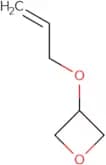
CAS:3-(Allyloxy)oxetane is a monomer that has been found to be an effective adhesive. It is synthesized by the reaction of allyl alcohol with oxetane in the presence of base. 3-(Allyloxy)oxetane is used as an adhesive in textile manufacturing, paper coating, and sealing windows. It has also been found to be a promising material for use in sealants and adhesives.
Formula:C6H10O2Purity:Min. 95%Molecular weight:114.14 g/mol(2R,3S,4R,5R)-Oxane-2,3,4,5-tetrol
CAS:(2R,3S,4R,5R)-Oxane-2,3,4,5-tetrol is a ligand that binds to metal ions and isomers of nitro groups. This compound has four chiral centers and two stereogenic centers. It has been used as an immobilized catalyst in the synthesis of enantiopure alcohols and aldehydes. (2R,3S,4R,5R)-Oxane-2,3,4,5-tetrol can be used as a feedstock for the production of polyols or polymers. It can also be used in fermentations such as the conversion of sugars into alcohols using yeast. (2R,3S,4R,5R)-Oxane-2,3,4,5-tetrol is transported across cell membranes by active transport or diffusion. Growth temperature affects its solubility in water and its ability to form hydrogen bonds
Formula:C5H10O5Purity:Min. 95%Molecular weight:150.13 g/molRef: 3D-GAA74895
Discontinued product4-(4-Methoxy-phenyl)-piperidine hydrochloride
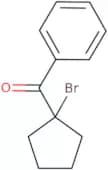
CAS:Versatile small molecule scaffoldFormula:C12H18ClNOPurity:Min. 95%Molecular weight:227.74 g/mol(1-Bromocyclopentyl)(phenyl)methanone
CAS:Versatile small molecule scaffold
Formula:C12H13BrOPurity:Min. 95%Molecular weight:253.13 g/molRef: 3D-GAA74066
Discontinued product5-Iodopentanenitrile
CAS:5-Iodopentanenitrile is a reactive chemical that can be used to produce organic compounds. This compound is an intermediate in the production of 5-iodo-1,3-dihydrobenzofuran and 5-iodoquinoline. It is also used for the production of pharmaceutical intermediates such as fluoroquinolones and alkylating agents. The mechanism of this chemical's reactivity has been studied extensively, which led to the discovery that it reacts by nucleophilic addition at electron deficient carbonyls groups. These reactions are known as Grignard reactions or halolactonizations. This chemical has also been shown to be reactive with biomolecules, such as DNA and RNA, and can bind to their sugar residues.
Formula:C5H8INPurity:Min. 95%Molecular weight:209.03 g/mol4-Iodobutanenitrile
CAS:4-Iodobutanenitrile is a synthetic compound that is used in the preparation of cyclobutanones. It can be prepared by the reaction of bromoacetic acid chloride with lysine. This procedure yields the product in high yield and purity and without significant amounts of undesired side products, such as 4-bromobutanenitrile and 2-chlorobenzene. The 4-iodobutanenitrile is synthesized using an asymmetric synthesis which includes hydrochloric acid as a reagent.
Formula:C4H6INPurity:Min. 95%Molecular weight:195 g/molRef: 3D-GAA72773
Discontinued product3-(4-Iodo-5-methyl-1H-pyrazol-1-yl)propanoic acid
CAS:Versatile small molecule scaffold
Formula:C7H9IN2O2Purity:Min. 95%Molecular weight:280.06 g/molRef: 3D-GAA71593
Discontinued product4-Azatricyclo[5.2.2.0,2,6]undec-8-ene-3,5-dione
CAS:4-Azatricyclo[5.2.2.0,2,6]undec-8-ene-3,5-dione (ATU) is a chemical compound that has been shown to have antimicrobial properties. It inhibits the growth of gram-negative and gram-positive bacteria and shows significant inhibition of MT4 cells in culture. ATU also demonstrated antifungal properties against Candida albicans and Aspergillus niger in vitro. ATU has been found to be cytotoxic to cells in culture, but not to mammals. The mechanism of action is not known, but it may be due to binding with DNA or RNA.>>END>>Formula:C10H11NO2Purity:Min. 95%Molecular weight:177.2 g/molRef: 3D-GAA71529
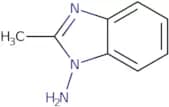
Discontinued product2-Methyl-1H-1,3-benzodiazol-1-amine
CAS:Versatile small molecule scaffold
Formula:C8H9N3Purity:Min. 95%Molecular weight:147.18 g/molRef: 3D-GAA29993
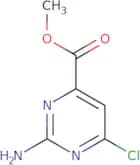
Discontinued productMethyl 2-amino-6-chloropyrimidine-4-carboxylate
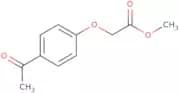
CAS:Versatile small molecule scaffoldFormula:C6H6ClN3O2Purity:Min. 95%Molecular weight:187.58 g/molMethyl 2-(4-acetylphenoxy)acetate
CAS:Versatile small molecule scaffold
Formula:C11H12O4Purity:Min. 95%Molecular weight:208.21 g/molRef: 3D-GAA29628
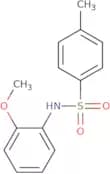
Discontinued productN-(2-Methoxyphenyl)-4-methylbenzene-1-sulfonamide
CAS:N-(2-Methoxyphenyl)-4-methylbenzene-1-sulfonamide is a drug that has been shown to be effective in treating nerve injury. It binds to extracellular nicotinic acetylcholine receptors and blocks the neurotransmitter acetylcholine from binding to its receptor, preventing it from stimulating the postsynaptic neuron. N-(2-Methoxyphenyl)-4-methylbenzene-1-sulfonamide also prevents the release of nitric oxide, which is a neurotransmitter that stimulates the postsynaptic neuron. The dihedral angles of this compound are close to those found in natural products such as nicotine, which possess similar effects on nerve injury. This drug has been shown to be successful in treating cerebral injuries, but not peripheral ones.END>Formula:C14H15NO3SPurity:Min. 95%Molecular weight:277.34 g/molN-Benzyl-2-hydroxypropanamide
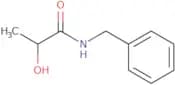
CAS:N-Benzyl-2-hydroxypropanamide is an amide that is a carboxylic acid and an unsaturated compound. It has a chiral center, which can be either erythro or threo depending on the configuration of the substituents. N-Benzyl-2-hydroxypropanamide is a diastereomer of 2-(benzyloxy)propanoic acid and can be obtained by alkylation of 2-(benzyloxy)ethanol with chloroacetic acid followed by hydrolysis. This compound can exist in mixtures of enantiomers due to its stereochemistry.
Formula:C10H13NO2Purity:Min. 95%Molecular weight:179.22 g/molDiallyl Isocyanurate
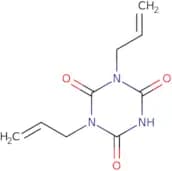
CAS:Diallyl Isocyanurate is an aliphatic hydrocarbon and a cross-linking agent. It reacts with amines to form amides, which are the backbone of many polymers and plastics. This chemical has strong hydrogen bonding properties, making it suitable for use as a sealant. Diallyl Isocyanurate also has hydroxyl groups that can react with other compounds to form adducts or polyclonal antibodies. It is chemically stable and has a high boiling point, making it useful in radiation as a sealant.
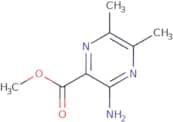
Formula:C9H11N3O3Purity:Min. 95%Molecular weight:209.21 g/molMethyl 3-amino-5,6-dimethylpyrazine-2-carboxylate
CAS:Versatile small molecule scaffold
Formula:C8H11N3O2Purity:Min. 95%Molecular weight:181.19 g/molRef: 3D-GAA29472
Discontinued product5-Methyl-5-(pyridin-4-yl)imidazolidine-2,4-dione
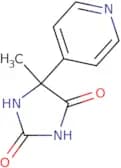
CAS:5-Methyl-5-(pyridin-4-yl)imidazolidine-2,4-dione is a compound that is structurally related to cisplatin. It has antibacterial activity and has been found to inhibit the growth of Escherichia coli. 5-Methyl-5-(pyridin-4-yl)imidazolidine-2,4-dione has been shown to be effective against gram positive bacteria such as Staphylococcus aureus and Streptococcus pneumoniae, but not against gram negative bacteria such as Pseudomonas aeruginosa. The molecule is an inhibitor with a broad spectrum of action. It binds to the active site of bacterial DNA gyrase, which is an enzyme that maintains the integrity of bacterial DNA by preventing supercoiling. This binding prevents the formation of an antibiotic resistant complex with the enzyme cell wall synthesis that is required for cell wall biosynthesis
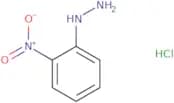
Formula:C9H9N3O2Purity:Min. 95%Molecular weight:191.19 g/mol2-Nitrophenylhydrazine Hydrochloride
CAS:2-Nitrophenylhydrazine hydrochloride is a low-dose group of nonsteroidal anti-inflammatory drugs (NSAIDs) that is used as a pharmaceutical preparation for the treatment of pain and inflammation. This drug may be used in conjunction with other NSAIDs such as ibuprofen, naproxen, or diclofenac to treat more severe pain. NSAIDs inhibit the cyclooxygenase enzyme that produces prostaglandins, which are mediators of pain and inflammation. NSAIDs can also inhibit the production of certain types of cells found in the stomach lining, which can lead to ulcers. 2-Nitrophenylhydrazine hydrochloride has been shown to inhibit the formation of acid when combined with hydrochloric acid and sodium salts. It also exhibits hydrogen bonding properties.
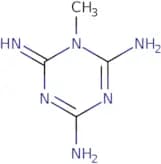
Formula:C6H7N3O2·HClPurity:Min. 95%Molecular weight:189.6 g/mol6-Imino-1-methyl-1,6-dihydro-1,3,5-triazine-2,4-diamine
CAS:Versatile small molecule scaffoldFormula:C4H8N6Purity:Min. 95%Molecular weight:140.15 g/molRef: 3D-GAA29182
Discontinued product4-Morpholin-4-yl-phenol
CAS:4-Morpholin-4-yl-phenol is a molecule that belongs to the class of organic compounds called morpholines. It is an intermediate in the formation of 4-morpholinoaniline. In this reaction, a nucleophilic oxygen atom (OH) reacts with an electrophilic nitrogen atom (N) and forms a tetrahedral intermediate. This intermediate then undergoes dimerization, which results in the loss of water molecules and produces a double bond between carbon atoms 3 and 4. The product of this reaction is 4-morpholin-4-yl phenol.
The kinetics of this reaction are first order with respect to both reactants. The rate constant for this reaction is 0.0029 mol/L/s at 25°C and can be calculated from the equation:
k = A[R]*[S]/(R*S)
where A is the concentration of R and S is the concentration of SFormula:C10H13NO2Purity:Min. 95%Molecular weight:179.22 g/molRef: 3D-GAA29123
Discontinued product
![3-[(2-Furylmethyl)amino]propanenitrile](/_next/image/?url=https%3A%2Fstatic.cymitquimica.com%2Fproducts%2F3D%2Fthumb-webp%2FGAA78868.webp&w=3840&q=75)





![4-Azatricyclo[5.2.2.0,2,6]undec-8-ene-3,5-dione](/_next/image/?url=https%3A%2Fstatic.cymitquimica.com%2Fproducts%2F3D%2Fthumb-webp%2FGAA71529.webp&w=3840&q=75)