


Building Blocks
Subcategories of "Building Blocks"
- Boronic Acids & Boronic Acid Derivatives(5,786 products)
- Chiral Building Blocks(1,246 products)
- Hydrocarbon Building Blocks(6,107 products)
- Organic Building Blocks(61,079 products)
Found 205461 products of "Building Blocks"
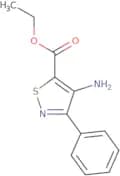
Ethyl 4-amino-3-phenyl-1,2-thiazole-5-carboxylate
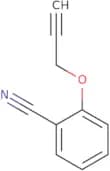
CAS:Versatile small molecule scaffoldFormula:C12H12N2O2SPurity:Min. 95%Molecular weight:248.3 g/mol2-(Prop-2-yn-1-yloxy)benzonitrile
CAS:Versatile small molecule scaffold
Formula:C10H7NOPurity:Min. 95%Molecular weight:157.17 g/molRef: 3D-QCA21156
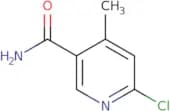
Discontinued product6-Chloro-4-methyl-nicotinamide
CAS:Versatile small molecule scaffold
Formula:C7H7ClN2OPurity:Min. 95%Molecular weight:170.59 g/molRef: 3D-QCA16937
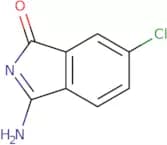
Discontinued product3-Amino-6-chloro-1H-isoindol-1-one
CAS:Versatile small molecule scaffold
Formula:C8H5ClN2OPurity:Min. 95%Molecular weight:180.59 g/molRef: 3D-QCA12209
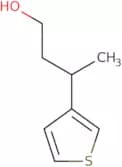
Discontinued product3-(Thiophen-3-yl)butan-1-ol
CAS:Versatile small molecule scaffold
Formula:C8H12OSPurity:Min. 95%Molecular weight:156.25 g/molRef: 3D-QCA12130
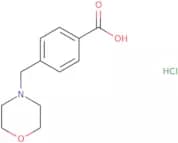
Discontinued product4-(Morpholinomethyl)benzoic acid hydrochloride
CAS:Versatile small molecule scaffold
Formula:C12H16ClNO3Purity:Min. 95%Molecular weight:257.71 g/molRef: 3D-QCA10182
Discontinued product1-(Benzo[d][1,3]dioxol-5-yl)thiourea
CAS:1-(Benzo[d][1,3]dioxol-5-yl)thiourea is a molecule that belongs to the class of heterocycles. The molecular geometry of this compound has been calculated at the density functional theory level using the B3LYP hybrid functional. The hyperpolarizability of 1-(benzo[d][1,3]dioxol-5-yl)thiourea has been calculated by using the polarizability and frequency parameters in conjunction with the frequency spectrum. The optimum values for these parameters have been determined from an analysis of the electronic structure and density theory.
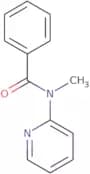
Formula:C8H8N2O2SPurity:Min. 95%Molecular weight:196.23 g/molN-Methyl-N-(pyridin-2-yl)benzamide
CAS:Versatile small molecule scaffold
Formula:C13H12N2OPurity:Min. 95%Molecular weight:212.25 g/molRef: 3D-QCA05285
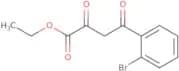
Discontinued productEthyl 4-(2-bromophenyl)-2,4-dioxobutanoate
CAS:Versatile small molecule scaffoldFormula:C12H11BrO4Purity:Min. 95%Molecular weight:299.12 g/mol1-[4-Hydroxy-3-(methoxymethyl)phenyl]ethan-1-one
CAS:Versatile small molecule scaffold
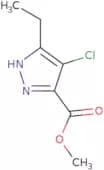
Formula:C10H12O3Purity:Min. 95%Molecular weight:180.2 g/molMethyl 4-chloro-5-ethyl-1H-pyrazole-3-carboxylate
CAS:Versatile small molecule scaffold
Formula:C7H9ClN2O2Purity:Min. 95%Molecular weight:188.61 g/molRef: 3D-QBC73959
Discontinued product3,6-Dimethylene-2,5-piperazinedione
CAS:3,6-Methylene-2,5-piperazinedione is a heterocyclic compound that belongs to the piperazinedione ring system. It is synthesized from 3,6-dithiobenzoic acid and thioacetic acid. The synthesis of this compound proceeds through a series of reactions involving oxidation of the thioacetic acid to the dithiols, followed by a sequence of nucleophilic substitution reactions.
Formula:C6H6N2O2Purity:Min. 95%Molecular weight:138.12 g/molRef: 3D-QAA99622
Discontinued productrac-(3S,6R)-3,6-Bis(hydroxymethyl)piperazine-2,5-dione
CAS:Versatile small molecule scaffoldFormula:C6H10N2O4Purity:Min. 95%Molecular weight:174.15 g/molMethyl 4-(aminooxy)butanoate hydrochloride
CAS:Versatile small molecule scaffold
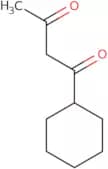
Formula:C5H12ClNO3Purity:Min. 95%Molecular weight:169.61 g/mol1-Cyclohexylbutane-1,3-dione
CAS:Versatile small molecule scaffold
Formula:C10H16O2Purity:Min. 95%Molecular weight:168.23 g/molRef: 3D-QAA97215
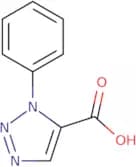
Discontinued product1-Phenyl-1H-1,2,3-triazole-5-carboxylic acid
CAS:Versatile small molecule scaffoldFormula:C9H7N3O2Purity:Min. 95%Molecular weight:189.17 g/molRef: 3D-QAA96672
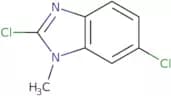
Discontinued product2,6-Dichloro-1-methyl-1H-1,3-benzodiazole
CAS:Versatile small molecule scaffold
Formula:C8H6Cl2N2Purity:Min. 95%Molecular weight:201.05 g/mol2-Chloro-1,5-dimethyl-1H-benzo[D]imidazole
CAS:Versatile small molecule scaffold
Formula:C9H9ClN2Purity:Min. 95%Molecular weight:180.63 g/mol1-Methyl-4-phenyl-1H-1,2,3-triazole
CAS:1-Methyl-4-phenyl-1H-1,2,3-triazole is a ligand that interacts with copper. It is used in the synthesis of pyridine complexes and as a reagent for the preparation of other organometallic compounds. 1-Methyl-4-phenyl-1H-1,2,3-triazole has been shown to be able to replace azide or chloride ligands in some metal coordination complexes. It has been observed in spectra of copper and rhenium complexes with axially coordinated ligands. The X ray crystal structures of 1 methyl 4 phenyl 1H 1 2 3 triazole have revealed that it can be either a luminescent or nonluminescent compound depending on the type of solvent used during its preparation.
Formula:C9H9N3Purity:Min. 95%Molecular weight:159.19 g/molRef: 3D-QAA96536
Discontinued productMethyl 3-methylenecyclobutanecarboxylate
CAS:Methyl 3-methylenecyclobutanecarboxylate is an organic compound with the chemical formula CH3C(O)CH2CH2COOCH3. It is a colorless liquid that is soluble in organic solvents. Methyl 3-methylenecyclobutanecarboxylate has been studied for its use as a precursor to potassium salts, which are used as catalysts in industrial processes. Methyl 3-methylenecyclobutanecarboxylate has also been identified as a structural factor for the elimination of potassium from cyclopentanone and benzene, factors that contribute to its elimination from the body. This compound can be brominated using potassium tert-butoxide and reactions with other reagents such as lithium chloride or sodium hydroxide to form methyl 3-bromocyclobutanecarboxylate, which can then be dehydrobrominated to form methyl 3-Formula:C7H10O2Purity:Min. 95%Molecular weight:126.15 g/mol

![1-(Benzo[d][1,3]dioxol-5-yl)thiourea](/_next/image/?url=https%3A%2Fstatic.cymitquimica.com%2Fproducts%2F3D%2Fthumb-webp%2FQCA06955.webp&w=3840&q=75)
![1-[4-Hydroxy-3-(methoxymethyl)phenyl]ethan-1-one](/_next/image/?url=https%3A%2Fstatic.cymitquimica.com%2Fproducts%2F3D%2Fthumb-webp%2FQCA03320.webp&w=3840&q=75)


![2-Chloro-1,5-dimethyl-1H-benzo[D]imidazole](/_next/image/?url=https%3A%2Fstatic.cymitquimica.com%2Fproducts%2F3D%2Fthumb-webp%2FQAA96560.webp&w=3840&q=75)

