Building Blocks
Subcategories of "Building Blocks"
- Boronic Acids & Boronic Acid Derivatives(5,784 products)
- Chiral Building Blocks(1,243 products)
- Hydrocarbon Building Blocks(6,105 products)
- Organic Building Blocks(61,066 products)
Found 205426 products of "Building Blocks"
2-azaspiro[4.4]nonane-1,3-dione
CAS:2-Azaspiro[4.4]nonane-1,3-dione is a linker that is used in the synthesis of active derivatives of drugs. It has pharmacological and physicochemical properties that are similar to those of methylene. 2-Azaspiro[4.4]nonane-1,3-dione is used as an analytical standard for rp-hplc analysis and x-ray structural analysis. It can be used to synthesize pentylenetetrazole and imine derivatives for anticonvulsant properties, which have been shown to have properties similar to those of phenytoin.
Formula:C8H11NO2Purity:Min. 95%Molecular weight:153.18 g/molRef: 3D-BAA12495
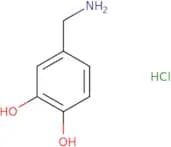
Discontinued product4-(Aminomethyl)-1,2-benzenediol hydrochloride
CAS:4-(Aminomethyl)-1,2-benzenediol hydrochloride is a potent inhibitor of monoamine neurotransmitter synthesis. It has been shown to inhibit the polymerase chain reaction (PCR) and is effective in the preparation of samples for PCR analysis. 4-(Aminomethyl)-1,2-benzenediol hydrochloride is chemically stable and has an electrochemical detector that can be used in its detection. This chemical also inhibits the incorporation of thymidine into DNA during DNA synthesis, leading to a decrease in DNA synthesis. The monoclonal antibody technique has been used to detect this compound in human serum and tissue biopsies.
Formula:C7H10ClNO2Purity:Min. 95%Molecular weight:175.61 g/molN-[(4-Fluorophenyl)methyl]-4-methoxyaniline
CAS:Versatile small molecule scaffold
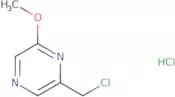
Formula:C14H14FNOPurity:Min. 95%Molecular weight:231.26 g/mol2-(Chloromethyl)-6-methoxypyrazine hydrochloride
CAS:Versatile small molecule scaffold
Formula:C6H8Cl2N2OPurity:Min. 95%Molecular weight:195.04 g/molRef: 3D-GGD25928
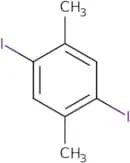
Discontinued product1,4-Diiodo-2,5-dimethylbenzene
CAS:1,4-Diiodo-2,5-dimethylbenzene is an iodide that can be used in the industrialization of iodine. It can be prepared from bicyclopropylidene and nitrosobenzene by coupling with a carbonyl group. The yield of this reaction is high and the product is stable. 1,4-Diiodo-2,5-dimethylbenzene can also be prepared by palladium-catalyzed cross coupling or a Diels–Alder reaction between 2,5-dimethylaniline and 3-(bromomethyl)cyclobutane. This process yields only one regioisomer because there are no other reactive groups on the ring to form a second regioisomeric product.
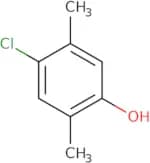
Formula:C8H8I2Purity:Min. 95%Molecular weight:357.96 g/mol4-Chloro-2,5-dimethylphenol
CAS:4-Chloro-2,5-dimethylphenol is a phenolic compound that is used as an intermediate in the synthesis of other organic compounds. It has low ph and can form adducts with methanol at high ph. 4-Chloro-2,5-dimethylphenol can be reacted with hydrogen chloride to produce the corresponding chloride or with a coupling agent to produce the corresponding imine. 4-Chloro-2,5-dimethylphenol can also be used as an elimination agent.
Formula:C8H9ClOPurity:Min. 95%Molecular weight:156.61 g/molRef: 3D-BAA12406
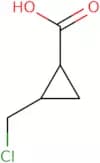
Discontinued productrac-(1R,2R)-2-(Chloromethyl)cyclopropane-1-carboxylic acid
CAS:Versatile small molecule scaffoldFormula:C5H7ClO2Purity:Min. 95%Molecular weight:134.56 g/molrac-tert-Butyl N-{[(1R,3S)-3-(hydroxymethyl)cyclohexyl]methyl}carbamate
CAS:Versatile small molecule scaffoldFormula:C13H25NO3Purity:Min. 95%Molecular weight:243.3 g/molRef: 3D-GKB65677
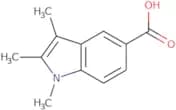
Discontinued product1,2,3-Trimethyl-1H-indole-5-carboxylic acid
CAS:Versatile small molecule scaffold
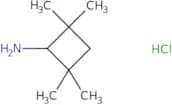
Formula:C12H13NO2Purity:Min. 95%Molecular weight:203.24 g/mol2,2,4,4-Tetramethylcyclobutan-1-amine hydrochloride
CAS:Versatile small molecule scaffold
Formula:C8H18ClNPurity:Min. 95%Molecular weight:163.69 g/molRef: 3D-GPD67387
Discontinued product3,3-Dimethylglutarimide
CAS:3,3-Dimethylglutarimide is a molecule that has been shown to inhibit the enzyme butyrylcholinesterase in a stepwise manner. This inhibition prevents the breakdown of acetylcholine, which leads to increased levels of this neurotransmitter and an improvement in cognition. 3,3-Dimethylglutarimide also has protonation properties that allow it to form complexes with metal ions such as zinc and copper. These complexes are formed by the interaction of functional groups on the molecules with protons on the metal ions.
Formula:C7H11NO2Purity:Min. 95%Molecular weight:141.17 g/mol8-Azaspiro[4.5]decane hydrochloride
CAS:Versatile small molecule scaffold
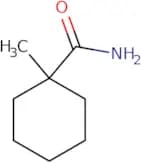
Formula:C9H17N·HClPurity:Min. 95%Molecular weight:175.7 g/mol1-Methylcyclohexane-1-carboxamide
CAS:1-Methylcyclohexane-1-carboxamide is a sclerotiorin, which are natural substances that have been shown to have inhibitory effects against fungi. It has been shown to be effective against Sclerotinia sclerotiorum and Gaseous Botrytis cinerea. The inhibition of sclerotiorin 1-methylcyclohexane-1-carboxamide is due to its ability to inhibit the synthesis of ergosterol, which is an important component of the fungal cell membrane. This drug has also been shown to have inhibitory effects on carbon bond formation in natural substances such as ginseng root or solid form.
Formula:C8H15NOPurity:Min. 95%Molecular weight:141.21 g/molRef: 3D-BAA12324
Discontinued product1-[5-(Trimethylsilyl)-1,2-oxazol-3-yl]ethan-1-one
CAS:Versatile small molecule scaffoldFormula:C8H13NO2SiPurity:Min. 95%Molecular weight:183.28 g/molRef: 3D-GQC14777
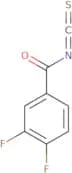
Discontinued product3,4-Difluorobenzoyl isothiocyanate
CAS:Versatile small molecule scaffold
Formula:C8H3F2NOSPurity:Min. 95%Molecular weight:199.18 g/molRef: 3D-BMB24980
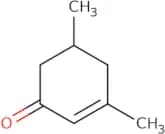
Discontinued product3,5-Dimethyl-2-cyclohexen-1-one
CAS:3,5-Dimethyl-2-cyclohexen-1-one is a β-unsaturated ketone that has been synthesized using an efficient method. It has been shown to have anti-inflammatory properties and is used for the treatment of pulmonary fibrosis in humans. The compound also binds to polyene compounds and supramolecular substrates. 3,5-Dimethyl-2-cyclohexen-1-one reacts with chloride ions to form a β unsaturated ketone chloride that can undergo alkylation with an electron donor such as acetonitrile. This reaction is catalyzed by microsomal cytochrome P450 enzymes and requires a reaction time of about two hours to complete.
Formula:C8H12OPurity:Min. 95%Molecular weight:124.18 g/mol4-Bromo-5-{3,7-dioxabicyclo[4.1.0]heptan-6-yl}-1-methyl-1H-pyrazole
CAS:Versatile small molecule scaffold
Formula:C9H11BrN2O2Purity:Min. 95%Molecular weight:259.1 g/molRef: 3D-GGD25935
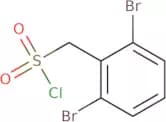
Discontinued product2,6-Dibromo-benzenemethanesulfonyl chloride
CAS:Versatile small molecule scaffold
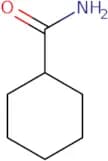
Formula:C7H5Br2ClO2SPurity:Min. 95%Molecular weight:348.44 g/molCyclohexanecarboxamide
CAS:Cyclohexanecarboxamide is a carboxamide that has been shown to inhibit the growth of bacteria. It binds to the bacterial receptor and inhibits the activity of the enzyme carboxide, which is involved in the synthesis of monoamine neurotransmitters. Cyclohexanecarboxamide has also been shown to inhibit axonal growth in mammalian cells, which may be due to its ability to block potassium channels on nerve cells. Cyclohexanecarboxamide has been shown to have antimicrobial properties against a range of organisms including those resistant mutants.
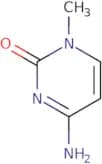
Formula:C7H13NOPurity:Min. 95%Molecular weight:127.18 g/mol4-Amino-1-methylpyrimidin-2(1H)-one
CAS:4-Amino-1-methylpyrimidin-2(1H)-one is a chemical compound that belongs to the group of pyrimidine compounds. It has been shown to be an inhibitor of viral life, with its activity against HIV being most well studied. The tautomers of 4-amino-1-methylpyrimidin-2(1H)-one are protonated and stable, meaning that they do not undergo any chemical change in the body. 4-Amino-1-methylpyrimidin-2(1H)-one is also able to form stable complexes with nitrogen atoms. The xray crystal structure for this compound shows that it coordinates with group P2, which contains two nitrogen atoms and one oxygen atom. The interaction between these three atoms is called a dinucleotide phosphate. This group binds to DNA by hydrogen bonds, forming intramolecular hydrogen bonds. The groups on the other side of the molecule bind
Formula:C5H7N3OPurity:Min. 95%Molecular weight:125.13 g/mol
![2-azaspiro[4.4]nonane-1,3-dione](/_next/image/?url=https%3A%2Fstatic.cymitquimica.com%2Fproducts%2F3D%2Fthumb-webp%2FBAA12495.webp&w=3840&q=75)

![N-[(4-Fluorophenyl)methyl]-4-methoxyaniline](/_next/image/?url=https%3A%2Fstatic.cymitquimica.com%2Fproducts%2F3D%2Fthumb-webp%2FGPA53143.webp&w=3840&q=75)
![rac-tert-Butyl N-{[(1R,3S)-3-(hydroxymethyl)cyclohexyl]methyl}carbamate](/_next/image/?url=https%3A%2Fstatic.cymitquimica.com%2Fproducts%2F3D%2Fthumb-webp%2FGKB65677.webp&w=3840&q=75)

![8-Azaspiro[4.5]decane hydrochloride](/_next/image/?url=https%3A%2Fstatic.cymitquimica.com%2Fproducts%2F3D%2Fthumb-webp%2FBAA12330.webp&w=3840&q=75)
![1-[5-(Trimethylsilyl)-1,2-oxazol-3-yl]ethan-1-one](/_next/image/?url=https%3A%2Fstatic.cymitquimica.com%2Fproducts%2F3D%2Fthumb-webp%2FGQC14777.webp&w=3840&q=75)
![4-Bromo-5-{3,7-dioxabicyclo[4.1.0]heptan-6-yl}-1-methyl-1H-pyrazole](/_next/image/?url=https%3A%2Fstatic.cymitquimica.com%2Fproducts%2F3D%2Fthumb-webp%2FGGD25935.webp&w=3840&q=75)