Building Blocks
Subcategories of "Building Blocks"
- Boronic Acids & Boronic Acid Derivatives(5,781 products)
- Chiral Building Blocks(1,242 products)
- Hydrocarbon Building Blocks(6,101 products)
- Organic Building Blocks(61,038 products)
Found 205338 products of "Building Blocks"
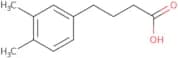
4-(3,4-Dimethylphenyl)butanoic acid
CAS:Versatile small molecule scaffold
Formula:C12H16O2Purity:Min. 95%Molecular weight:192.25 g/molRef: 3D-FAA46518
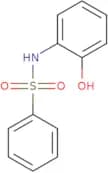
Discontinued productN-(2-Hydroxyphenyl)benzenesulfonamide
CAS:Versatile small molecule scaffold
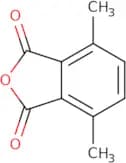
Formula:C12H11NO3SPurity:Min. 95%Molecular weight:249.29 g/mol4,7-Dimethyl-1,3-dihydro-2-benzofuran-1,3-dione
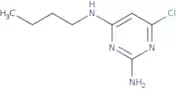
CAS:4,7-Dimethyl-1,3-dihydro-2-benzofuran-1,3-dione is a functional theory that stabilizes the molecule by preventing the formation of an intermediate. It can be used to prevent the generation of reactive radicals and other undesirable side reactions. 4,7-Dimethyl-1,3-dihydro-2-benzofuran-1,3-dione is uncatalyzed and reacts with water to form a cyclic compound that has a section of two functional groups that are bifunctional in nature. The parameters for this reaction include acid as a catalyst and proton as an acceptor. In catalysis, hydrogen bond forms between hydrogen fluoride and one of the hydroxyl groups on the 4,7 dimethyl benzofuran ring. This bond breaks down during dehydration when hydrogen fluoride leaves the molecule to form water.Formula:C10H8O3Purity:Min. 95%Molecular weight:176.17 g/mol4-N-Butyl-6-chloropyrimidine-2,4-diamine
CAS:Versatile small molecule scaffold
Formula:C8H13ClN4Purity:Min. 95%Molecular weight:200.67 g/molRef: 3D-FAA45791
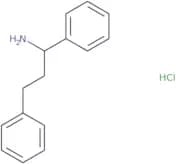
Discontinued product1,3-Diphenylpropan-1-amine hydrochloride
CAS:Versatile small molecule scaffold
Formula:C15H18ClNPurity:Min. 95%Molecular weight:247.76 g/molRef: 3D-FAA45435
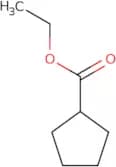
Discontinued productEthyl cyclopentane carboxylate
CAS:Ethyl cyclopentane carboxylate is a cell signaling molecule that is synthesized from an amide and diacylglycerol. It has been shown to have therapeutic effects in autoimmune diseases, cancer, inflammatory diseases, bowel disease, and transfer reactions. Ethyl cyclopentane carboxylate inhibits the MCL-1 protein and CB2 receptor in the immune system. Ethyl cyclopentane carboxylate has also been shown to inhibit the inflammatory response in experimental models of inflammatory bowel disease by inhibiting the activity of the Cb2 receptor.
Formula:C8H14O2Purity:Min. 95%Molecular weight:142.2 g/molRef: 3D-FAA45385
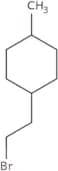
Discontinued product1-(2-Bromoethyl)-4-methylcyclohexane
CAS:Versatile small molecule scaffold
Formula:C9H17BrPurity:Min. 95%Molecular weight:205.13 g/molRef: 3D-FAA45269
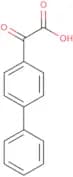
Discontinued product2-Oxo-2-(4-phenylphenyl)acetic acid
CAS:Versatile small molecule scaffold
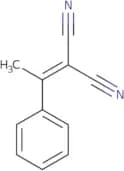
Formula:C14H10O3Purity:Min. 95%Molecular weight:226.23 g/mol2-(1-Phenylethylidene)malononitrile
CAS:2-(1-Phenylethylidene)malononitrile (2-PMAN) is a chemical compound that is used as starting material for the manufacture of other chemicals. It can be obtained by the reaction of anthranilic acid with trichloroacetonitrile in the presence of hydride transfer agents. The product is purified by crystallization and recrystallization, and then reacts with carbon disulfide to form 2-phenylethanamine. 2-PMAN has been shown to have nematocidal activity, which may be due to its ability to inhibit protein synthesis by interfering with the uptake of amino acids into cells. Additionally, 2-PMAN can undergo dimerization or isomerisation reactions which affect its biological activity.
Formula:C11H8N2Purity:Min. 95%Molecular weight:168.19 g/molRef: 3D-FAA44787
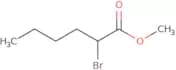
Discontinued productMethyl 2-Bromohexanoate
CAS:Methyl 2-bromohexanoate is a reactive chemical that has been found in the urine of healthy volunteers. It is used as an intermediate for pharmaceutical preparations and can be introduced into the body through inhalation, ingestion, or skin contact. Methyl 2-bromohexanoate also has potential use as a biomarker for cancer, since it has been detected in patients with cervical cancer and environmental exposure to benzene. This compound reacts with sulfoxide in the environment to form polymers and phosphates. It also exhibits optical properties when polymerized.
Formula:C7H13BrO2Purity:Min. 95%Molecular weight:209.08 g/mol1H-Benzo[d]imidazole-2-sulfonamide
CAS:1H-Benzo[d]imidazole-2-sulfonamide is a transcriptional regulator that is used in the treatment of bowel disease. It has been shown to be active against autoimmune diseases, such as inflammatory bowel disease and rheumatoid arthritis. 1H-Benzo[d]imidazole-2-sulfonamide regulates gene expression by binding to response elements in the promoter region of certain genes. The drug is an inhibitor of human serum proteases, which may lead to decreased inflammation and improved symptoms of inflammation bowel disease. The drug also has pharmacokinetic properties that make it suitable for oral administration.
Formula:C7H7N3O2SPurity:Min. 95%Molecular weight:197.21 g/molRef: 3D-FAA43531
Discontinued product1-(2-Chlorophenyl)butan-1-ol
CAS:Versatile small molecule scaffold
Formula:C10H13ClOPurity:Min. 95%Molecular weight:184.66 g/molRef: 3D-FAA43455
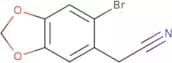
Discontinued product2-(6-Bromo-1,3-dioxaindan-5-yl)acetonitrile
CAS:Versatile small molecule scaffold
Formula:C9H6BrNO2Purity:Min. 95%Molecular weight:240.05 g/molRef: 3D-FAA43450
Discontinued product2-[(2-Nitrophenyl)amino]acetic acid
CAS:2-[(2-Nitrophenyl)amino]acetic acid (2NPA) is a selective antagonist with high affinity for the acetylcholine receptor. It has been shown to inhibit ionic currents in Xenopus oocytes expressing α-subunits of the nicotinic acetylcholine receptor. The compound binds to the site on the receptor that is normally occupied by acetylcholine and prevents it from binding to its normal binding site, thereby inhibiting functional activity. 2NPA was found to be a potent inhibitor of acetylcholine release in rat brain synaptosomes and inhibited acetylcholinesterase activity. 2NPA also inhibits cholinergic neurotransmission in the hippocampus, which may be due to its ability to block nicotinic receptors.
Formula:C8H8N2O4Purity:Min. 95%Molecular weight:196.16 g/molRef: 3D-FAA42799
Discontinued product4-Chloro-N-[2-(diethylamino)ethyl]aniline
CAS:Versatile small molecule scaffoldFormula:C12H19ClN2Purity:Min. 95%Molecular weight:226.74 g/molRef: 3D-FAA42735
Discontinued product2-Amino-N,3-diphenylpropanamide
CAS:2-Amino-N,3-diphenylpropanamide is a chiral compound that can be synthesized from 2-propanol and amide. It has two moieties, which are the amide and the protonated amino group. The amide moiety is a chiral center because it has four different substituents. The experimental thermodynamic experiments show that the enantiomer with the R configuration has higher energy than the one with the S configuration. This is due to its high steric hindrance and its electron donating property.
Formula:C15H16N2OPurity:Min. 95%Molecular weight:240.3 g/molRef: 3D-FAA42673
Discontinued product2-[(Quinazolin-4-yl)amino]ethan-1-ol
CAS:Versatile small molecule scaffold
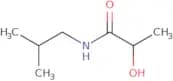
Formula:C10H11N3OPurity:Min. 95%Molecular weight:189.21 g/mol2-Hydroxy-N-(2-methylpropyl)propanamide
CAS:Versatile small molecule scaffoldFormula:C7H15NO2Purity:Min. 95%Molecular weight:145.2 g/molRef: 3D-FAA42236
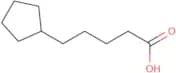
Discontinued product5-Cyclopentylpentanoic acid
CAS:Cyclopentylpentanoic acid is a carboxylic acid that is produced by the condensation of two molecules of acetaldehyde. It has been shown to have antibacterial activities against Pseudomonas aeruginosa and Aeruginosa and has been used to treat bacterial infections in animals. Cyclopentylpentanoic acid also inhibits virulence factors, such as the production of exotoxins, proteases, and hemolysin, which are enzymes that destroy red blood cells. This compound also inhibits the growth of A. baumannii through sensing mechanisms mediated by an unknown factor.
Formula:C10H18O2Purity:Min. 95%Molecular weight:170.25 g/molRef: 3D-FAA42227
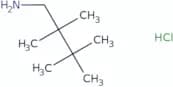
Discontinued product2,2,3,3-Tetramethylbutan-1-amine hydrochloride
CAS:Versatile small molecule scaffoldFormula:C8H20ClNPurity:Min. 95%Molecular weight:165.7 g/molRef: 3D-FAA42155
Discontinued product

![1H-Benzo[d]imidazole-2-sulfonamide](/_next/image/?url=https%3A%2Fstatic.cymitquimica.com%2Fproducts%2F3D%2Fthumb-webp%2FFAA43531.webp&w=3840&q=75)

![2-[(2-Nitrophenyl)amino]acetic acid](/_next/image/?url=https%3A%2Fstatic.cymitquimica.com%2Fproducts%2F3D%2Fthumb-webp%2FFAA42799.webp&w=3840&q=75)
![4-Chloro-N-[2-(diethylamino)ethyl]aniline](/_next/image/?url=https%3A%2Fstatic.cymitquimica.com%2Fproducts%2F3D%2Fthumb-webp%2FFAA42735.webp&w=3840&q=75)

![2-[(Quinazolin-4-yl)amino]ethan-1-ol](/_next/image/?url=https%3A%2Fstatic.cymitquimica.com%2Fproducts%2F3D%2Fthumb-webp%2FFAA42359.webp&w=3840&q=75)