Building Blocks
Subcategories of "Building Blocks"
- Boronic Acids & Boronic Acid Derivatives(5,780 products)
- Chiral Building Blocks(1,241 products)
- Hydrocarbon Building Blocks(6,100 products)
- Organic Building Blocks(61,023 products)
Found 205289 products of "Building Blocks"
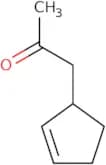
2-Cyclopentenyl-1-acetone
CAS:Versatile small molecule scaffold
Formula:C8H12OPurity:Min. 95%Molecular weight:124.18 g/mol3-Methylpentanoic-d11 acid
CAS:3-Methylpentanoic-d11 acid is an organic compound. It is a fatty acid that is produced by the fermentation of yeast. 3-Methylpentanoic-d11 acid can be used as a carbon source for protein synthesis and has been shown to have antifungal activity in vitro against Candida albicans, Saccharomyces cerevisiae, and Aspergillus niger. 3-Methylpentanoic-d11 acid also has radical scavenging activities, which inhibit lipid peroxide formation. This compound does not have any known metabolites or reactions.
Formula:C6HD11O2Purity:Min. 95%Molecular weight:127.23 g/molMethyl 5-(2,3-dihydrobenzo[b][1,4]dioxin-7-yl)isoxazole-3-carboxylate
CAS:Versatile small molecule scaffold
Formula:C13H11NO5Purity:Min. 95%Molecular weight:261.23 g/molRef: 3D-AMB00456
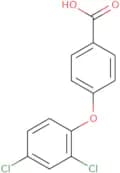
Discontinued product4-(2,4-Dichlorophenoxy)benzoic acid
CAS:Versatile small molecule scaffold
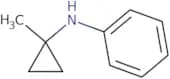
Formula:C13H8Cl2O3Purity:Min. 95%Molecular weight:283.1 g/molN-(1-Methylcyclopropyl)aniline
CAS:Versatile small molecule scaffold
Formula:C10H13NPurity:Min. 95%Molecular weight:147.22 g/molRef: 3D-ARA77773
Discontinued product3-[(3-Fluorophenyl)methyl]pyrrolidine
CAS:Versatile small molecule scaffold
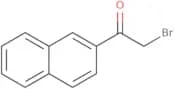
Formula:C11H14FNPurity:Min. 95%Molecular weight:179.23 g/mol2-Bromo-2²-acetonaphthone
CAS:2-Bromo-2²-acetonaphthone (2BA) is a chemical compound belonging to the group of naphthalene derivatives. It has significant inhibitory activities against bacteria, fungi, and protozoans. The 2BA molecule is an antimicrobial agent that binds to fatty acids in the cell membrane and inhibits the synthesis of fatty acids in the mitochondria. This leads to cell death by inhibiting protein synthesis and cell division. 2BA has also been shown to have anti-inflammatory properties, which may be due to its inhibition of prostaglandin synthesis. The chemical structure of 2BA can be found below:
Formula:C10H7COCH2BrPurity:Min. 95%Molecular weight:249.1 g/mol2,2-Bis(chloromethyl)-1,3-dioxolane
CAS:2,2-Bis(chloromethyl)-1,3-dioxolane is a chemical intermediate that can be used in the production of polyester resins. It is a colorless liquid with an unpleasant odor. 2,2-Bis(chloromethyl)-1,3-dioxolane reacts with ethylene and glycol to produce polyester resins. This reaction occurs at high temperatures and produces a mixture of products such as diols and triols. When heated in acidic conditions, the compound hydrolyzes to form dihydroxyacetone and p-toluenesulfonic acid. The compound is also used as an industrial solvent for acidic materials. Recrystallizing the product from ethylene glycol results in a white crystalline powder that can be used in the manufacture of other chemicals such as sulfate salts.
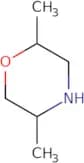
Formula:C5H8Cl2O2Purity:Min. 95%Molecular weight:171.02 g/mol2,5-Dimethylmorpholine
CAS:2,5-Dimethylmorpholine is an isomeric mixture of two compounds that are related to the morpholine class of chemical compounds. It has been shown to be a good acceptor for styrene and long-chain alkanes. 2,5-Dimethylmorpholine can be used as a mechanistic probe for styrene polymerization reactions, because it yields mechanistic information about the reaction selectivity. It has also been shown to have catalytic properties in amine synthesis and isomers with dodecyl chains.
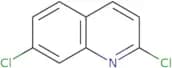
2,5-Dimethylmorpholine is a colorless liquid with a boiling point of 69°C and an odor threshold of 1 ppm.Formula:C6H14ClNOPurity:Min. 95%Molecular weight:151.63 g/mol2,7-Dichloroquinoline
CAS:2,7-Dichloroquinoline is a quinoline derivative that has been synthesized to be a potential drug. The molecule is structurally similar to the natural bioactive molecule called adenosine, which is involved in many cellular processes. The 2,7-dichloroquinoline has been shown to have anti-inflammatory properties and may also have anticancer activity. It was identified as an inhibitor of protein kinase C and as a potent inhibitor of angiogenesis. This drug has also been shown to inhibit the growth of bacteria and fungi, which may be due to its ability to form covalent bonds with nucleophiles such as anions or azides.
Formula:C9H5Cl2NPurity:Min. 95%Molecular weight:198.05 g/molRef: 3D-AAA61377
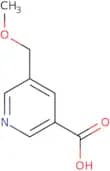
Discontinued product5-(Methoxymethyl)pyridine-3-carboxylic acid
CAS:Versatile small molecule scaffoldFormula:C8H9NO3Purity:Min. 95%Molecular weight:167.16 g/molRef: 3D-AQB29838
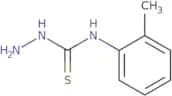
Discontinued product4-(2-Methylphenyl)-3-thiosemicarbazide
CAS:4-(2-Methylphenyl)-3-thiosemicarbazide is a crystalline solid that belongs to the group of benzoic acid derivatives. It has an orthorhombic crystal structure, with a yellow color. The crystals are measured at room temperature, and it has an atomic weight of 197.11 g/mol. 4-(2-Methylphenyl)-3-thiosemicarbazide is stable in air and in solution, but decomposes at temperatures above 250°C. This compound has been studied by using X-ray diffraction measurements and Bruker parameters. Its isotropic radiation is recorded at the following wavelength: 1.5418 Å (1).
Formula:C8H11N3SPurity:Min. 95%Molecular weight:181.26 g/mol1-[3-(Hydroxymethyl)phenyl]ethan-1-one
CAS:Versatile small molecule scaffold
Formula:C9H10O2Purity:Min. 95%Molecular weight:150.17 g/molRef: 3D-AFA60406
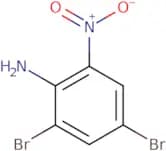
Discontinued product2,4-Dibromo-6-nitroaniline
CAS:2,4-Dibromo-6-nitroaniline is a nitro compound that has been used in the production of dyes. It is also used as a component in the synthesis of other organic compounds. 2,4-Dibromo-6-nitroaniline can be produced by electrolysis of an acid solution containing radical cations and benzene. The radical cations are formed by proton transfer from the acid to the benzene, followed by electron transfer from benzene to the electrode. This process results in the formation of nitro groups on the benzene ring, which undergoes oxidation to form 2,4-dibromo-6-nitroaniline. The cyclic voltammetry shows that this process occurs via two pathways: one with a fast rate and one with a slow rate. The mechanism for this reaction is not yet known.
Formula:C6H4Br2N2O2Purity:Min. 95%Molecular weight:295.92 g/mol1-Ethoxy-2-iodobenzene
CAS:1-Ethoxy-2-iodobenzene is a model complex that has been used to study the interactions between copper ions and chlorine atoms. The complexes are found in the chlorobenzene molecule, which is itself an organometallic compound. The covalent bonds in this complex are unsymmetrical, with a higher electron density on the carbon atom of the ethoxy group. 1-Ethoxy-2-iodobenzene has been shown to be carcinogenic, inducing mutations in ovary cells. This may be due to its interaction with DNA and interference with transcription.
Formula:C8H9IOPurity:Min. 95%Molecular weight:248.06 g/molRef: 3D-AAA61473
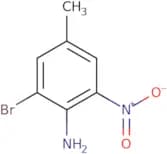
Discontinued product2-Bromo-4-methyl-6-nitroaniline
CAS:Versatile small molecule scaffold
Formula:C7H7BrN2O2Purity:Min. 95%Molecular weight:231.05 g/mol2-Bromo-7-chlorothieno[3,2-b]pyridine
CAS:Versatile small molecule scaffold
Formula:C7H3BrClNSPurity:Min. 95%Molecular weight:248.52 g/molRef: 3D-AJA38505
Discontinued productMethyl 2-Octynoate
CAS:Methyl 2-octynoate is a chemical that has been shown to bind to the nicotinic acetylcholine receptor. Methyl 2-octynoate has been shown to have antitumor activity in various types of cancer cells, including breast, prostate, and lung cancer cells. This chemical is not known to be chemically stable or film-forming. It also disrupts mitochondrial membrane potential and reduces the endpoints of oxidative phosphorylation. Methyl 2-octynoate was found to have low potency against cancer cells in vitro and in vivo.
Formula:C9H14O2Purity:Min. 95%Molecular weight:154.21 g/mol3,4-Dihydro-2H-pyrano[2,3-b]pyridine
CAS:Versatile small molecule scaffold
Formula:C8H9NOPurity:Min. 95%Molecular weight:135.17 g/molRef: 3D-BBA26789
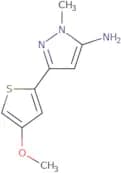
Discontinued product3-(4-Methoxythiophen-2-yl)-1-methyl-1H-pyrazol-5-amine
CAS:Versatile small molecule scaffoldFormula:C9H11N3OSPurity:Min. 95%Molecular weight:209.27 g/molRef: 3D-AKC17424
Discontinued product


![Methyl 5-(2,3-dihydrobenzo[b][1,4]dioxin-7-yl)isoxazole-3-carboxylate](/_next/image/?url=https%3A%2Fstatic.cymitquimica.com%2Fproducts%2F3D%2Fthumb-webp%2FAMB00456.webp&w=3840&q=75)
![3-[(3-Fluorophenyl)methyl]pyrrolidine](/_next/image/?url=https%3A%2Fstatic.cymitquimica.com%2Fproducts%2F3D%2Fthumb-webp%2FAQB19880.webp&w=3840&q=75)

![1-[3-(Hydroxymethyl)phenyl]ethan-1-one](/_next/image/?url=https%3A%2Fstatic.cymitquimica.com%2Fproducts%2F3D%2Fthumb-webp%2FAFA60406.webp&w=3840&q=75)

![2-Bromo-7-chlorothieno[3,2-b]pyridine](/_next/image/?url=https%3A%2Fstatic.cymitquimica.com%2Fproducts%2F3D%2Fthumb-webp%2FAJA38505.webp&w=3840&q=75)

![3,4-Dihydro-2H-pyrano[2,3-b]pyridine](/_next/image/?url=https%3A%2Fstatic.cymitquimica.com%2Fproducts%2F3D%2Fthumb-webp%2FBBA26789.webp&w=3840&q=75)