Building Blocks
Subcategories of "Building Blocks"
- Boronic Acids & Boronic Acid Derivatives(5,783 products)
- Chiral Building Blocks(1,242 products)
- Hydrocarbon Building Blocks(6,105 products)
- Organic Building Blocks(61,055 products)
Found 205383 products of "Building Blocks"
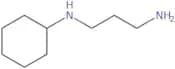
N1-Cyclohexylpropane-1,3-diamine
CAS:N1-Cyclohexylpropane-1,3-diamine is a potent compound that has been shown to inhibit cholesterol synthesis and mitochondrial membrane potential. This drug also has anti-cancer effects and can be used for the treatment of cancers in which nuclear DNA is affected by light emission. N1-Cyclohexylpropane-1,3-diamine has been shown to have physiological activities such as cell growth inhibition, matrix effect, and intracellular hydrogen release. The drug binds to the enzyme activity site with a coordination geometry that is similar to other inhibitors of cholesterol synthesis. N1-Cyclohexylpropane-1,3-diamine was crystallized from methanol at room temperature and its molecular structure was determined by X-ray diffraction techniques.
Formula:C9H20N2Purity:Min. 95%Molecular weight:156.27 g/mol5-Bromo-2-(methylsulfonyl)pyridine
CAS:5-Bromo-2-(methylsulfonyl)pyridine is a versatile compound with various applications. It can be used in the synthesis of nanocomposites and colloidal systems, where it exhibits reactivity towards reactive oxygen species. This compound also finds utility in the production of amides and electrodes due to its unique chemical properties.
Formula:C6H6BrNO2SPurity:Min. 95%Molecular weight:236.09 g/molRef: 3D-YDA62695
Discontinued product2-Methyl-4-(2,2,2-trifluoroethyl)-4H-thieno[3,2-b]pyrrole-5-carboxylic acid
CAS:Versatile small molecule scaffoldFormula:C10H8F3NO2SPurity:Min. 95%Molecular weight:263.24 g/molRef: 3D-FDD52275
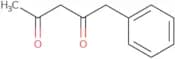
Discontinued product1-Phenylpentane-2,4-dione
CAS:1-Phenylpentane-2,4-dione is a molecule that absorbs light. It has been shown to be an efficient absorber of solar radiation and has the potential to be used in photovoltaic devices. 1-Phenylpentane-2,4-dione can be used as an electron donor in polymer solar cells because it is able to act as both a chelate and a light absorber. 1-Phenylpentane-2,4-dione can also be used in acetone peroxide based solar cells because it is able to absorb light efficiently. In addition, 1-phenylpentane-2,4-dione may have use as an optical element for positioning systems such as telescopes or cameras.
Formula:C11H12O2Purity:Min. 95%Molecular weight:176.21 g/mol1-Hydroxy-3-methylanthraquinone
CAS:1-Hydroxy-3-methylanthraquinone is a quinone compound that has been shown to have binding constants for the fungal filamentous fungus, Vulgare L. (strain pachybasin), and bacterial strains. This chemical has also been shown to have biological properties such as antimicrobial activity against Acetobacter aceti, inhibition of growth of the human pathogen Streptococcus pyogenes, and induction of locomotor activity in mice. 1-Hydroxy-3-methylanthraquinone binds to fatty acids in the cell membrane and alters the permeability of this membrane. 1HMR spectroscopy data suggests that this compound is regiospecific with respect to its two hydroxyl groups.
Formula:C15H10O3Purity:Min. 95%Molecular weight:238.24 g/mol[3-(4-Formylphenoxy)-propyl]-carbamic acid tert-butyl ester
CAS:Versatile small molecule scaffold
Formula:C15H21NO4Purity:Min. 95%Molecular weight:279.34 g/molRef: 3D-FQA43133
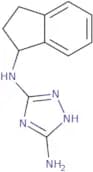
Discontinued productN3-(2,3-Dihydro-1H-inden-1-yl)-4H-1,2,4-triazole-3,5-diamine
CAS:Versatile small molecule scaffold
Formula:C11H13N5Purity:Min. 95%Molecular weight:215.25 g/molRef: 3D-FZC17482
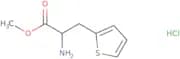
Discontinued productMethyl 2-amino-3-(thiophen-2-yl)propanoate hydrochloride
CAS:Versatile small molecule scaffold
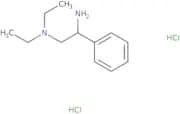
Formula:C8H12ClNO2SPurity:Min. 95%Molecular weight:221.71 g/mol(2-Amino-2-phenylethyl)diethylamine dihydrochloride
CAS:Versatile small molecule scaffold
Formula:C12H22Cl2N2Purity:Min. 95%Molecular weight:265.2 g/molRef: 3D-GBA78886
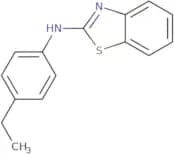
Discontinued productN-(4-Ethylphenyl)-1,3-benzothiazol-2-amine
CAS:Versatile small molecule scaffoldFormula:C15H14N2SPurity:Min. 95%Molecular weight:254.4 g/molRef: 3D-FQA42714
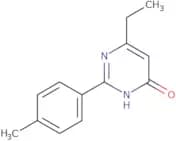
Discontinued product6-Ethyl-2-(4-methylphenyl)-3,4-dihydropyrimidin-4-one
CAS:Versatile small molecule scaffold
Formula:C13H14N2OPurity:Min. 95%Molecular weight:214.26 g/molRef: 3D-EWB54927
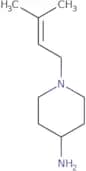
Discontinued product1-(3-Methylbut-2-en-1-yl)piperidin-4-amine
CAS:Versatile small molecule scaffold
Formula:C10H20N2Purity:Min. 95%Molecular weight:168.28 g/mol3-[(3-Methoxyphenyl)amino]propanoic acid
CAS:Versatile small molecule scaffold
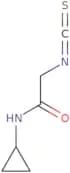
Formula:C10H13NO3Purity:Min. 95%Molecular weight:195.21 g/molN-Cyclopropyl-2-isothiocyanatoacetamide
CAS:Versatile small molecule scaffold
Formula:C6H8N2OSPurity:Min. 95%Molecular weight:156.21 g/molRef: 3D-EWB55145
Discontinued product2-(1,3-Benzothiazol-6-yl)acetic acid
CAS:Versatile small molecule scaffold
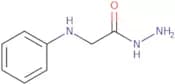
Formula:C9H7NO2SPurity:Min. 95%Molecular weight:193.22 g/mol2-(Phenylamino)acetohydrazide
CAS:2-(Phenylamino)acetohydrazide is a non-steroidal antibacterial agent that binds to the active site of bacterial ribosomes and inhibits protein synthesis. The molecule is stabilized by electron-withdrawing groups, which are favorable for binding to metal ions. 2-(Phenylamino)acetohydrazide has been shown to be effective against a wide range of bacteria, including E. coli, Pseudomonas aeruginosa, Candida neoformans, and Staphylococcus epidermidis. It also has a strong inhibitory effect on S. epidermidis and Escherichia coli.
Formula:C8H11N3OPurity:Min. 95%Molecular weight:165.19 g/molRef: 3D-EBA11146
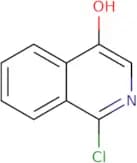
Discontinued product1-Chloroisoquinolin-4-ol
CAS:1-Chloroisoquinolin-4-ol is a phenylpyrimidine with anti-inflammatory properties. It is used in the treatment of sensitivity and mediated diseases, such as osteoarthritis, rheumatoid arthritis, and ankylosing spondylitis. 1-Chloroisoquinolin-4-ol inhibits the enzymatic activity of matrix metalloproteinases (MMPs), which are enzymes that break down collagen and other proteins in the body. The inhibition of MMPs by 1-chloroisoquinolin-4-ol leads to reduced inflammation and pain. This compound is also an effective inhibitor of the activities of chloride channels involved in acid secretion by cells in the stomach lining, thus inhibiting acid production. 1-Chloroisoquinolin-4-ol has been shown to have anticholesterolemic effects on liver cells due to its ability to inhibit cholesterol synthesis through inhibition of HMG CoA
Formula:C9H6ClNOPurity:Min. 95%Molecular weight:179.6 g/molRef: 3D-DAA33643
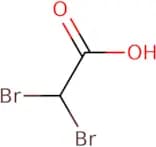
Discontinued productDibromoacetic Acid
CAS:Dibromoacetic acid is a genotoxic chemical that is used to form an acid. It has been shown to have toxic effects on the testes, and can also cause liver damage. Dibromoacetic acid binds to DNA and alters its structure by forming bromoacetic adducts. The binding of dibromoacetic acid to DNA alters the way in which it replicates, leading to mutations. This compound has been detected in human plasma at levels close to those seen in samples from people with occupational exposure, indicating that it may be found in the environment as well. Dibromoacetic acid has been shown to induce inflammation and increase toll-like receptor (TLR) expression through activation of NF-κB signaling pathways. It is able to do this because it contains a hydroxyl group, which allows for oxidation catalysts to bind with it easily.
Formula:C2H2Br2O2Purity:Min. 95%Molecular weight:217.84 g/molRef: 3D-AAA63164
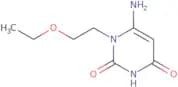
Discontinued product6-Amino-1-(2-ethoxyethyl)-1,2,3,4-tetrahydropyrimidine-2,4-dione
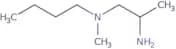
CAS:Versatile small molecule scaffoldFormula:C8H13N3O3Purity:Min. 95%Molecular weight:199.21 g/mol(2-Aminopropyl)(butyl)methylamine
CAS:Versatile small molecule scaffold
Formula:C8H20N2Purity:Min. 95%Molecular weight:144.26 g/molRef: 3D-EBA15145
Discontinued product

![2-Methyl-4-(2,2,2-trifluoroethyl)-4H-thieno[3,2-b]pyrrole-5-carboxylic acid](/_next/image/?url=https%3A%2Fstatic.cymitquimica.com%2Fproducts%2F3D%2Fthumb-webp%2FFDD52275.webp&w=3840&q=75)
![[3-(4-Formylphenoxy)-propyl]-carbamic acid tert-butyl ester](/_next/image/?url=https%3A%2Fstatic.cymitquimica.com%2Fproducts%2F3D%2Fthumb-webp%2FFQA43133.webp&w=3840&q=75)
![3-[(3-Methoxyphenyl)amino]propanoic acid](/_next/image/?url=https%3A%2Fstatic.cymitquimica.com%2Fproducts%2F3D%2Fthumb-webp%2FDAA33467.webp&w=3840&q=75)