Building Blocks
Subcategories of "Building Blocks"
- Boronic Acids & Boronic Acid Derivatives(5,784 products)
- Chiral Building Blocks(1,244 products)
- Hydrocarbon Building Blocks(6,105 products)
- Organic Building Blocks(61,076 products)
Found 205455 products of "Building Blocks"
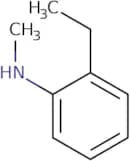
2-Ethyl-N-methylaniline
CAS:2-Ethyl-N-methylaniline is a colorless liquid that has a pyrrole ring and an indole group. It is used in the production of potassium and indoles, as well as in the synthesis of other organic compounds. 2-Ethyl-N-methylaniline also has pyrrole properties, which are similar to those of pyrrole. This chemical was first created by the German chemist Emil Fischer in 1887.
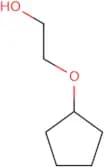
Formula:C9H13NPurity:Min. 95%Molecular weight:135.21 g/mol2-(cyclopentyloxy)ethanol
CAS:Versatile small molecule scaffold
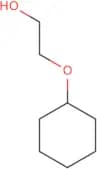
Formula:C7H14O2Purity:Min. 95%Molecular weight:130.19 g/mol2-(Cyclohexyloxy)ethanol
CAS:2-(Cyclohexyloxy)ethanol is a synthetic, xylene-based glycol ether. It has been shown to have synergistic effects with boron trifluoride etherate, germanium trioxide, and alkyl substituents. 2-(Cyclohexyloxy)ethanol has an antibacterial activity against Gram-positive bacteria, including methicillin-resistant Staphylococcus aureus (MRSA). This compound also has a constant rate of degradation and can be used in peptide binding studies.
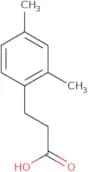
Formula:C8H16O2Purity:Min. 95%Molecular weight:144.21 g/mol3-(2,4-Dimethylphenyl)propionic acid
CAS:3-(2,4-Dimethylphenyl)propionic acid is an organic compound that belongs to the class of propionic acid derivatives. It is a chiral compound with two stereoisomers. The crystal structure of the racemic mixture has been determined by x-ray crystallography and the absolute configuration was assigned as (S) based on its enantiomeric excess. 3-(2,4-Dimethylphenyl)propionic acid can be synthesized from benzyloxymethyl chloride and propionic acid. This reaction is mediated by a base, such as sodium methoxide or potassium t-butoxide.
3-(2,4-Dimethylphenyl)propionic acid is used in the synthesis of other compounds, such as phenylethyl propionate and 2-methylbenzaldehyde.Formula:C11H14O2Purity:Min. 95%Molecular weight:178.23 g/molRef: 3D-BAA81185
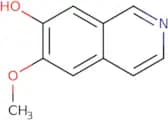
Discontinued product6-Methoxyisoquinolin-7-ol
CAS:Versatile small molecule scaffold
Formula:C10H9NO2Purity:Min. 95%Molecular weight:175.18 g/molRef: 3D-BAA81058
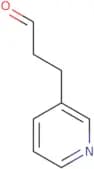
Discontinued product3-(Pyridin-3-yl)propanal
CAS:3-(Pyridin-3-yl)propanal is a potential anticancer agent that has been shown to cause apoptosis in DU145 cells. 3-(Pyridin-3-yl)propanal inhibits the kinase activity of 3-kinase, leading to the phosphatidylinositol pathway and the activation of caspases. This compound also has potent anti-proliferative activities in cancer cells, and may be used as an anticancer agent. 3-(Pyridin-3-yl)propanal was found to inhibit the proliferation of U937 cells in vitro by inducing apoptosis and inhibiting cell cycle progression at G1 phase.
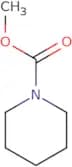
Formula:C8H9NOPurity:Min. 95%Molecular weight:135.16 g/molMethyl piperidine-1-carboxylate
CAS:Methyl piperidine-1-carboxylate is a synthetic chemical that is used as a stabilizer. It inhibits the hyperproliferation of cancer cells by blocking the activation of protein kinase C. Methyl piperidine-1-carboxylate also inhibits the growth of bacteria, such as Staphylococcus aureus, by interfering with their metabolic pathways. This chemical has been synthesized in an organic reaction and is an analog to ansamycin.
Formula:C7H13NO2Purity:Min. 95%Molecular weight:143.18 g/molRef: 3D-BAA79627
Discontinued productSpiro[5.5]undecan-1-one
CAS:Versatile small molecule scaffold
Formula:C11H18OPurity:Min. 95%Molecular weight:166.26 g/molRef: 3D-BAA78183
Discontinued productSpiro[5.5]undecan-2-one
CAS:Spiro[5.5]undecan-2-one is a reactive intermediate that can be generated by the aldol reaction between acetaldehyde and acetone. It is also produced in the olefination of methyl acrylate with 2-bromoethanol, and intramolecular aldol condensation of cyclopentenone with itself. Spiro[5.5]undecan-2-one has been shown to be an effective inhibitor of DNA gyrase, which is an enzyme that maintains the integrity of bacterial DNA. This active form binds to the 16S ribosomal RNA and inhibits protein synthesis, leading to cell death by inhibiting the production of proteins vital for cell division.
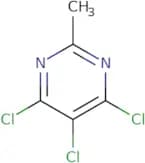
Formula:C11H18OPurity:Min. 95%Molecular weight:166.26 g/mol4,5,6-Trichloro-2-methylpyrimidine
CAS:Versatile small molecule scaffold
Formula:C5H3Cl3N2Purity:Min. 95%Molecular weight:197.44 g/molRef: 3D-BAA78028
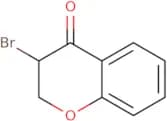
Discontinued product3-bromo-2,3-dihydro-4H-chromen-4-one
CAS:3-Bromo-2,3-dihydro-4H-chromen-4-one is a borohydride reduction and molecular modeling study of an analog of the natural product. The 14α-demethylase enzyme catalyzes the conversion of 3β,14α-dihydroxyandrostane to 3β,14β-dihydroxyandrostane. This enzyme has stereoselective activity in the synthesis of androgens from progesterone. The hydrogen bond interactions between the active site residues and solvent molecules are important for the enzymatic activity.
Formula:C9H7BrO2Purity:Min. 95%Molecular weight:227.06 g/molRef: 3D-BAA77609
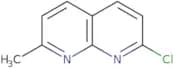
Discontinued product2-Chloro-7-methyl-1,8-naphthyridine
CAS:Versatile small molecule scaffold
Formula:C9H7ClN2Purity:Min. 95%Molecular weight:178.62 g/molRef: 3D-BAA77250
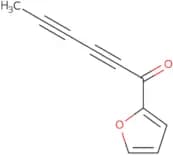
Discontinued product1-(Furan-2-yl)hexa-2,4-diyn-1-one
CAS:Versatile small molecule scaffold
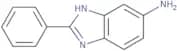
Formula:C10H6O2Purity:Min. 95%Molecular weight:158.2 g/mol2-Phenyl-1H-1,3-benzodiazol-5-amine
CAS:Versatile small molecule scaffold
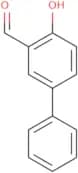
Formula:C13H11N3Purity:Min. 95%Molecular weight:209.25 g/mol2-Hydroxy-5-phenylbenzaldehyde
CAS:2-Hydroxy-5-phenylbenzaldehyde is a fluorescent probe that is used in the detection of amines and thiosemicarbazides. 2-Hydroxy-5-phenylbenzaldehyde has been shown to have antibacterial activity against bacteria such as subtilis and Staphylococcus aureus. This compound also emits fluorescence when it reacts with an amine or thiosemicarbazide, which can be used to detect these compounds. 2-Hydroxy-5-phenylbenzaldehyde also reacts with triethyl orthoformate under acidic conditions, producing ethylene and formic acid, which can be used to produce a volatile gas that can be detected by gas chromatography (GC).
Formula:C13H10O2Purity:Min. 95%Molecular weight:198.22 g/molRef: 3D-BAA76163
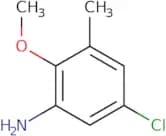
Discontinued product5-Chloro-2-methoxy-3-methylaniline
CAS:Versatile small molecule scaffold
Formula:C8H10ClNOPurity:Min. 95%Molecular weight:171.62 g/molRef: 3D-BAA76073
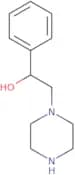
Discontinued product1-Phenyl-2-(piperazin-1-yl)ethan-1-ol
CAS:Versatile small molecule scaffold
Formula:C12H18N2OPurity:Min. 95%Molecular weight:206.28 g/molRef: 3D-BAA76019
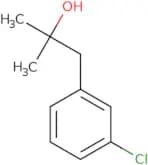
Discontinued product1-(3-Chlorophenyl)-2-methylpropan-2-ol
CAS:Versatile small molecule scaffold
Formula:C10H13ClOPurity:Min. 95%Molecular weight:184.66 g/molRef: 3D-BAA75467
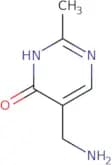
Discontinued product5-(Aminomethyl)-2-methylpyrimidin-4-ol
CAS:Versatile small molecule scaffold
Formula:C6H9N3OPurity:Min. 95%Molecular weight:139.16 g/molRef: 3D-BAA74972
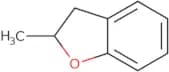
Discontinued product2-Methylcoumaran
CAS:2-Methylcoumaran is a functionalized coumarin. It is synthesized by the reaction of 2-methylcoumarin with an alkylating agent such as acetyl chloride or benzoyl chloride. This reaction involves the substitution of one of the hydroxyl groups in 2-methylcoumarin with an alkyl group, forming a new bond between the two carbon atoms. The resulting product has two new functional groups, which can be used in organic reactions.
Formula:C9H10OPurity:Min. 95%Molecular weight:134.18 g/mol

![Spiro[5.5]undecan-1-one](/_next/image/?url=https%3A%2Fstatic.cymitquimica.com%2Fproducts%2F3D%2Fthumb-webp%2FBAA78183.webp&w=3840&q=75)
![Spiro[5.5]undecan-2-one](/_next/image/?url=https%3A%2Fstatic.cymitquimica.com%2Fproducts%2F3D%2Fthumb-webp%2FBAA78181.webp&w=3840&q=75)