Building Blocks
This section contains fundamental products for the synthesis of organic and biological compounds. Building blocks are the essential starting materials used to construct complex molecules through various chemical reactions. They play a critical role in drug discovery, material science, and chemical research. At CymitQuimica, we offer a diverse range of high-quality building blocks to support your innovative research and industrial projects, ensuring you have the essential components for successful synthesis.
Subcategories of "Building Blocks"
- Boronic Acids & Boronic Acid Derivatives(5,756 products)
- Chiral Building Blocks(1,242 products)
- Hydrocarbon Building Blocks(6,095 products)
- Organic Building Blocks(61,055 products)
Found 199650 products of "Building Blocks"
Sort by
Purity (%)
0
100
|
0
|
50
|
90
|
95
|
100
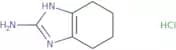
4,5,6,7-Tetrahydro-1H-1,3-benzodiazol-2-amine hydrochloride
CAS:Versatile small molecule scaffoldFormula:C7H12ClN3Purity:Min. 95%Molecular weight:173.64 g/molN-(4,5,6,7-Tetrahydro-1H-1,3-benzodiazol-2-yl)acetamide
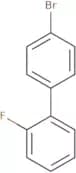
CAS:<p>Versatile small molecule scaffold</p>Formula:C9H13N3OPurity:Min. 95%Molecular weight:179.22 g/mol4'-bromo-2-fluoro-1,1'-biphenyl
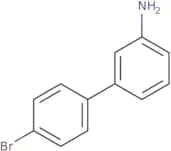
CAS:<p>Versatile small molecule scaffold</p>Formula:C12H8BrFPurity:Min. 95%Molecular weight:251.1 g/mol3-(4-Bromophenyl)aniline
CAS:<p>Versatile small molecule scaffold</p>Formula:C12H10BrNPurity:Min. 95%Molecular weight:248.12 g/mol4-Cyclopropylphenylacetic acid
CAS:<p>Versatile small molecule scaffold</p>Formula:C11H12O2Purity:Min. 95%Molecular weight:176.22 g/molMethyl 2-[(2-aminoethyl)sulfanyl]acetate hydrochloride
CAS:<p>Versatile small molecule scaffold</p>Formula:C5H12ClNO2SPurity:Min. 95%Molecular weight:185.67 g/mol4-Bromo-1H-benzo[d]imidazol-2(3H)-one
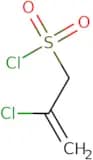
CAS:<p>Versatile small molecule scaffold</p>Formula:C7H5BrN2OPurity:Min. 95%Molecular weight:213.03 g/mol2-Chloroprop-2-ene-1-sulfonyl chloride
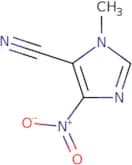
CAS:<p>Versatile small molecule scaffold</p>Formula:C3H4Cl2O2SPurity:Min. 95%Molecular weight:175.03 g/mol1-Methyl-4-nitro-1H-imidazole-5-carbonitrile
CAS:<p>1-Methyl-4-nitro-1H-imidazole-5-carbonitrile is a nitroimidazole that is activated by oxidation. It has been shown to be effective against strains of bacteria that are resistant to other antibiotics, such as methicillin and erythromycin. Nitroimidazoles are analogues of sulfonamides and have a reactive methylsulfonyl group that can be used to form covalent bonds with nucleophiles. 1-Methyl-4-nitro-1H-imidazole-5-carbonitrile is an example of a substituent in which the substituent is a bromo group. This substituent has been shown to react with nucleophiles, such as alkyl halides and thiols, which may lead to the formation of new compounds.</p>Formula:C5H4N4O2Purity:Min. 95%Molecular weight:152.11 g/molN-Cyclopentylaniline
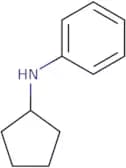
CAS:<p>N-Cyclopentylaniline is a chemical compound that is used to control pests. It has been shown to be effective as an anti-inflammatory in inflammatory pain and inflammatory diseases. N-Cyclopentylaniline also has hypotensive properties, which may be due to its ability to block the action of the enzyme phosphodiesterase 4, preventing the breakdown of cyclic AMP. This leads to vasodilation and reduced blood pressure, which can result in a decrease in heart rate. The drug has been shown to have receptor agonism effects on cannabinoid type 1 and 2 receptors, which are associated with chronic pain relief.</p>Formula:C11H15NPurity:Min. 95%Molecular weight:161.24 g/mol4-Propylcyclohexanone
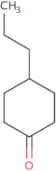
CAS:<p>4-Propylcyclohexanone is a cycloalkane that can be synthesized from butyric acid and hydroxide solution. The activation energy for this reaction is 41.7 kJ mol−1. The reaction can be catalyzed by potassium phosphate or sodium hydroxide solution, which are good bases. 4-Propylcyclohexanone has two functional groups: a hydroxyl group and a cycloalkane ring. This compound is an important precursor to eugenol, which is used in the production of perfumes, flavors, and other chemicals.</p>Formula:C9H16OPurity:Min. 95%Molecular weight:140.23 g/molN-(1-Cyano-1-methylethyl)acetamide
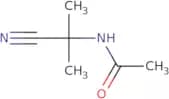
CAS:<p>Versatile small molecule scaffold</p>Formula:C6H10N2OPurity:Min. 95%Molecular weight:126.16 g/mol2-Methyl-4-phenylbutanal
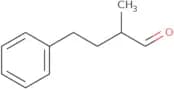
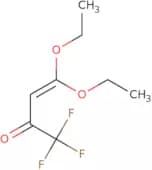
CAS:<p>Versatile small molecule scaffold</p>Formula:C11H14OPurity:90%MinMolecular weight:162.23 g/mol4,4-Diethoxy-1,1,1-trifluorobut-3-en-2-one
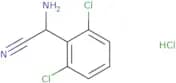
CAS:<p>Versatile small molecule scaffold</p>Formula:C8H11F3O3Purity:Min. 95%Molecular weight:212.17 g/mol2-Amino-2-(2,6-dichlorophenyl)acetonitrile hydrochloride
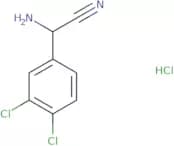
CAS:<p>Versatile small molecule scaffold</p>Formula:C8H7Cl3N2Purity:Min. 95%Molecular weight:237.5 g/mol2-Amino-2-(3,4-dichlorophenyl)acetonitrile hydrochloride
CAS:<p>Versatile small molecule scaffold</p>Formula:C8H7Cl3N2Purity:Min. 95%Molecular weight:237.5 g/mol4-[5-(Pyridin-3-yl)-1,2,4-oxadiazol-3-yl]phenol
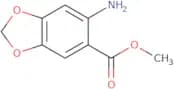
CAS:<p>Versatile small molecule scaffold</p>Formula:C13H9N3O2Purity:Min. 95%Molecular weight:239.23 g/molMethyl 6-amino-1,3-dioxaindane-5-carboxylate
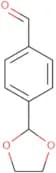
CAS:<p>Versatile small molecule scaffold</p>Formula:C9H9NO4Purity:Min. 95%Molecular weight:195.17 g/mol4-(1,3-Dioxolan-2-yl)benzaldehyde
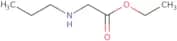
CAS:<p>Versatile small molecule scaffold</p>Formula:C10H10O3Purity:Min. 95%Molecular weight:178.18 g/molethyl 2-(propylamino)acetate
CAS:<p>Ethyl 2-(propylamino)acetate is an amine that is classified as a nucleophile. It reacts with other molecules to form new compounds and has been shown to react with a variety of nucleophiles including alcohols, carboxylic acids, and phenols. Spectroscopic techniques have revealed that ethyl 2-(propylamino)acetate exists in two isomeric forms: the cis-isomer and the trans-isomer. The cis-isomer is more reactive than the trans-isomer because it has a greater electron density on its alpha carbon atom.</p>Formula:C7H15NO2Purity:Min. 95%Molecular weight:145.2 g/mol



![Methyl 2-[(2-aminoethyl)sulfanyl]acetate hydrochloride](/_next/image/?url=https%3A%2Fstatic.cymitquimica.com%2Fproducts%2F3D%2Fthumb-webp%2FQBA64285.webp&w=3840&q=75)
![4-Bromo-1H-benzo[d]imidazol-2(3H)-one](/_next/image/?url=https%3A%2Fstatic.cymitquimica.com%2Fproducts%2F3D%2Fthumb-webp%2FQBA64416.webp&w=3840&q=75)
![4-[5-(Pyridin-3-yl)-1,2,4-oxadiazol-3-yl]phenol](/_next/image/?url=https%3A%2Fstatic.cymitquimica.com%2Fproducts%2F3D%2Fthumb-webp%2FQBA67880.webp&w=3840&q=75)