


Building Blocks
This section contains fundamental products for the synthesis of organic and biological compounds. Building blocks are the essential starting materials used to construct complex molecules through various chemical reactions. They play a critical role in drug discovery, material science, and chemical research. At CymitQuimica, we offer a diverse range of high-quality building blocks to support your innovative research and industrial projects, ensuring you have the essential components for successful synthesis.
Subcategories of "Building Blocks"
- Boronic Acids & Boronic Acid Derivatives(5,778 products)
- Chiral Building Blocks(1,243 products)
- Hydrocarbon Building Blocks(6,098 products)
- Organic Building Blocks(61,057 products)
Found 200716 products of "Building Blocks"
Sort by
Purity (%)
0
100
|
0
|
50
|
90
|
95
|
100
1-Methyl-2,6,7-trioxabicyclo[2.2.2]octan-4-amine
CAS:Versatile small molecule scaffoldFormula:C6H11NO3Purity:Min. 95%Molecular weight:145.16 g/mol4-Methanesulfinylbenzaldehyde
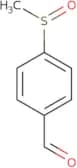
CAS:<p>4-Methanesulfinylbenzaldehyde is an antiinflammatory agent that inhibits the production of prostaglandin E2 (PGE2) by inhibiting the conversion of arachidonic acid to PGE2. It also has antioxidant properties, which may be due to its ability to inhibit peroxide oxidation. 4-Methanesulfinylbenzaldehyde is used in the treatment of inflammatory skin diseases such as atopic dermatitis, acne vulgaris and psoriasis.</p>Formula:C8H8O2SPurity:Min. 95%Molecular weight:168.21 g/molMethyl (1S,2R,3R,8S)-4-bromocubane-1-carboxylate
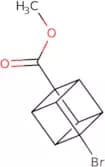
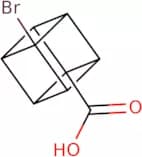
CAS:<p>Methyl (1S,2R,3R,8S)-4-bromocubane-1-carboxylate is an experimental compound that has been shown to produce efficient crystallization of various organic compounds. It is a vicinal difunctional reagent with the carbonyl group on one end and the fluorine atom at the other. It is an X-ray sensitive substance and can be used for x-ray diffraction studies. This compound is also useful for preparing carbonyl fluorides. Methyl (1S,2R,3R,8S)-4-bromocubane-1-carboxylate can be used in crystallography studies because it forms well defined crystals in space groups P21/n and P21/c.</p>Formula:C10H9BrO2Purity:Min. 95%Molecular weight:241.08 g/mol8-Bromocubane-1-carboxylic acid
CAS:<p>Versatile small molecule scaffold</p>Formula:C9H7BrO2Purity:Min. 95%Molecular weight:227.05 g/mol5-(Aminomethyl)benzo[b]furan
CAS:5-(Aminomethyl)benzo[b]furan is a drug that has been shown to inhibit the histamine h3 receptor and transcriptase. It has been used in the treatment of allergic reactions, such as those caused by histamine release. The drug is classified as a non-nucleoside inhibitor of reverse transcriptase. 5-(Aminomethyl)benzo[b]furan has also been shown to be effective against viral strains that are resistant to nucleoside analogues, such as HIV-1, HIV-2, and influenza A. 5-(Aminomethyl)benzo[b]furan binds to the active site of reverse transcriptase and inhibits the synthesis of viral RNA from single-stranded DNA. This binding prevents the formation of a double-stranded DNA with complementary RNA template necessary for viral replication.Formula:C9H9NOPurity:Min. 95%Molecular weight:147.17 g/mol4-Hydroxy-1-methyl-1H-pyrazolo[3,4-b]pyridine-5-carboxylic acid
CAS:Versatile small molecule scaffoldFormula:C8H7N3O3Purity:Min. 95%Molecular weight:193.16 g/molEthyl 4-chloro-1-methyl-1H-pyrazolo[3,4-b]pyridine-5-carboxylate
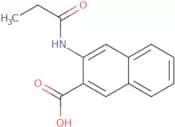
CAS:<p>Versatile small molecule scaffold</p>Formula:C10H10ClN3O2Purity:Min. 95%Molecular weight:239.66 g/mol3-Propanamidonaphthalene-2-carboxylic acid
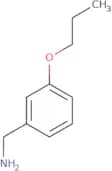
CAS:Versatile small molecule scaffoldFormula:C14H13NO3Purity:Min. 95%Molecular weight:243.26 g/mol(3-Propoxyphenyl)methanamine hydrochloride
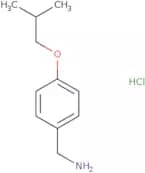
CAS:Versatile small molecule scaffoldFormula:C10H16ClNOPurity:Min. 95%Molecular weight:201.7 g/mol(4-Isobutoxyphenyl)methanamine hydrochloride
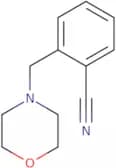
CAS:Versatile small molecule scaffoldFormula:C11H18ClNOPurity:Min. 95%Molecular weight:215.72 g/mol2-(Morpholinomethyl)benzonitrile
CAS:Versatile small molecule scaffoldFormula:C12H14N2OPurity:Min. 95%Molecular weight:202.26 g/mol4-[(Phenylamino)methyl]benzonitrile
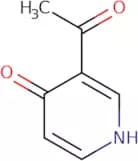
CAS:<p>Versatile small molecule scaffold</p>Formula:C14H12N2Purity:Min. 95%Molecular weight:208.26 g/mol3-Acetylpyridin-4(1H)-one
CAS:<p>Versatile small molecule scaffold</p>Formula:C7H7NO2Purity:Min. 95%Molecular weight:137.14 g/molO-[(3-Pyridyl)methyl]hydroxylamine
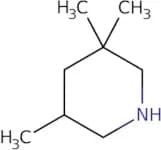
CAS:<p>O-[(3-Pyridyl)methyl]hydroxylamine is an epimer of hydroxylamine. It is a nucleic acid that can be enzymatically synthesized and is used in the synthesis of oligosaccharides with uronic acids, such as dermatan sulfate. O-[(3-Pyridyl)methyl]hydroxylamine attacks sulfated glycosaminoglycans and glycosaminoglycan chains in the skin, causing a loss of water from the skin. This drug has been shown to have affinity for dermatan and deuterium, which may result in its use as a marker for dermatan sulfate.</p>Formula:C6H8N2OPurity:Min. 95%Molecular weight:124.14 g/mol3,3,5-Trimethylpiperidine
CAS:Versatile small molecule scaffoldFormula:C8H17NPurity:Min. 95%Molecular weight:127.23 g/mol1-(1-Methyl-piperidin-4-yl)-ethanol
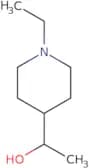
CAS:Versatile small molecule scaffoldFormula:C8H17NOPurity:Min. 95%Molecular weight:143.22 g/mol1-(1-Ethylpiperidin-4-yl)ethan-1-ol
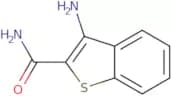
CAS:<p>Versatile small molecule scaffold</p>Formula:C9H19NOPurity:Min. 95%Molecular weight:157.25 g/mol3-Amino-1-benzothiophene-2-carboxamide
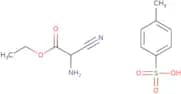
CAS:<p>Versatile small molecule scaffold</p>Formula:C9H8N2OSPurity:Min. 95%Molecular weight:192.24 g/molEthyl 2-amino-2-cyanoacetate 4-methylbenzenesulfonate
CAS:Versatile small molecule scaffoldFormula:C12H16N2O5SPurity:Min. 95%Molecular weight:300.33 g/mol3-[(2-Aminophenyl)sulfanyl]-2-methylpropanenitrile
CAS:Versatile small molecule scaffoldFormula:C10H12N2SPurity:Min. 95%Molecular weight:192.28 g/mol
![1-Methyl-2,6,7-trioxabicyclo[2.2.2]octan-4-amine](/_next/image/?url=https%3A%2Fstatic.cymitquimica.com%2Fproducts%2F3D%2Fthumb-webp%2FMBA78752.webp&w=3840&q=75)

![5-(Aminomethyl)benzo[b]furan](/_next/image/?url=https%3A%2Fstatic.cymitquimica.com%2Fproducts%2F3D%2Fthumb-webp%2FMBA79808.webp&w=3840&q=75)
![4-Hydroxy-1-methyl-1H-pyrazolo[3,4-b]pyridine-5-carboxylic acid](/_next/image/?url=https%3A%2Fstatic.cymitquimica.com%2Fproducts%2F3D%2Fthumb-webp%2FMBA80004.webp&w=3840&q=75)
![Ethyl 4-chloro-1-methyl-1H-pyrazolo[3,4-b]pyridine-5-carboxylate](/_next/image/?url=https%3A%2Fstatic.cymitquimica.com%2Fproducts%2F3D%2Fthumb-webp%2FMBA80157.webp&w=3840&q=75)
![4-[(Phenylamino)methyl]benzonitrile](/_next/image/?url=https%3A%2Fstatic.cymitquimica.com%2Fproducts%2F3D%2Fthumb-webp%2FMBA81249.webp&w=3840&q=75)
![O-[(3-Pyridyl)methyl]hydroxylamine](/_next/image/?url=https%3A%2Fstatic.cymitquimica.com%2Fproducts%2F3D%2Fthumb-webp%2FMBA83220.webp&w=3840&q=75)
![3-[(2-Aminophenyl)sulfanyl]-2-methylpropanenitrile](/_next/image/?url=https%3A%2Fstatic.cymitquimica.com%2Fproducts%2F3D%2Fthumb-webp%2FMBA84563.webp&w=3840&q=75)