Building Blocks
This section contains fundamental products for the synthesis of organic and biological compounds. Building blocks are the essential starting materials used to construct complex molecules through various chemical reactions. They play a critical role in drug discovery, material science, and chemical research. At CymitQuimica, we offer a diverse range of high-quality building blocks to support your innovative research and industrial projects, ensuring you have the essential components for successful synthesis.
Subcategories of "Building Blocks"
- Boronic Acids & Boronic Acid Derivatives(5,756 products)
- Chiral Building Blocks(1,242 products)
- Hydrocarbon Building Blocks(6,095 products)
- Organic Building Blocks(61,038 products)
Found 196817 products of "Building Blocks"
Sort by
Purity (%)
0
100
|
0
|
50
|
90
|
95
|
100
Methyl 3-oxoisoindoline-5-carboxylate
CAS:<p>Versatile small molecule scaffold</p>Formula:C10H9NO3Purity:Min. 95%Molecular weight:191.18 g/mol6,6-Difluorospiro[3.3]heptan-2-amine Hydrochloride
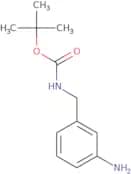
CAS:<p>Versatile small molecule scaffold</p>Formula:C7H11F2N·HClPurity:Min. 95%Molecular weight:147.17 g/mol(3-Aminobenzyl)carbamic acid tert-butyl ester
CAS:<p>Versatile small molecule scaffold</p>Formula:C12H18N2O2Purity:Min. 95%Molecular weight:222.28 g/moltert-Butyl 9-oxo-4,8-diazaspiro[4.4]nonane-4-carboxylate
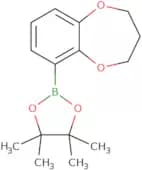
CAS:<p>Versatile small molecule scaffold</p>Formula:C12H20N2O3Purity:Min. 95%Molecular weight:240.3 g/mol2-(3,4-Dihydro-2H-1,5-benzodioxepin-6-yl)-4,4,5,5-tetramethyl-1,3,2-dioxaborolane
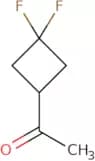
CAS:<p>Versatile small molecule scaffold</p>Formula:C15H21BO4Purity:Min. 95%Molecular weight:276.14 g/mol1-(3,3-Difluorocyclobutyl)ethan-1-one
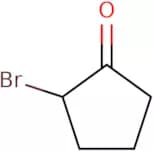
CAS:<p>Versatile small molecule scaffold</p>Formula:C6H8F2OPurity:Min. 95%Molecular weight:134.13 g/mol2-Bromocyclopentanone
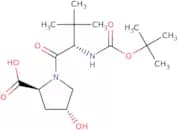
CAS:<p>2-Bromocyclopentanone is an organic molecule that is used in the synthesis of epoxides. It is also a potential precursor for the synthesis of polymers, dyes, and pharmaceuticals. 2-Bromocyclopentanone has been shown to undergo photolysis when irradiated with ultraviolet light or through chemical reaction with acetonitrile. This product has two conformers with different rotational barriers and corresponding spectral properties. The two conformers can be distinguished by their ultraviolet spectra. The synthetic methods for 2-bromocyclopentanone involve halogenation followed by hydrolysis to yield bromoacetic acid, which is then converted to the desired product by acylation or alkylation.</p>Formula:C5H7BrOPurity:Min. 95%Molecular weight:163.01 g/mol1-(Boc-L-tert-leucinyl)-(4R)-4-hydroxy-L-proline
CAS:<p>Versatile small molecule scaffold</p>Formula:C16H28N2O6Purity:Min. 95%Molecular weight:344.4 g/mol1-[(tert-butoxy)carbonyl]-5,5-difluoropiperidine-3-carboxylic acid
CAS:<p>Versatile small molecule scaffold</p>Formula:C11H17F2NO4Purity:Min. 95%Molecular weight:265.3 g/mol(4R)-5,7-Difluoro-3,4-dihydro-2H-1-benzopyran-4-ol
CAS:<p>Versatile small molecule scaffold</p>Formula:C9H8F2O2Purity:Min. 95%Molecular weight:186.15 g/mol6-Chlorohexanol
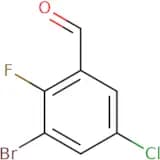
CAS:<p>6-Chlorohexanol is a fatty alcohol with a hydroxyl group. It is soluble in water and has a phase transition temperature of -114°C. 6-Chlorohexanol can be synthesized by reacting 2,6-dichlorophenol with hydrochloric acid and sodium hydroxide in the presence of azobenzene. The reaction solution is then heated to about 300°C for 3 hours. 6-Chlorohexanol is used as a model system for studying the photochemical reactions of fatty acids. Hydroxy groups are susceptible to light exposure, which leads to the formation of carbonyl compounds such as malonic acid and chloride monomers.</p>Formula:C6H13ClOPurity:Min. 95%Color and Shape:PowderMolecular weight:136.62 g/mol3-bromo-5-chloro-2-fluorobenzaldehyde
CAS:Versatile small molecule scaffoldFormula:C7H3BrClFOPurity:Min. 95%Molecular weight:237.5 g/molR-(-)-3-Chloro-1,2-propanediol
CAS:<p>R-(-)-3-Chloro-1,2-propanediol is a chiral epoxide that is used in the synthesis of other chemicals. It has been shown to be active against bacterial strains such as corynebacterium and coryneform bacteria. This chemical can be synthesized from hydrochloric acid and chlorinated propane with an asymmetric synthesis. The R-(-)-3-Chloro-1,2-propanediol can also be synthesized through electrochemical methods using chloride ion as the reducing agent. This compound is soluble in water and shows kinetic activity with carbon sources when used as an antibiotic.</p>Formula:C3H7ClO2Purity:Min. 95%Color and Shape:Colorless Clear LiquidMolecular weight:110.54 g/molH-β-Cyclohexyl-Ala-OMe·HCl
CAS:<p>Please enquire for more information about H-beta-Cyclohexyl-Ala-OMe·HCl including the price, delivery time and more detailed product information at the technical inquiry form on this page</p>Formula:C10H19NO2·HClPurity:Min. 95%Molecular weight:221.72 g/molChloroiodomethane, stabilised with copper
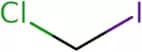
CAS:<p>Chloroiodomethane is a chemical that is used as an intermediate in the production of other chemicals. It is a colourless liquid with a strong odour. 3-Bromopropylamine hydrobromide reacts with chloroiodomethane to form 3-bromopropyl bromide, which can be reacted with hydrogen chloride to form the corresponding acid chloride. This reaction product can then be reacted with β-amino acids to form amides or esters. The reaction mechanism of this process involves nucleophilic substitution of chloroiodomethane by the amino group of the β-amino acid to produce an intermediate α,β-unsaturated carbonyl chloride, which undergoes elimination to give the final product. Chloroiodomethane also reacts rapidly with fatty acids and hydroxyl groups in biological systems, leading to inflammatory diseases such as HIV infection.</p>Formula:CH2ClIPurity:Min. 95%Color and Shape:Colorless Clear LiquidMolecular weight:176.38 g/mol6-Amino-4H,5H,6H,7H,8H-thieno[3,2-b]azepin-5-one hydrochloride
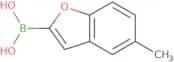
CAS:<p>Versatile small molecule scaffold</p>Formula:C8H11ClN2OSPurity:Min. 95%Molecular weight:218.7 g/mol(5-methylbenzofuran-2-yl)boronic acid
CAS:<p>Versatile small molecule scaffold</p>Formula:C9H9BO3Purity:Min. 95%Molecular weight:175.98 g/molCyclobutanesulfonyl chloride
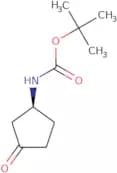
CAS:<p>Cyclobutanesulfonyl chloride is a reagent that is used for the synthesis of 1-6-alkylcyclobutanes. It can be used to synthesize heterocyclic compounds, including those with high optical purity. Cyclobutanesulfonyl chloride has been shown to have antiviral and antiproliferative properties. It has also been shown to exhibit anticancer activity in vitro and in vivo. The mechanism of action for this compound is unclear, but it may inhibit protein synthesis by attacking the amino acid methionine in proteins or by inhibiting DNA replication.</p>Formula:C4H7ClO2SPurity:Min. 95%Color and Shape:Clear LiquidMolecular weight:154.62 g/mol(S)-tert-Butyl (3-oxocyclopentyl)carbamate
CAS:<p>Versatile small molecule scaffold</p>Formula:C10H17NO3Purity:Min. 95%Molecular weight:199.25 g/mol4-Chloro-8-quinolinol
CAS:<p>4-Chloro-8-quinolinol is a quinoline derivative that has been shown to have pharmacological effects. It is used in the synthesis of other compounds, such as 5-chloro-8-hydroxyquinoline, which is used in the treatment of cancer. 4-Chloro-8-quinolinol can also be prepared by oxidizing 5,6,7,8 tetrachloroquinoline with chlorine and ammonia. The photophysical properties of this compound are analogous to those of benzothiazole derivatives. The fluorescence emission spectrum ranges from 360 nm to 450 nm with a maximum at 390 nm and emission intensity at 350 nm. This compound exhibits fungitoxicity against Penicillium notatum and Aspergillus fumigatus.</p>Formula:C9H6ClNOPurity:Min. 95%Molecular weight:179.6 g/mol


![6,6-Difluorospiro[3.3]heptan-2-amine Hydrochloride](/_next/image/?url=https%3A%2Fstatic.cymitquimica.com%2Fproducts%2F3D%2Fthumb-webp%2FYGC03271.webp&w=3840&q=75)
![tert-Butyl 9-oxo-4,8-diazaspiro[4.4]nonane-4-carboxylate](/_next/image/?url=https%3A%2Fstatic.cymitquimica.com%2Fproducts%2F3D%2Fthumb-webp%2FWYB81845.webp&w=3840&q=75)
![1-[(tert-butoxy)carbonyl]-5,5-difluoropiperidine-3-carboxylic acid](/_next/image/?url=https%3A%2Fstatic.cymitquimica.com%2Fproducts%2F3D%2Fthumb-webp%2FFAC66686.webp&w=3840&q=75)




![6-Amino-4H,5H,6H,7H,8H-thieno[3,2-b]azepin-5-one hydrochloride](/_next/image/?url=https%3A%2Fstatic.cymitquimica.com%2Fproducts%2F3D%2Fthumb-webp%2FTHC97972.webp&w=3840&q=75)