


Building Blocks
This section contains fundamental products for the synthesis of organic and biological compounds. Building blocks are the essential starting materials used to construct complex molecules through various chemical reactions. They play a critical role in drug discovery, material science, and chemical research. At CymitQuimica, we offer a diverse range of high-quality building blocks to support your innovative research and industrial projects, ensuring you have the essential components for successful synthesis.
Subcategories of "Building Blocks"
- Boronic Acids & Boronic Acid Derivatives(5,756 products)
- Chiral Building Blocks(1,242 products)
- Hydrocarbon Building Blocks(6,095 products)
- Organic Building Blocks(61,037 products)
Found 196200 products of "Building Blocks"
Sort by
Purity (%)
0
100
|
0
|
50
|
90
|
95
|
100
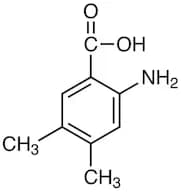
2-Amino-4,5-dimethylbenzoic Acid
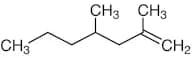
CAS:Formula:C9H11NO2Purity:>97.0%(T)(HPLC)Color and Shape:White to Yellow powder to crystalMolecular weight:165.192,4-Dimethyl-1-heptene
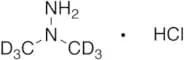
CAS:Formula:C9H18Purity:>98.0%(GC)Color and Shape:Colorless to Almost colorless clear liquidMolecular weight:126.24N,N-(Dimethyl-d6)hydrazine Hydrochloride
CAS:Controlled Product<p>Applications A labelled isotope of a toxic volatile hydrazine found in rocket fuel systems.<br>References Oanasyuk, A.G. et al.: Vis. Nat. Tekh. Univ. KhPI, 13, 59 (2010);<br></p>Formula:C2H3D6ClN2Color and Shape:NeatMolecular weight:102.602-[Nitroso(phenylmethyl)amino]benzoic Acid
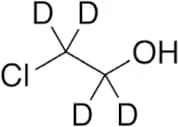
CAS:Controlled ProductFormula:C14H12N2O3Color and Shape:NeatMolecular weight:256.2572-Chloroethanol-1,1,2,2-d4
CAS:Controlled Product<p>Applications 2-Chloroethanol is used in the preparation of TTFTT (tetrathiafulvalene-2,3,6,7-tetrathiolate) and important building block in TTF syntheis. In addition, it is used in the synthesis of vinyltriazoles. This is the labeled analog.<br>Dangerous Goods Info This compound is forbidden to ship by air under IATA regulations.<br>References Svenstrup, N. et al.: Synthesis, 8, 809 (1994); Thibault, R. et al.: J. Am. Chem. Soc., 128, 12084 (2006);<br></p>Formula:C22H4ClOHColor and Shape:Colourless OilMolecular weight:84.54Glyceryl Trihexadecanoate-13C1 (2-Hexadecanoate-1-13C)
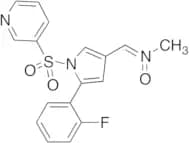
CAS:Controlled Product<p>Applications Glyceryl Trihexadecanoate-13C1 (2-Hexadecanoate-1-13C) is a useful isotopically labeled compound of Tripalmitin (T808130)<br></p>Formula:CC50H98O6Color and Shape:NeatMolecular weight:808.33(Z)-N-((5-(2-Fluorophenyl)-1-(pyridin-3-ylsulfonyl)-1H-pyrrol-3-yl)methylene)methanamine Oxide
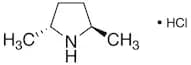
CAS:Formula:C17H14FN3O3SColor and Shape:Neat(-)-(2R,5R)-2,5-Dimethylpyrrolidine, Hydrochloride, 90% (contains meso-isomer)
CAS:Controlled Product<p>Applications Reagent used for asymmetric syntheses.<br>References Schlessinger, R., et al.: J. Org. Chem., 28, 3070 (1986)<br></p>Formula:C6H13N·ClHColor and Shape:NeatMolecular weight:135.644-Tetradecylphenyl-13C6 1-Sodium Sulfonate
CAS:Controlled ProductFormula:C6C14H33O3S·NaColor and Shape:NeatMolecular weight:382.485tert-Butyl N-(3-amino-2-methylbutan-2-yl)carbamate
CAS:<p>Versatile small molecule scaffold</p>Formula:C10H22N2O2Purity:Min. 95%Molecular weight:202.3 g/molRef: 3D-SLC84728
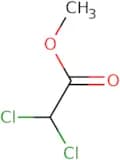
Discontinued productDichloroacetic Acid Methyl Ester
CAS:<p>Dichloroacetic acid methyl ester (DCA) is a metabolic disorder agent that belongs to the group of detergent compositions. It is an important intermediate in the synthesis of sodium salts and hiv infection inhibitors, such as hydrochloric acid and covalent linkages. DCA reacts with water molecules to form hydroxyl groups and then reacts with metal carbonyls to produce anhydrous sodium. This product also reacts with fatty acids to produce alcohol residue and can be used in the reaction solution. The product has a pyrazole ring with a hydroxyl group at one end and an alcohol residue at the other end.</p>Formula:C3H4Cl2O2Purity:Min. 95%Molecular weight:142.97 g/mol5-Butyl-4H,7H-[1,2,4]triazolo[1,5-a]pyrimidin-7-one
CAS:<p>Versatile small molecule scaffold</p>Formula:C9H12N4OPurity:Min. 95%Molecular weight:192.22 g/molRef: 3D-TGA68647
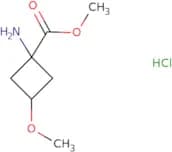
Discontinued productMethyl 1-amino-3-methoxycyclobutane-1-carboxylate hydrochloride
CAS:<p>Versatile small molecule scaffold</p>Formula:C7H14ClNO3Purity:Min. 95%Molecular weight:195.6 g/molRef: 3D-TMD05888
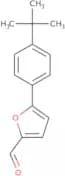
Discontinued product5-(4-tert-Butylphenyl)furan-2-carbaldehyde
CAS:<p>Versatile small molecule scaffold</p>Formula:C15H16O2Purity:Min. 95%Molecular weight:228.29 g/molRef: 3D-TNA60413
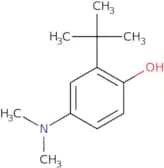
Discontinued product2-tert-Butyl-4-(dimethylamino)phenol
CAS:<p>Versatile small molecule scaffold</p>Formula:C12H19NOPurity:Min. 95%Molecular weight:193.28 g/molRef: 3D-TZB40201
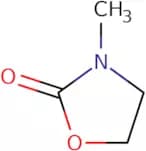
Discontinued product3-Methyl-2-oxazolidone
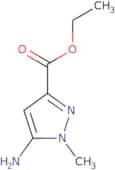
CAS:<p>3-Methyl-2-oxazolidone is an organic compound that is soluble in water and has a molecular weight of 114.3 g/mol. It can be produced by the reaction of methanol with oxalic acid, acetic acid, or malonic acid. 3-Methyl-2-oxazolidone is used as a solvent to dissolve other compounds and is used in the manufacture of sulfa drugs, hydrogen chloride, glycol ethers, and tetraphenylborates. 3-Methyl-2-oxazolidone has been shown to have electrochemical properties including proton conductivity and hydroxyl group oxidation. It also exhibits magnetic resonance properties due to its solute nature.</p>Formula:C4H7NO2Purity:Min. 95%ethyl 5-amino-1-methyl-1h-pyrazole-3-carboxylate
CAS:<p>Versatile small molecule scaffold</p>Formula:C7H11N3O2Purity:Min. 95%Molecular weight:169.18 g/mol1-[(tert-butoxy)carbonyl]-1,2,3,6-tetrahydropyridine-4-carboxylic acid
CAS:<p>Versatile small molecule scaffold</p>Formula:C11H17NO4Purity:Min. 95%Molecular weight:227.3 g/mol


![2-[Nitroso(phenylmethyl)amino]benzoic Acid](/_next/image/?url=https%3A%2Fstatic.cymitquimica.com%2Fproducts%2FTR%2Fthumb-webp%2FN472575.webp&w=3840&q=75)




![5-Butyl-4H,7H-[1,2,4]triazolo[1,5-a]pyrimidin-7-one](/_next/image/?url=https%3A%2Fstatic.cymitquimica.com%2Fproducts%2F3D%2Fthumb-webp%2FTGA68647.webp&w=3840&q=75)
![1-[(tert-butoxy)carbonyl]-1,2,3,6-tetrahydropyridine-4-carboxylic acid](/_next/image/?url=https%3A%2Fstatic.cymitquimica.com%2Fproducts%2F3D%2Fthumb-webp%2FVCA68484.webp&w=3840&q=75)