Building Blocks
This section contains fundamental products for the synthesis of organic and biological compounds. Building blocks are the essential starting materials used to construct complex molecules through various chemical reactions. They play a critical role in drug discovery, material science, and chemical research. At CymitQuimica, we offer a diverse range of high-quality building blocks to support your innovative research and industrial projects, ensuring you have the essential components for successful synthesis.
Subcategories of "Building Blocks"
- Boronic Acids & Boronic Acid Derivatives(5,756 products)
- Chiral Building Blocks(1,242 products)
- Hydrocarbon Building Blocks(6,095 products)
- Organic Building Blocks(61,055 products)
Found 199650 products of "Building Blocks"
Sort by
Purity (%)
0
100
|
0
|
50
|
90
|
95
|
100
2-Hydroxy-3-methyl-2-phenylbutanoic acid
CAS:<p>Versatile small molecule scaffold</p>Formula:C11H14O3Purity:Min. 95%Molecular weight:194.23 g/mol5-(2-Methoxy-ethyl)-[1,3,4]thiadiazol-2-ylamine
CAS:<p>Versatile small molecule scaffold</p>Formula:C5H9N3OSPurity:Min. 95%Molecular weight:159.21 g/mol1-Chloro-4-{[(chloromethyl)sulfanyl]methyl}benzene
CAS:<p>Versatile small molecule scaffold</p>Formula:C8H8Cl2SPurity:Min. 95%Molecular weight:207.12 g/molSodium 3-methylbenzene-1-sulfinate
CAS:<p>Versatile small molecule scaffold</p>Formula:C7H7NaO2SPurity:Min. 95%Molecular weight:178.19 g/mol1-Bromo-5,5-dimethylhexane
CAS:<p>Versatile small molecule scaffold</p>Formula:C8H17BrPurity:Min. 95%Molecular weight:193.12 g/mol6,6-Dimethylheptanoic acid
CAS:<p>6,6-Dimethylheptanoic acid is a polybasic fatty acid that is used as an antifungal agent. It has been shown to inhibit the growth of various yeast and fungi in laboratory studies. 6,6-Dimethylheptanoic acid has also been shown to have anticancer properties due to its ability to cause tumor cell apoptosis. This compound may be used for coatings or treatments on surfaces, such as skin or teeth, and can be used in the production of polymers with antimicrobial activities. 6,6-Dimethylheptanoic acid has been shown to have anti-inflammatory properties and may be useful for the treatment of nociceptive pain.</p>Formula:C9H18O2Purity:Min. 95%Molecular weight:158.24 g/mol2-Methyl-2-(propan-2-yl)cyclopropane-1-carboxylic acid
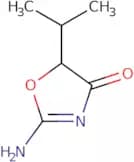
CAS:<p>Versatile small molecule scaffold</p>Formula:C8H14O2Purity:Min. 95%Molecular weight:142.2 g/mol4(5H)-Oxazolone, 2-amino-5-(1-methylethyl)-
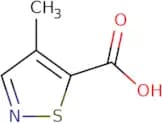
CAS:<p>Versatile small molecule scaffold</p>Formula:C6H10N2O2Purity:Min. 95%Molecular weight:142.16 g/mol4-Methyl-isothiazole-5-carboxylic acid
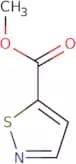
CAS:<p>Versatile small molecule scaffold</p>Formula:C5H5NO2SPurity:Min. 95%Molecular weight:143.16 g/molIsothiazole-5-carboxylic acid methyl ester
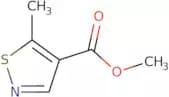
CAS:<p>Versatile small molecule scaffold</p>Formula:C5H5NO2SPurity:Min. 95%Molecular weight:143.16 g/molMethyl 5-methyl-1,2-thiazole-4-carboxylate
CAS:Versatile small molecule scaffoldFormula:C6H7NO2SPurity:Min. 95%Molecular weight:157.19 g/mol3-Methylisothiazole-4-carboxylic acid
CAS:<p>3-Methylisothiazole-4-carboxylic acid is an amino acid that has shown anti-tumor activity. It has been shown to inhibit the growth of leukemia cells in mice and to prevent the proliferation of human cancer cells in vitro. 3-Methylisothiazole-4-carboxylic acid is a competitive inhibitor of benzoylamino, which is a key enzyme involved in the synthesis of DNA. The compound inhibits DNA replication by binding to nucleic acids at the site where they are synthesized, blocking the formation of base pairs. This drug also has immunosuppressive properties and can be used as an adjuvant therapy for hypersensitivity reactions such as asthma and allergies.</p>Formula:C5H5NO2SPurity:Min. 95%Molecular weight:143.16 g/mol3-(2,4-Dimethylphenoxy)propanoic acid
CAS:<p>Versatile small molecule scaffold</p>Formula:C11H14O3Purity:Min. 95%Molecular weight:194.23 g/mol3-Amino-2,2,4-trimethylpentan-1-ol
CAS:<p>Versatile small molecule scaffold</p>Formula:C8H19NOPurity:Min. 95%Molecular weight:145.24 g/molN-Phenylcyclobutanecarboxamide
CAS:<p>N-Phenylcyclobutanecarboxamide is a sulfone that is used as a chemotherapy agent. It has been shown to be effective in the treatment of peritoneal carcinomatosis and pancreatic cancer. This drug inhibits the growth of cancer cells by interfering with DNA synthesis and protein synthesis, which prevents cell division. N-Phenylcyclobutanecarboxamide also causes tumor cells to die by causing them to undergo apoptosis.</p>Formula:C11H13NOPurity:Min. 95%Molecular weight:175.23 g/mol3-Amino-1H,4H,5H-pyrazolo[3,4-d]pyrimidin-4-one
CAS:<p>Versatile small molecule scaffold</p>Formula:C5H5N5OPurity:Min. 95%Molecular weight:151.1 g/mol3,4-Dimethyl-6H,7H-[1,2]oxazolo[3,4-d]pyridazin-7-one
CAS:<p>Versatile small molecule scaffold</p>Formula:C7H7N3O2Purity:Min. 95%Molecular weight:165.15 g/moliso-Butyrylglycine
CAS:<p>Iso-butyrlglycine is an intermediate in the metabolism of amino acids. It has been used as a diagnostic marker for the detection of dehydrogenase deficiency and other diseases. Iso-butyrlglycine is also used to assess the activity index of enzymes such as fatty acid synthase, which are involved in energy metabolism.</p>Formula:C6H11NO3Purity:Min. 95%Molecular weight:145.16 g/mol2-Phenyl-1,3-oxazole-4,5-dicarboxylic acid
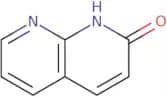
CAS:<p>Versatile small molecule scaffold</p>Formula:C11H7NO5Purity:Min. 95%Molecular weight:233.18 g/mol1,8-Naphthyridine-2(1H)-one
CAS:<p>1,8-Naphthyridine-2(1H)-one is a naphthyridone that inhibits the growth of gram-positive bacteria. This compound binds to the CB2 receptor site on the cell membrane and blocks the transfer of electrons from cytochrome c to molecular oxygen, which inhibits the production of reactive oxygen species. This inhibition causes an accumulation of hydrogen peroxide in the bacterial cell and leads to necrosis. 1,8-Naphthyridine-2(1H)-one has also been shown to inhibit HIV infection by inhibiting reverse transcriptase activity through metal chelate formation.</p>Formula:C8H6N2OPurity:Min. 95%Molecular weight:146.15 g/mol


![5-(2-Methoxy-ethyl)-[1,3,4]thiadiazol-2-ylamine](/_next/image/?url=https%3A%2Fstatic.cymitquimica.com%2Fproducts%2F3D%2Fthumb-webp%2FQAA88490.webp&w=3840&q=75)
![1-Chloro-4-{[(chloromethyl)sulfanyl]methyl}benzene](/_next/image/?url=https%3A%2Fstatic.cymitquimica.com%2Fproducts%2F3D%2Fthumb-webp%2FQAA89425.webp&w=3840&q=75)




![3-Amino-1H,4H,5H-pyrazolo[3,4-d]pyrimidin-4-one](/_next/image/?url=https%3A%2Fstatic.cymitquimica.com%2Fproducts%2F3D%2Fthumb-webp%2FQAA90868.webp&w=3840&q=75)
![3,4-Dimethyl-6H,7H-[1,2]oxazolo[3,4-d]pyridazin-7-one](/_next/image/?url=https%3A%2Fstatic.cymitquimica.com%2Fproducts%2F3D%2Fthumb-webp%2FQAA91116.webp&w=3840&q=75)