Building Blocks
This section contains fundamental products for the synthesis of organic and biological compounds. Building blocks are the essential starting materials used to construct complex molecules through various chemical reactions. They play a critical role in drug discovery, material science, and chemical research. At CymitQuimica, we offer a diverse range of high-quality building blocks to support your innovative research and industrial projects, ensuring you have the essential components for successful synthesis.
Subcategories of "Building Blocks"
- Boronic Acids & Boronic Acid Derivatives(5,756 products)
- Chiral Building Blocks(1,242 products)
- Hydrocarbon Building Blocks(6,095 products)
- Organic Building Blocks(61,038 products)
Found 196817 products of "Building Blocks"
Sort by
Purity (%)
0
100
|
0
|
50
|
90
|
95
|
100
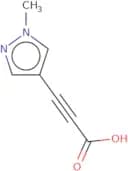
3-(1-Methyl-1H-pyrazol-4-yl)prop-2-ynoic acid
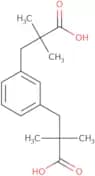
CAS:<p>Versatile small molecule scaffold</p>Formula:C7H6N2O2Purity:Min. 95%Molecular weight:150.1 g/mol±,±,±²,±²-Tetramethyl-1,3-benzenedipropionic acid
CAS:<p>Versatile small molecule scaffold</p>Formula:C16H22O4Purity:Min. 95%Molecular weight:278.34 g/molGivinostat hydrochloride
CAS:<p>Givinostat hydrochloride is a research chemical that has shown potential in various fields. It is a molybdenum-based compound that has been studied for its effects on dopamine release and hydrogen evolution. Givinostat hydrochloride has also been investigated as an osteoclast inhibitor, which may be beneficial in the treatment of bone-related disorders such as osteoporosis. Additionally, it has shown promise as a retinoid and calpain inhibitor, suggesting its potential use in dermatological conditions and neurodegenerative diseases. The compound contains fluorine atoms, making it suitable for imaging studies using fluorine MRI techniques. Givinostat hydrochloride has been tested on MDA-MB-231 cells and has shown inhibitory effects on their growth, indicating its potential as an anticancer agent.</p>Formula:C24H27N3O4·HClPurity:Min. 95%Molecular weight:457.95 g/molDebacarb
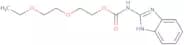
CAS:<p>Debacarb is a subtilis mutant strain that produces the active substances debacarb and debacin. Debacarb inhibits the mitochondrial cytochrome b-245, which is an enzyme in the electron transport chain of mitochondria. It also inhibits bacterial growth by binding to nicotinic acetylcholine, which is an enzyme involved in the synthesis of bacterial cell walls. The target enzymes for this compound are not yet known. The bacterium Agrobacterium tumefaciens was found to be sensitive to Debacarb, but resistant strains were also obtained. Debacarb has been used as an agrochemical against bacterial strains such as Pseudomonas syringae and Erwinia carotovora. The effective dose for Debacarb varies depending on the bacterial strain. The most common effective doses are between 2 and 5 ppm, but higher concentrations may be needed against some bacteria.br> Debacarb can inhibit polymerase chain reactions, which</p>Formula:C14H19N3O4Purity:Min. 95%Molecular weight:293.32 g/mol6-Sulfamoyl-3,4-dihydro-2H-1-benzopyran-3-carboxylic acid
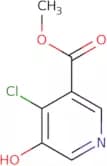
CAS:<p>Versatile small molecule scaffold</p>Formula:C10H11NO5SPurity:Min. 95%Color and Shape:PowderMolecular weight:257.27 g/molMethyl 4-chloro-5-hydroxy-3-pyridinecarboxylate
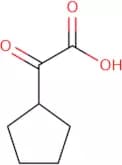
CAS:<p>Versatile small molecule scaffold</p>Formula:C7H6ClNO3Purity:Min. 95%Molecular weight:187.58 g/mol2-Cyclopentyl-2-oxoacetic acid
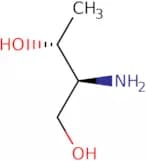
CAS:<p>Versatile small molecule scaffold</p>Formula:C7H10O3Purity:Min. 95%Molecular weight:142.15 g/molD-allo-Threoninol
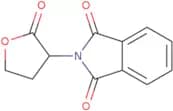
CAS:<p>D-allo-Threoninol is a conformational analogue of threonine. It has been shown to inhibit the growth of Escherichia coli, Bacillus subtilis, and Staphylococcus aureus in vitro. D-allo-Threoninol binds to the enzyme methionine adenosyltransferase (MAT) by forming hydrogen bonds with its amino acid side chains. This binding prevents the formation of the MAT-coenzyme A complex, inhibiting protein synthesis and cell division.</p>Formula:C4H11NO2Purity:Min. 95%Color and Shape:PowderMolecular weight:105.14 g/mol2-(2-Oxotetrahydrofuran-3-yl)-1H-isoindole-1,3(2H)-dione
CAS:<p>Versatile small molecule scaffold</p>Formula:C12H9NO4Purity:Min. 95%Molecular weight:231.2 g/mol[3-Fluoro-4-(1H-imidazol-1-yl)phenyl]methanamine
CAS:<p>Versatile small molecule scaffold</p>Formula:C10H10FN3Purity:Min. 95%Molecular weight:191.2 g/mol6-Bromocinnolin-4-ol
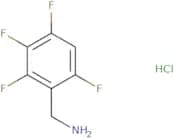
CAS:<p>Versatile small molecule scaffold</p>Formula:C8H5BrN2OPurity:Min. 95%Molecular weight:225.04 g/mol2,3,4,6-Tetrafluorobenzylamine hydrochloride
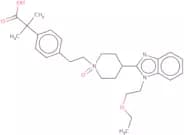
CAS:<p>2,3,4,6-Tetrafluorobenzylamine hydrochloride is a fluorescent organic dye that binds to the antibody and can be used as a research tool for studying protein interactions. 2,3,4,6-Tetrafluorobenzylamine hydrochloride is also an inhibitor of the ion channel TRPV1. This compound has been shown to be a ligand and activator of nicotinic acetylcholine receptors. It binds to the receptor with high affinity and is an excellent fluorescent probe for covalent labeling of peptides and proteins.</p>Formula:C7H6ClF4NPurity:Min. 95%Molecular weight:215.57 g/moltrans-Bilastine N-oxide
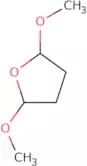
CAS:<p>Please enquire for more information about trans-Bilastine N-oxide including the price, delivery time and more detailed product information at the technical inquiry form on this page</p>Formula:C28H37N3O4Purity:Min. 95%Molecular weight:479.61 g/mol2,5-Dimethoxytetrahydrofuran
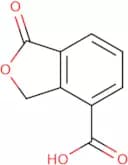
CAS:<p>2,5-Dimethoxytetrahydrofuran is an organic compound that can be synthesized from 2,5-dimethoxybenzaldehyde and tetrahydrofuran. The asymmetric synthesis of this compound was first reported in 1968. The nmr spectrum of 2,5-dimethoxytetrahydrofuran shows two signals at δ 5.89 and δ 7.03 ppm. This compound is soluble in water and organic solvents such as dichloromethane, benzene, toluene, chloroform, and methanol. 2,5-Dimethoxytetrahydrofuran has been shown to have pain-relieving effects using the formalin test in mice and rats. It also has antineoplastic properties when used with other quinoline derivatives.br>br> 2,5-Dimethoxytetrahydrofuran is a white solid</p>Formula:C6H12O3Purity:Min. 95%Color and Shape:PowderMolecular weight:132.16 g/mol1-Oxo-1,3-dihydro-2-benzofuran-4-carboxylic acid
CAS:<p>Versatile small molecule scaffold</p>Formula:C9H6O4Purity:Min. 95%Molecular weight:178.14 g/molPyr-Gln-OH trifluoroacetate
CAS:<p>Please enquire for more information about Pyr-Gln-OH trifluoroacetate including the price, delivery time and more detailed product information at the technical inquiry form on this page</p>Formula:C10H15N3O5•(C2HF3O2)xPurity:Min. 95%Macaridine
CAS:<p>Please enquire for more information about Macaridine including the price, delivery time and more detailed product information at the technical inquiry form on this page</p>Formula:C13H13NO2Purity:Min. 95%Molecular weight:215.25 g/molBenzal Chloride
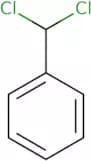
CAS:Controlled Product<p>Benzal Chloride is a chlorinating agent that exhibits reactive properties. It is used in wastewater treatment to disinfect and oxidize organic matter, as well as to remove hydrogen sulfide and other volatile organics. Benzal Chloride is also used for the preparation of benzalkonium chloride, which has been shown to have antimicrobial properties. The pharmacokinetic properties of benzal chloride are similar to those of chloride, but it has not been studied extensively in humans.</p>Formula:C7H6Cl2Purity:Min. 95%Color and Shape:Clear LiquidMolecular weight:161.03 g/mol4-Bromothiophene-2-acetic acid
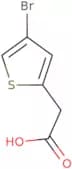
CAS:<p>Versatile small molecule scaffold</p>Formula:C6H5BrO2SPurity:Min. 95%Molecular weight:221.07 g/molXLT4 Agar Supplement
CAS:<p>Please enquire for more information about XLT4 Agar Supplement including the price, delivery time and more detailed product information at the technical inquiry form on this page</p>Formula:C14H30O4S•NaMolecular weight:316.43 g/mol



![[3-Fluoro-4-(1H-imidazol-1-yl)phenyl]methanamine](/_next/image/?url=https%3A%2Fstatic.cymitquimica.com%2Fproducts%2F3D%2Fthumb-webp%2FBNB90714.webp&w=3840&q=75)