


Building Blocks
This section contains fundamental products for the synthesis of organic and biological compounds. Building blocks are the essential starting materials used to construct complex molecules through various chemical reactions. They play a critical role in drug discovery, material science, and chemical research. At CymitQuimica, we offer a diverse range of high-quality building blocks to support your innovative research and industrial projects, ensuring you have the essential components for successful synthesis.
Subcategories of "Building Blocks"
- Boronic Acids & Boronic Acid Derivatives(5,756 products)
- Chiral Building Blocks(1,242 products)
- Hydrocarbon Building Blocks(6,095 products)
- Organic Building Blocks(61,055 products)
Found 199650 products of "Building Blocks"
Sort by
Purity (%)
0
100
|
0
|
50
|
90
|
95
|
100
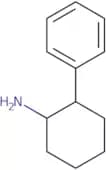
2-Phenylcyclohexanamine
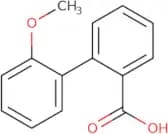
CAS:<p>2-Phenylcyclohexanamine is a synthetic, experimental compound. It has been shown to have high energy content and the ability to cross over from the gas phase to the liquid phase. 2-Phenylcyclohexanamine can be used as a thermodynamic probe in analytical research and has an efficient method for synthesis. The synthesis of 2-phenylcyclohexanamine is done by heating 1,1-diphenyl cyclopropane with cyclohexylamine, producing a mixture that can be purified with column chromatography. The analytical methodology for this compound includes GC/MS analysis of the raw material, reaction product, and final product.</p>Formula:C12H17NPurity:Min. 95%Molecular weight:175.27 g/mol2'-Methoxybiphenyl-2-carboxylic acid
CAS:<p>2'-Methoxybiphenyl-2-carboxylic acid is a benzene carboxylic acid that is used as a precursor for biphenyl-2-carboxylic acids. 2'-Methoxybiphenyl-2-carboxylic acid can be synthesized by refluxing 2'-hydroxybiphenyl with peroxides in the presence of benzene, followed by cyclisation and decarboxylation. Alternatively, 2'-methoxybiphenyl-2-carboxylic acid can be obtained by thermally decomposing 3,4,5,6-tetramethylbenzoic acid. This compound has been shown to react intramolecularly and intermediacy with triphenylene to form triphenyltetracarboxylic acids.</p>Formula:C14H12O3Purity:Min. 95%Molecular weight:228.25 g/mol1-(Bromomethyl)cyclohexan-1-ol
CAS:<p>1-(Bromomethyl)cyclohexan-1-ol is an organic solvent that is used in xerographic processes. It has been shown to be a good binder for active substances and can also be used as a stabilizer in the production of butyral and radical chain resins. This substance has hydroxy groups, which are responsible for the solubility of 1-(bromomethyl)cyclohexan-1-ol in water. It also has two benzyl radicals, which increase the solubility of this substance in organic solvents. This is an active substance with a valency of 2 and 4, so it can bind with up to 8 other molecules.</p>Formula:C7H13BrOPurity:Min. 95%Molecular weight:193.08 g/mol3-Ethylcyclohex-2-en-1-one
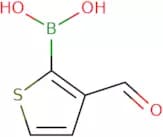
CAS:<p>Versatile small molecule scaffold</p>Formula:C8H12OPurity:Min. 95%Molecular weight:124.18 g/mol3-Formyl-2-thienylboronic acid
CAS:<p>3-Formyl-2-thienylboronic acid is an organometallic compound that has a variety of bioactivities. It reacts with boronic acids to form cross-coupled products, which can be used in the synthesis of pharmaceuticals. 3-Formyl-2-thienylboronic acid has been shown to selectively react with a variety of boronic acids and produce highly substituted products. The constant nature of 3-Formyl-2-thienylboronic acid makes it suitable for introducing formyl groups into organic molecules for chemical ligation reactions. This compound is found in nature as an isomeric mixture of two enantiomers: R and S, which are chemically identical but have different biological properties.</p>Formula:C5H5BO3SPurity:Min. 95%Molecular weight:155.97 g/molEthyl 4-methyl-2-sulfanyl-1,3-thiazole-5-carboxylate
CAS:<p>Versatile small molecule scaffold</p>Formula:C7H9NO2S2Purity:Min. 95%Molecular weight:203.3 g/molMethyl 2-(ethylamino)benzoate
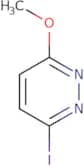
CAS:<p>Methyl 2-(ethylamino)benzoate is a chemical compound that can be synthesized from anilines and aminophenols. It is an intermediate in the synthesis of aminobenzamides and yields high yields when methylated. The reactivity is highly dependent on the reaction conditions. For example, in the presence of strong acids, such as hydrochloric acid, it reacts to form dialkylamines. This compound has also been shown to be useful for the preparation of carbonyl compounds and five-membered rings.</p>Formula:C10H13NO2Purity:Min. 95%Molecular weight:179.22 g/mol3-Iodo-6-methoxypyridazine
CAS:<p>3-Iodo-6-methoxypyridazine is a type of diazine that is also known as 3,6-dimethoxy-N-(1,2,4-triazol-1-ylmethyl)pyridine. It is an agrochemical that has been shown to inhibit the growth of plants by interfering with nitrogen metabolism. The compound inhibits protein synthesis and nucleic acid synthesis through a nucleophilic attack on the nitrogen atom in the heterocycle. This compound has been used as an analog of pyridazine and cinnoline in the synthesis of other natural products.</p>Formula:C5H5IN2OPurity:Min. 95%Molecular weight:236.01 g/mol3,4-Dimethyl-1-phenyl-1H-pyrazolo[3,4-b]pyridin-6-ol
CAS:<p>Versatile small molecule scaffold</p>Formula:C14H13N3OPurity:Min. 95%Molecular weight:239.27 g/mol2-[(3,4-Dichlorobenzoyl)amino]acetic acid
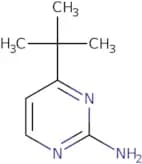
CAS:<p>Versatile small molecule scaffold</p>Formula:C9H7Cl2NO3Purity:Min. 95%Molecular weight:248.07 g/mol4-tert-Butylpyrimidin-2-amine
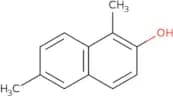
CAS:<p>Versatile small molecule scaffold</p>Formula:C8H13N3Purity:Min. 95%Molecular weight:151.21 g/mol1,6-Dimethylnaphthalen-2-ol
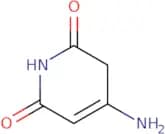
CAS:<p>Versatile small molecule scaffold</p>Formula:C12H12OPurity:Min. 95%Molecular weight:172.22 g/mol4-Amino-1,2,3,6-tetrahydropyridine-2,6-dione
CAS:<p>Thiourea is a compound that can be found in the amino acid threonine. It is also produced by certain bacteria, such as Lactobacillus acidophilus. Thiourea has been shown to have a variety of potential health benefits, including relief from celiac disease symptoms and the formation of body tissues. Thiourea may also serve as a nutritional supplement for animals and humans, although it is not well-studied in this area. The low molecular weight and divalent nature of thiourea makes it soluble in water and thus highly absorbable by the intestines.</p>Formula:C5H6N2O2Purity:Min. 95%Molecular weight:126.11 g/mol2-Chloro-7-methyl-4H-pyrido[1,2-a]pyrimidin-4-one
CAS:<p>Versatile small molecule scaffold</p>Formula:C9H7ClN2OPurity:Min. 95%Molecular weight:194.62 g/mol2-chloro-9-methyl-4H-pyrido[1,2-a]pyrimidin-4-one
CAS:Versatile small molecule scaffoldFormula:C9H7N2OClPurity:Min. 95%Molecular weight:194.61 g/mol2-Chloro-9-methyl-4-oxo-4H-pyrido[1,2-a]pyrimidine-3-carbaldehyde
CAS:<p>Versatile small molecule scaffold</p>Formula:C10H7ClN2O2Purity:Min. 95%Molecular weight:222.63 g/molMethyl cyclohept-4-ene-1-carboxylate
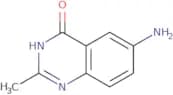
CAS:<p>Versatile small molecule scaffold</p>Formula:C9H14O2Purity:Min. 95%Molecular weight:154.21 g/mol6-Amino-2-methylquinazolin-4-ol
CAS:<p>Versatile small molecule scaffold</p>Formula:C9H9N3OPurity:Min. 95%Molecular weight:175.19 g/mol3-Methyl-4-phenyl-6H,7H-[1,2]oxazolo[3,4-d]pyridazin-7-one
CAS:<p>Patent US20100287939</p>Formula:C12H9N3O2Purity:Min. 95%Molecular weight:227.22 g/mol(2-Chloroethyl)trimethylsilane
CAS:<p>(2-Chloroethyl)trimethylsilane is an organosilicon compound with a molecular weight of 98.06 g/mol. It is synthesized from ethylene and chlorine, and has been shown to inhibit the activity of tyrosine kinase in chronic pain and depression models. (2-Chloroethyl)trimethylsilane also inhibits adenosine receptors, which are involved in the development of chronic pain. This drug has been shown to be effective against depression by inhibiting the binding of adenosine to its receptor site. The kinetic properties of this drug have been studied using molecular modelling, and it has been found that conformational changes are induced in the purinergic receptor when this drug binds.</p>Formula:C5H13ClSiPurity:Min. 95%Molecular weight:136.69 g/mol





![3,4-Dimethyl-1-phenyl-1H-pyrazolo[3,4-b]pyridin-6-ol](/_next/image/?url=https%3A%2Fstatic.cymitquimica.com%2Fproducts%2F3D%2Fthumb-webp%2FSAA32144.webp&w=3840&q=75)
![2-[(3,4-Dichlorobenzoyl)amino]acetic acid](/_next/image/?url=https%3A%2Fstatic.cymitquimica.com%2Fproducts%2F3D%2Fthumb-webp%2FSAA32180.webp&w=3840&q=75)
![2-Chloro-7-methyl-4H-pyrido[1,2-a]pyrimidin-4-one](/_next/image/?url=https%3A%2Fstatic.cymitquimica.com%2Fproducts%2F3D%2Fthumb-webp%2FSAA32618.webp&w=3840&q=75)
![2-chloro-9-methyl-4H-pyrido[1,2-a]pyrimidin-4-one](/_next/image/?url=https%3A%2Fstatic.cymitquimica.com%2Fproducts%2F3D%2Fthumb-webp%2FSAA32622.webp&w=3840&q=75)
![2-Chloro-9-methyl-4-oxo-4H-pyrido[1,2-a]pyrimidine-3-carbaldehyde](/_next/image/?url=https%3A%2Fstatic.cymitquimica.com%2Fproducts%2F3D%2Fthumb-webp%2FSAA32627.webp&w=3840&q=75)

![3-Methyl-4-phenyl-6H,7H-[1,2]oxazolo[3,4-d]pyridazin-7-one](/_next/image/?url=https%3A%2Fstatic.cymitquimica.com%2Fproducts%2F3D%2Fthumb-webp%2FSAA33468.webp&w=3840&q=75)
