Building Blocks
This section contains fundamental products for the synthesis of organic and biological compounds. Building blocks are the essential starting materials used to construct complex molecules through various chemical reactions. They play a critical role in drug discovery, material science, and chemical research. At CymitQuimica, we offer a diverse range of high-quality building blocks to support your innovative research and industrial projects, ensuring you have the essential components for successful synthesis.
Subcategories of "Building Blocks"
- Boronic Acids & Boronic Acid Derivatives(5,778 products)
- Chiral Building Blocks(1,242 products)
- Hydrocarbon Building Blocks(6,098 products)
- Organic Building Blocks(61,034 products)
Found 199601 products of "Building Blocks"
Sort by
Purity (%)
0
100
|
0
|
50
|
90
|
95
|
100
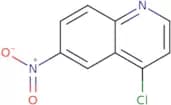
4-Chloro-6-nitroquinoline
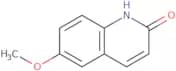
CAS:<p>4-Chloro-6-nitroquinoline is a dopamine receptor antagonist that has been shown to have high affinity and selectivity for the 5-HT6 receptor. This agent inhibits the binding of serotonin to 5-HT6 receptors, which causes an increase in dopamine release in the brain. 4-Chloro-6-nitroquinoline has been used in a study of Parkinson's disease and depression in humans.</p>Formula:C9H5ClN2O2Purity:Min. 95%Molecular weight:208.6 g/mol6-Methoxyquinolin-2-ol
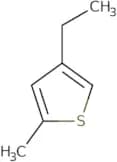
CAS:<p>Versatile small molecule scaffold</p>Formula:C10H9NO2Purity:Min. 95%Molecular weight:175.18 g/mol4-Ethyl-2-methylthiophene
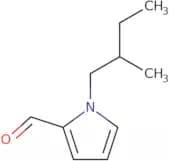
CAS:<p>Versatile small molecule scaffold</p>Formula:C7H10SPurity:Min. 95%Molecular weight:126.22 g/mol1-(2-Methylbutyl)-1H-pyrrole-2-carbaldehyde
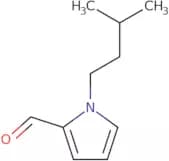
CAS:<p>Versatile small molecule scaffold</p>Formula:C10H15NOPurity:Min. 95%Molecular weight:165.23 g/mol1-(3-Methylbutyl)-1H-pyrrole-2-carbaldehyde
CAS:Versatile small molecule scaffoldFormula:C10H15NOPurity:Min. 95%Molecular weight:165.23 g/mol3-Vinylthiophene
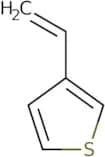
CAS:<p>3-Vinylthiophene is a stabilizer that can be used in the production of polymers and copolymers. It is used in the Suzuki coupling reaction to form vinylidene-3-thiophene, which has been shown to be an effective surface modifier for mesoporous materials. 3-Vinylthiophene has low affinity for both organic ligands and metal ions, making it a reactive compound. The absorption spectroscopy of 3-vinylthiophene shows a strong peak at 290 nm and a weak peak at 320 nm. With a photoelectron spectroscopy, it was found to have an electron affinity of 2.5 eV with a reactive copolymerization with phenylethyl and selenophene being possible reactions.</p>Formula:C6H6SPurity:Min. 95%Molecular weight:110.18 g/mol1-(4-Methyl-1,3-thiazol-2-yl)propan-1-one
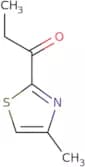
CAS:1-(4-Methyl-1,3-thiazol-2-yl)propan-1-one is a Grignard reagent that has been used in the synthesis of thiazoles. It has been shown to react with propionyl chloride to produce methylthiazole. This compound can also be used as a flavouring agent, which is often found in cinnamon, and as an anhydride for acylation reactions. 1-(4-Methyl-1,3-thiazol-2-yl)propan-1-one is oxidizing and can react with organic chlorides to form chromic acid. This reaction is reversible and when heated will produce the original Grignard reagent and hydrogen chloride gas.Formula:C7H9NOSPurity:Min. 95%Molecular weight:155.22 g/mol2-Methyltetrahydrothiophen-3-one
CAS:<p>2-Methyltetrahydrothiophen-3-one is an organic solvent that is found in the environment as a result of natural processes. It has been shown to inhibit bacterial growth and is used for the analysis of fatty acids. 2-Methyltetrahydrothiophen-3-one inhibits bacterial growth by inhibiting the synthesis of fatty acids, which are needed for cell membrane synthesis.</p>Formula:C5H8OSPurity:Min. 95%Molecular weight:116.18 g/mol2-(3-Nitro-phenyl)-1H-imidazole
CAS:<p>Versatile small molecule scaffold</p>Formula:C9H7N3O2Purity:Min. 95%Molecular weight:189.17 g/mol(2-Bromo-1-methoxyethyl)benzene
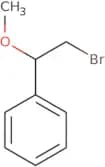
CAS:<p>Versatile small molecule scaffold</p>Formula:C9H11BrOPurity:Min. 95%Molecular weight:215.09 g/mol7-Nitro-2,3,4,5-tetrahydro-1,5-benzothiazepin-4-one
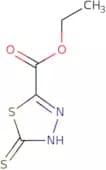
CAS:Versatile small molecule scaffoldFormula:C9H8N2O3SPurity:Min. 95%Molecular weight:224.2 g/molEthyl 5-sulfanyl-1,3,4-thiadiazole-2-carboxylate
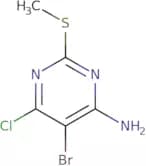
CAS:<p>Versatile small molecule scaffold</p>Formula:C5H6N2O2S2Purity:Min. 95%Molecular weight:190.2 g/mol5-bromo-6-chloro-2-(methylsulfanyl)pyrimidin-4-amine
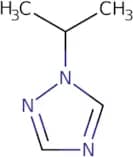
CAS:<p>Versatile small molecule scaffold</p>Formula:C5H5BrClN3SPurity:Min. 95%Molecular weight:254.5 g/mol1-Isopropyl-1H-1,2,4-triazole
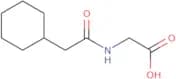
CAS:<p>Versatile small molecule scaffold</p>Formula:C5H9N3Purity:Min. 95%Molecular weight:111.15 g/mol2-(2-Cyclohexylacetamido)acetic acid
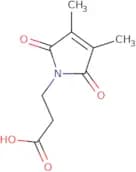
CAS:<p>Versatile small molecule scaffold</p>Formula:C10H17NO3Purity:Min. 95%Molecular weight:199.25 g/mol3-(3,4-Dimethyl-2,5-dioxo-2,5-dihydro-1H-pyrrol-1-yl)propanoic acid
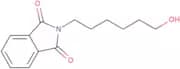
CAS:<p>Versatile small molecule scaffold</p>Formula:C9H11NO4Purity:Min. 95%Molecular weight:197.19 g/mol2-(6-Hydroxyhexyl)-2,3-dihydro-1H-isoindole-1,3-dione
CAS:<p>Versatile small molecule scaffold</p>Formula:C14H17NO3Purity:Min. 95%Molecular weight:247.29 g/mol1-Phenylpentan-2-amine
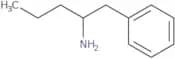
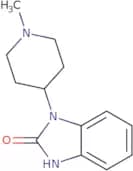
CAS:Controlled Product<p>1-Phenylpentan-2-amine is an organic compound with a chemical formula of C9H12N. It is an aromatic and heterocyclic amine that exhibits oxidative reactivity. 1-Phenylpentan-2-amine can be used as a substrate for coupling reactions, such as oxidative coupling and coordinating catalysts. It can also be used in the catalysis of metal catalysts to form new molecules in a reaction known as oxidative coupling.</p>Formula:C11H17NPurity:Min. 95%Molecular weight:163.26 g/mol1-(1-Methylpiperidin-4-yl)-2,3-dihydro-1H-1,3-benzodiazol-2-one
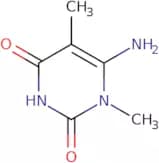
CAS:Versatile small molecule scaffoldFormula:C13H17N3OPurity:Min. 95%Molecular weight:231.29 g/mol6-Amino-1,5-dimethyl-1,2,3,4-tetrahydropyrimidine-2,4-dione
CAS:<p>Versatile small molecule scaffold</p>Formula:C6H9N3O2Purity:Min. 95%Molecular weight:155.15 g/mol